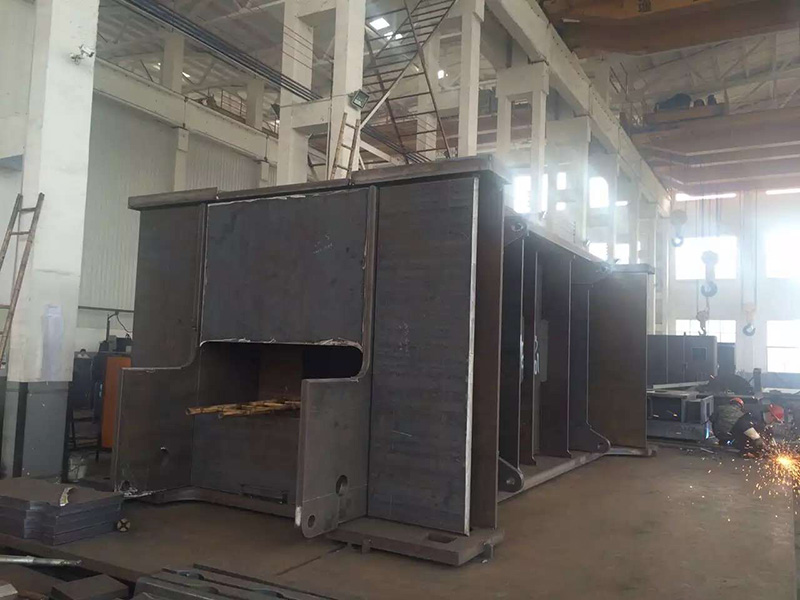
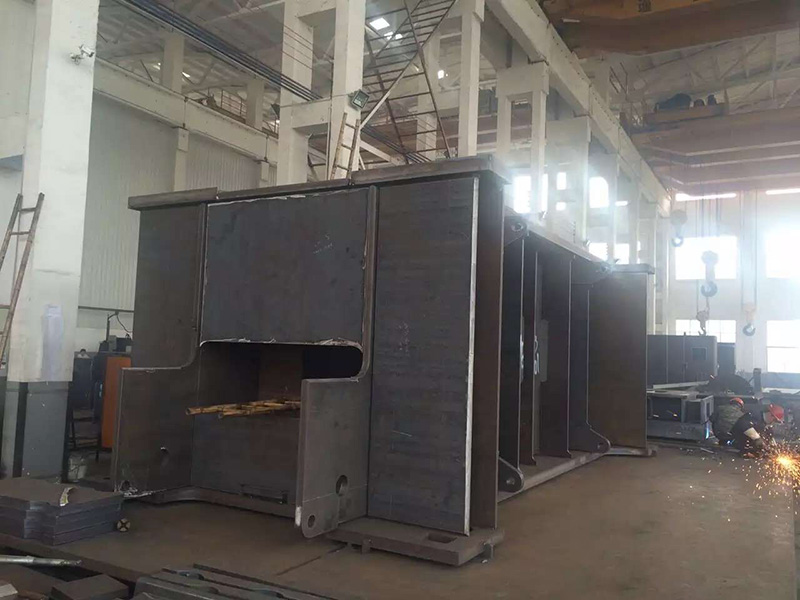
Machining is a core foundational process in manufacturing. It involves cutting, grinding, drilling, milling, turning, and other operations on raw materials such as metals and plastics using various machine tools (e.g., lathes, milling machines, grinders) and tools (e.g., cutters, fixtures). These operations alter the shape, size, and surface quality of workpieces to ultimately meet the precise requirements of product design. From precision parts in automobile engines to complex components in aerospace, and tiny components in electronic devices, machining permeates nearly every
of manufacturing, serving as the critical step in transforming design blueprints into physical products.
I. Core Definition of Machining: Transformation from Raw Material to Finished Product
Simply put, the essence of
machining is removing excess material — through the relative motion between tools and workpieces, raw materials (such as steel plates and round bars) are gradually processed into parts with specific functions. For example: turning a cylindrical steel bar into an automobile drive shaft, or milling an aluminum plate into the outer casing of a mobile phone frame. Its core goal is to accurately match design requirements: whether it is dimensions (e.g., the diameter of a shaft needs to be controlled within ±0.02mm), shape (e.g., the curvature error of a curved surface cannot exceed 0.01mm), or surface quality (e.g., the smoothness of a bearing needs to reach Ra0.8μm), all are achieved through machining.
II. Complete Process Flow of Machining: 6 Steps to Create Qualified Parts
Machining is not a simple operation of turning on the machine and cutting; it is a logically rigorous process where each step affects the final product quality:
1. Raw Material Preparation: Choosing the Right Foundation to Ensure Quality
Raw materials are the starting point of processing, and appropriate materials need to be selected based on the functional requirements of the product — for instance, automobile chassis parts require high-strength steel, electronic device casings need lightweight aluminum alloys, and medical device parts need corrosion-resistant stainless steel. After selecting the materials, pretreatment is also required: cleaning to remove surface oil, rust, and deburring to avoid sharp edges of raw materials scratching subsequent processing equipment, ensuring the smooth progress of subsequent steps.
2. Process Design: Blueprint Planning Before Machining
Process design is the brain of machining, determining processing efficiency and precision. Engineers formulate plans by considering three core factors:
- Workpiece requirements: shape (e.g., cylinder, complex curved surface), dimensional tolerance (e.g., high-precision requirement of ±0.01mm), surface quality (e.g., need for a mirror finish);
- Material properties: materials with high hardness (e.g., alloy steel) require a slow cutting speed, while materials with good toughness (e.g., copper) are suitable for a faster feed rate;
- Cost and efficiency: combining rough machining (quickly removing most material) and finish machining (ensuring precision) saves time and controls costs.
The final process route will specify: first, rough turning the shape with a lathe, then milling the flat surface with a milling machine, and finally improving the smoothness with a grinder — each step has a clear goal.
3. Workpiece Clamping: The First Step in Fixing Precision
The role of workpiece clamping is to firmly fix the raw material on the machine tool, preventing errors caused by vibration or displacement during processing. Common clamping methods include: using a chuck to fix cylindrical parts (e.g., drive shafts), using fixtures to fix complex-shaped parts (e.g., engine blocks), or using vacuum suction cups to fix thin-plate parts (e.g., electronic device casings). The key to clamping is accurate positioning — aligning the machine tool's coordinate axes through a reference surface (e.g., the bottom or side of the part) to minimize positional errors in subsequent processing.
4. Cutting Processing: The Core Link, Removing Excess Material
Cutting processing is the execution layer of machining, removing excess material through the relative motion between the tool and the workpiece (e.g., tool rotation, workpiece feeding) to achieve the designed shape. Common processing methods include:
- Turning: used for processing shaft and disc parts (e.g., automobile crankshafts, gears), where the lathe's rotational motion allows the tool to cut out cylindrical, conical, and other shapes;
- Milling: suitable for processing flat surfaces, grooves, or complex curved surfaces (e.g., heat dissipation grooves in mobile phone frames, curved surfaces in aerospace parts), achieving complex shapes through the multi-directional movement of the milling machine;
- Drilling: using a drill bit to create round holes in the workpiece (e.g., screw holes, pipe holes), the most commonly used processing method in the electronics and construction industries;
- Grinding: using a grinding wheel for fine processing of the workpiece surface (e.g., the inner ring of a bearing, the cutting edge of a tool), improving surface smoothness and dimensional accuracy.
5. Inspection and Quality Control: Holding the Precision Bottom Line
Inspection is the last line of defense to ensure product qualification. During processing, workers use measuring tools (e.g., calipers, micrometers, coordinate measuring machines) to check the dimensions and shape of the workpiece in real-time: for example, using calipers to measure whether the shaft diameter meets the ±0.02mm requirement, using micrometers to check surface flatness, or using coordinate measuring machines to scan the contour error of complex curved surfaces. Once a problem is found (e.g., a part's dimension exceeds the tolerance), processing parameters will be adjusted immediately (e.g., reducing cutting speed, replacing worn tools) to ensure each part meets the design standards.
6. Post-Processing: Making the Product More Perfect
Processed parts need to undergo post-processing to become final products:
- Cleaning: removing iron filings, oil stains, and cutting fluid during processing to avoid corrosion of the part surface;
- Deburring: using sandpaper, polishers, or special equipment to remove sharp edges after cutting (e.g., burrs in screw holes) to prevent scratching users or subsequent assembly;
- Heat treatment: changing the internal structure of the part through processes such as quenching and annealing to improve hardness (e.g., quenching of tools), toughness (e.g., annealing of springs), or corrosion resistance (e.g., passivation of stainless steel).
III. Modern Developments in Machining: High Precision, High Efficiency, and High Automation
With technological progress, machining is evolving from traditional manual operation to intelligent automation, with core trends including:
- CNC Machining: controlling machine tool movement through computer programs, replacing manual operation, with higher precision (error less than 0.001mm) and faster efficiency (capable of 24-hour continuous operation);
- Precision Machining: achieving micron-level (1μm = 0.001mm) or even nanometer-level precision, meeting the stringent requirements of aerospace (e.g., precision components of satellites) and medical equipment (e.g., joints of surgical robots);
- Laser Machining: using the high energy density of lasers to process tiny or complex parts (e.g., heat dissipation holes in electronic chips, hollow designs of eyeglass frames), avoiding the wear problem of traditional tools;
- Automated Production Lines: connecting machine tools and testing equipment into a line through robots and conveyors, realizing the fully automated whole process from raw material in-line → processing → inspection → finished product out-line, greatly improving production efficiency.
IV. The Value of Machining: The Muscle Supporting Modern Manufacturing
The significance of machining goes far beyond making parts — it is the key bridge between design ideas and physical products. For example:
- Automotive industry: through high-precision machining, the gap between the engine piston and cylinder block is controlled within 0.01mm, improving fuel efficiency;
- Aerospace: through precision machining, the weight of satellite solar panel brackets is reduced by 30% while ensuring strength;
- Electronics industry: through micro-part machining, the camera module of mobile phones realizes the anti-shake function, improving photo clarity.
From manual workshops to smart factories, the technological iteration of machining has always centered on the goals of more precise, more efficient, and more reliable. As a core link in manufacturing, it not only supports the development of automotive, aerospace, electronics, and other industries but also drives every progress in modern life — from the charging port of a mobile phone to the engine of an airplane, all the silent contribution of machining.