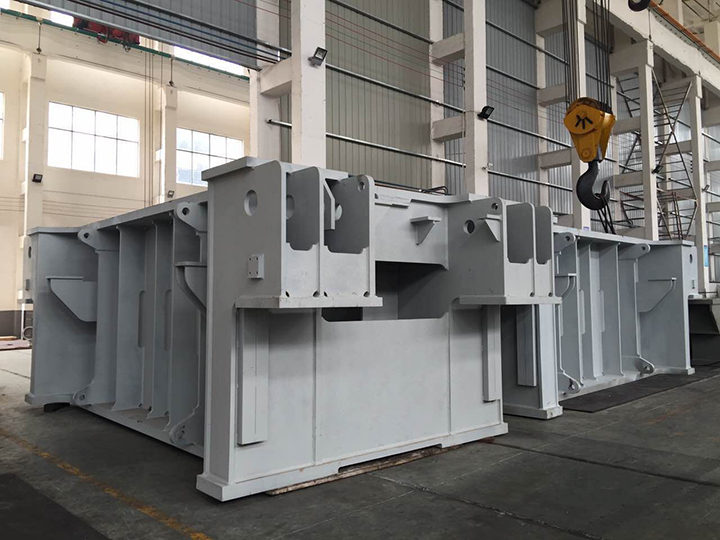
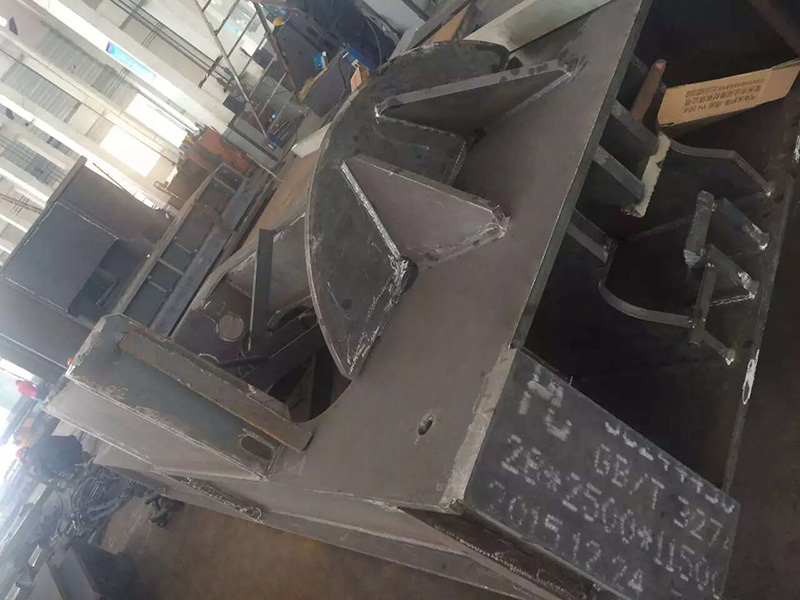
In the hierarchy of modern manufacturing, welding is not merely a process of joining metals; it is the skeletal framework upon which heavy industry, aerospace, and infrastructure are built. Welded fabrication—the comprehensive process encompassing cutting, fitting, welding, and post-weld treatment—transforms raw metallurgical stock into load-bearing structures and precision assemblies. This article delves into the advanced methodologies, metallurgical challenges, and quality assurance protocols that define professional welded component manufacturing.
1. Material Science and Weldability
The foundation of any successful welding project lies in understanding the base material's metallurgical properties. Not all metals are created equal in the eyes of a welder.
•
Carbon Steels: The most common material, ranging from mild steel (easily weldable) to high-carbon and alloy steels (requiring preheating and post-heating to prevent cracking due to increased hardness and reduced ductility).
• Stainless Steels: Austenitic grades (e.g., 304, 316) are generally weldable but prone to sensitization (carbide precipitation) if cooled too slowly, leading to intergranular corrosion. Ferritic and martensitic grades require careful heat input control to maintain corrosion resistance and toughness.
• Aluminum Alloys: Highly thermal conductive and oxide-prone. Welding aluminum requires meticulous surface cleaning (removal of the refractory Al₂O₃ layer) and often AC TIG welding to break up the oxide during the process.
• Exotic Alloys: Materials like Inconel, Hastelloy, and Titanium demand inert atmosphere chambers or trailing shields to prevent atmospheric contamination (oxygen and nitrogen absorption) which causes embrittlement.
2. Advanced Welding Methodologies
While traditional Stick (SMAW) welding has its place, industrial fabrication relies on high-efficiency, high-precision processes:
Process Principle Industrial Application
GMAW (MIG/MAG) Continuous wire feed with shielding gas. High-speed fabrication of structural steel, automotive assembly.
GTAW (TIG) Non-consumable tungsten electrode, precise heat input. Aerospace, thin-walled stainless/aluminum, root passes on pipelines.
FCAW Flux-cored wire, slag protection. Heavy structural welding, shipbuilding, outdoor construction (wind tolerant).
SAW Submerged arc under granular flux. Longitudinal seam welding of pressure vessels, thick plate fabrication.
Robotic/Laser Welding Automated or high-energy beam focusing. Mass production, electronics, battery tabs, and high-precision seams.
3. The Four Pillars of Fabrication Integrity
Professional welding fabrication extends far beyond the moment the arc is struck. It involves a sequence of critical stages:
Stage 1: Pre-Heat Treatment (PHT)
For thick sections or high-strength alloys, preheating is mandatory. It slows the cooling rate, reduces thermal stress, and drives off moisture, preventing hydrogen-induced cold cracking.
Stage 2: Fit-Up and Tacking
Precision alignment is crucial. Fixtures, jigs, and strongbacks are used to control distortion. Tack welds must be of sound quality, as they often become part of the final weld.
Stage 3: Welding Execution and Technique
Parameters such as voltage, amperage, travel speed, and interpass temperature must be strictly controlled. Techniques like stringer beads versus weaving are chosen based on joint geometry and material thickness.
Stage 4: Post-Weld Heat Treatment (PWHT)
Also known as stress relieving, this process involves heating the welded assembly to a specific temperature (below the transformation temperature) and holding it to reduce residual stresses induced by non-uniform heating and cooling.
4. Distortion Control and Residual Stress Management
One of the greatest challenges in welding is managing the physical deformation of the workpiece. Heat input causes expansion, while rapid cooling causes contraction, leading to warping.
• Neutralizing Sequences: Welders use specific sequences (e.g., backstep, cascade, or symmetrical welding) to balance heat input around the neutral axis of the part.
• Mechanical Correction: After welding, parts may undergo peening (mechanical hammering) or press correction to restore flatness and dimensional accuracy.
• Vibration Stress Relief (VSR): A modern alternative to thermal stress relief, using sub-harmonic vibrations to redistribute residual stresses.
5. Quality Assurance and Non-Destructive Testing (NDT)
In critical applications (pressure vessels, bridges, aircraft), visual inspection is insufficient. Rigorous NDT methods are employed:
1. Ultrasonic Testing (UT): Uses high-frequency sound waves to detect internal flaws and measure thickness.
2. Radiographic Testing (RT): X-rays or Gamma rays create images of the weld interior to reveal porosity, inclusions, or cracks.
3. Magnetic Particle Testing (MT): Used for ferromagnetic materials to detect surface and near-surface discontinuities.
4. Dye Penetrant Testing (PT): A liquid penetrant is drawn into surface-breaking defects, making them visible under UV light.
6. The Digital Transformation: WPS, PQR, and Welding Codes
Professional fabrication is governed by documentation and standards.
• WPS (Welding Procedure Specification): A formal document detailing the exact parameters (materials, positions, preheat, amperage) required to make a weld.
• PQR (Procedure Qualification Record): The record of tests performed to prove that the WPS produces a sound weld.
• Codes: Compliance with standards such as AWS D1.1 (Structural Steel), ASME Section IX (Boiler and Pressure Vessel), or ISO 3834 is mandatory for legal and safety compliance.
Conclusion
Welded fabrication is a sophisticated interplay of physics, chemistry, and mechanical engineering. From the selection of filler metals to the microstructural analysis of the Heat-Affected Zone (HAZ), every step determines the final integrity of the product. As industries move toward lighter, stronger, and more complex materials, the science of welding continues to evolve, demanding higher levels of precision, automation, and metallurgical expertise.