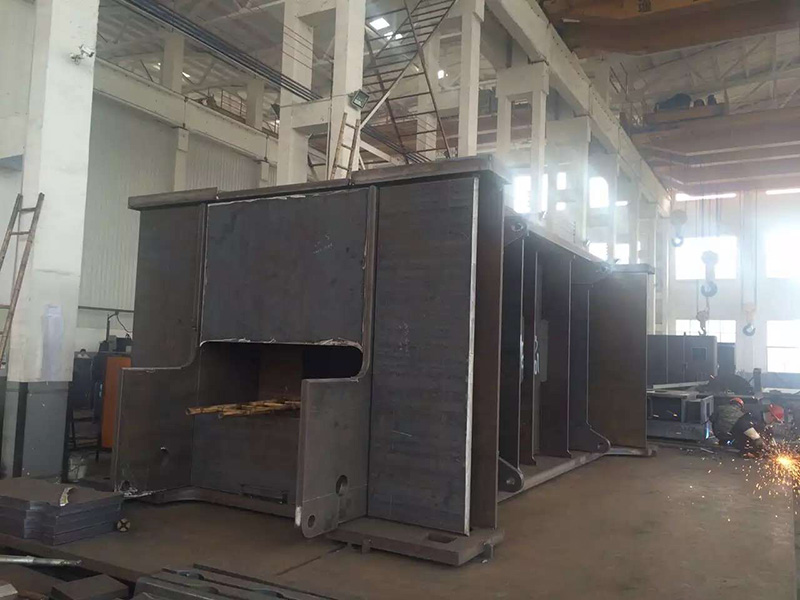
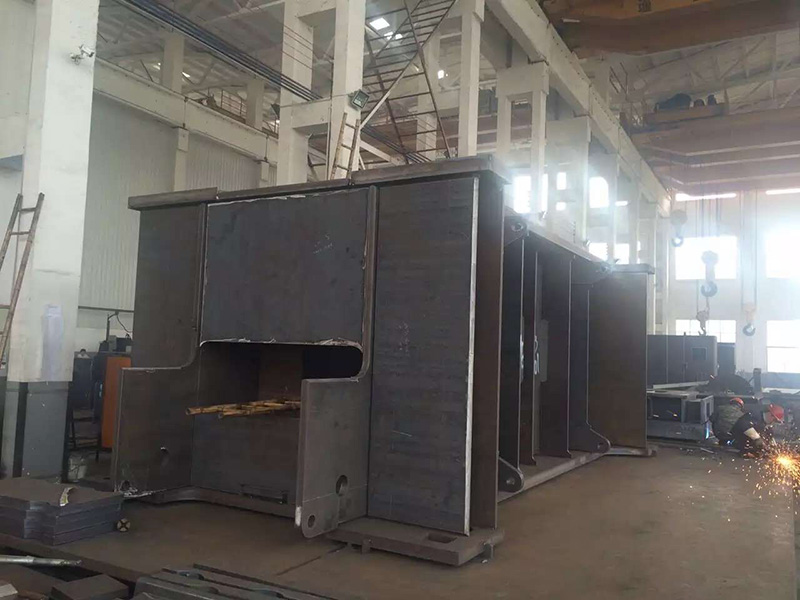
Post weld machining for weldments is an indispensable finishing process in modern metal fabrication and precision engineering. As a core post-welding procedure, it refers to the systematic machining treatment of finished welded assemblies (known as weldments) to correct welding-induced deviations, refine dimensional accuracy, optimize surface quality, and polish critical functional features. While welding successfully joins multiple discrete metal components into a unified structural unit, the welding process inevitably causes thermal deformation, residual stress, uneven weld beads, and surface defects. Without professional post weld machining, most weldments cannot meet strict industrial design tolerances, assembly standards, and service performance requirements.
What Are Weldments and Why Do They Need Post-Weld Machining?
A weldment is an integrated metal structure fabricated by welding two or more metal parts together. Common weldment forms include welded frames, support brackets, pipe assemblies, mechanical bases, and structural steel components widely used in machinery, construction, aerospace, and automotive industries. Unlike single-piece machined parts, weldments undergo drastic thermal cycling during welding, which triggers a series of unavoidable manufacturing flaws.
Welding heat input leads to material expansion and contraction, resulting in bending, twisting, and dimensional offset of weldments. Meanwhile, weld spatter, uneven weld beads, surface porosity, and slag residues will compromise surface flatness and assembly precision. Additionally, residual welding stresses may cause structural deformation or fatigue failure during long-term operation. Post weld machining serves as the final correction and optimization step to eliminate these defects, ensuring weldments conform to precise design specifications and functional standards.
Core Benefits of Post Weld Machining for Weldments
Investing in professional post weld machining delivers multiple technical and commercial advantages for welded component manufacturing, making it a standard procedure for high-precision industrial production.
1. Ensures Strict Dimensional Tolerances. Welding deformation usually creates minor or major dimensional errors that exceed acceptable industrial tolerance ranges. Post-weld milling, turning, grinding, and drilling precisely calibrate key dimensions, mounting holes, and fitting surfaces, enabling perfect matching and assembly with other mechanical parts. This is critical for precision equipment and automated production systems that require micron-level accuracy.
2. Improves Surface Finish and Aesthetics. Raw weld surfaces are rough, irregular, and covered with spatter and oxide layers. Post weld machining removes excess weld beads, polishes welding seams, and smooths rough areas, achieving uniform, clean surface finishes. A refined surface not only enhances product appearance but also prevents dust accumulation, corrosion, and wear during equipment operation.
3. Eliminates Hidden Structural Risks. Welding residual stress and tiny surface cracks are invisible hazards that weaken weldment structural stability. Targeted machining removes defective surface layers and cooperates with stress relief treatment to reduce internal stress, improving the overall structural strength, fatigue resistance, and service life of weldments.
4. Meets Industry Compliance Standards. Aerospace, automotive, hydraulic, and precision machinery industries have strict quality standards for welded structures. Standardized post weld machining helps manufacturers pass quality inspections, meet industry certification requirements, and reduce product rejection rates.
Common Post-Weld Machining Processes for Weldments
According to different weldment materials, structural characteristics, and precision requirements, manufacturers adopt diverse post-weld machining techniques to achieve optimal finishing results.
Weld Grinding and Polishing. This is the most basic and widely used post-weld process. It uses abrasive tools such as flap discs and sandpaper to remove weld spatter, smooth weld beads, and blend welding seams with the base metal. Strict operational standards control base metal removal within 5% of material thickness or 0.2mm to avoid damaging the original structural performance of weldments. It is suitable for stainless steel, carbon steel, and aluminum alloy weldments.
Precision Milling and Drilling. For weldments requiring high-precision assembly, CNC milling and drilling are applied to machine mounting planes, positioning holes, and key grooves. This process corrects welding deformation errors and ensures the flatness, parallelism, and perpendicularity of critical structural features.
Turning and Fine Finishing. For tubular and circular welded assemblies, lathe turning optimizes outer diameter and inner hole accuracy, achieving tight tolerance matching for rotary mechanical parts.
Post-Weld Heat Treatment (PWHT) Assisted Machining. For high-strength steel weldments, PWHT is conducted before final precision machining to eliminate residual welding stress, stabilize material structure, and prevent secondary deformation after machining.
Key Best Practices for High-Quality Post Weld Machining
To maximize weldment quality and consistency, manufacturers need to follow standardized post-weld machining best practices throughout production.
First, reserve reasonable machining allowances (0.030 to 0.125 inches) before formal welding according to weldment geometry and weld size, providing sufficient space for subsequent dimensional correction without affecting structural integrity. Second, select matched machining tools and abrasives based on workpiece materials—use special non-ferrous abrasives for stainless steel and aluminum weldments to avoid surface contamination.
Third, maintain standardized operation angles during grinding and polishing (15–25 degrees for contour and fillet welds) to ensure uniform material removal and smooth seam blending. Finally, conduct full quality inspection after machining, including dimensional tolerance testing, surface defect detection, and flatness verification, to guarantee all weldments meet design and industrial standards.
Industrial Applications of Machined Weldments
Post-weld machined weldments are widely applied in high-demand industrial scenarios where precision, stability, and durability are non-negotiable. In mechanical manufacturing, machined welded frames and bases ensure equipment operation stability. In the automotive industry, precision welded structural parts improve vehicle safety and assembly accuracy. In aerospace and hydraulic systems, finely finished weldments prevent leakage and structural failure under extreme working conditions. Additionally, construction steel structures, marine equipment, and medical machinery also rely on standardized post weld machining to ensure product reliability.
Final Thoughts
Post weld machining is not merely a supplementary finishing step but a core procedure that determines the final quality, performance, and service life of weldments. By eliminating welding deformation, repairing surface defects, optimizing dimensional accuracy, and releasing residual stress, professional post-weld machining transforms rough welded assemblies into high-precision, high-stability industrial components. For manufacturers pursuing high-quality welded products, standardized, precise post weld machining is an essential part of optimizing production processes and enhancing market competitiveness.