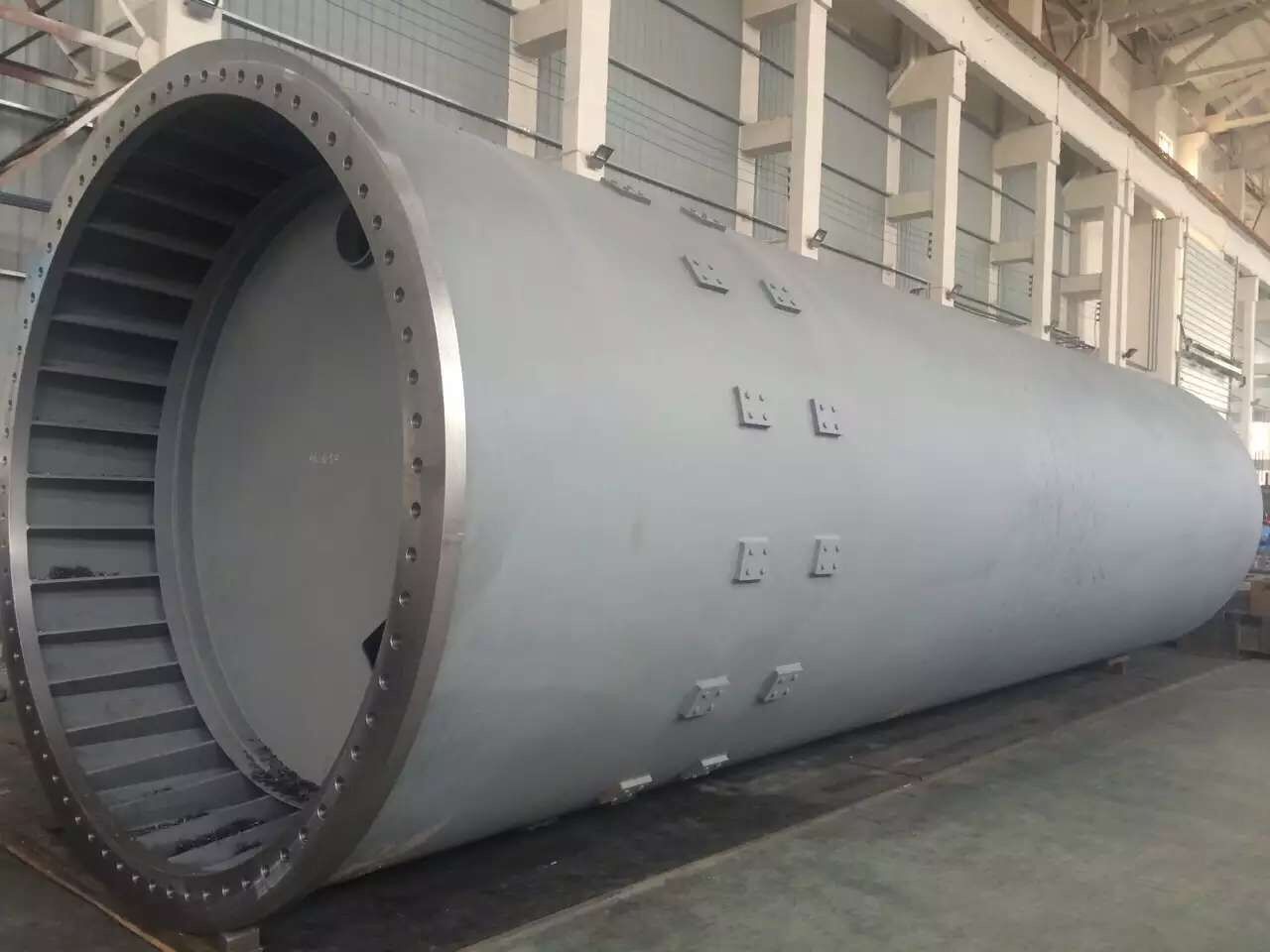
Why Is Welding the Most Specified Fabrication Process?
Most custom fabricated parts (frames, brackets, housings, structural weldments) are built by welding pre-machined or cut components. Welding is fast, adaptable to complex geometries, and produces strong joints when properly executed. The cost is the variability of the process — the result depends on the welder, the procedure, the environment, and the inspection.
A custom fabricator that ships parts to a regulator, an OEM, or a critical industry must demonstrate that the welding was performed by qualified welders, to qualified procedures, with documented inspection. A drawing that says "weld per AWS D1.1" without specifying the procedure is a drawing that the shop will interpret differently from the buyer's expectation.
The processing of various weldments capability at Yuqing includes welding to common standards; the engineer should specify which standard, which procedure, and which inspection.
What Are the Four Primary Welding Processes?
|
Process |
Heat Source |
Shielding |
Typical Thickness |
Typical Application |
|
SMAW (Shielded Metal Arc Welding, "stick") |
Electric arc |
Flux coating |
3–50 mm |
Field welding, thick sections, repair |
|
GMAW (Gas Metal Arc Welding, "MIG/MAG") |
Continuous wire arc |
External gas |
1–30 mm |
Production welding, structural steel |
|
GTAW (Gas Tungsten Arc Welding, "TIG") |
Non-consumable tungsten arc |
External gas (typically argon) |
0.5–10 mm |
Precision welding, stainless, aluminum |
|
Laser welding |
Focused laser beam |
Typically gas |
0.1–10 mm |
High-speed, low-distortion, automation |
Each process has a defined range of application and a defined set of standards. The drawing should specify the process and the standard, not just "weld."
How Is SMAW Selected?
SMAW uses a consumable electrode coated with flux. The flux melts to form a gas shield and a slag that protects the weld from atmospheric contamination. SMAW is the original "stick welding" process.
Strengths:
Portable equipment (no shielding gas required).
Works in outdoor and dirty environments.
High deposition rate for thick sections.
Tolerant of fit-up variation.
Limitations:
Slower than MIG for thin sections.
Requires slag removal between passes.
More spatter and smoke.
Lower quality than TIG for precision work.
Typical applications: heavy structural steel, field erection, repair welding, thick plate (over 10 mm).
Standards: AWS D1.1 (structural), ASME Section IX (procedure qualification), API 1104 (pipeline).
How Is GMAW (MIG) Selected?
GMAW uses a continuous consumable wire electrode and an external shielding gas (typically argon/CO2 mix for steel, pure argon for aluminum and stainless).
Strengths:
Continuous wire feed allows long welds without interruption.
Higher deposition rate than SMAW.
Less spatter, cleaner welds.
Easier to automate.
Limitations:
Requires shielding gas (cannot be used in strong wind without shelter).
Less tolerant of dirty or rusty material than SMAW.
Equipment is more complex and less portable.
GMAW has variants:
Short-circuit transfer (GMAW-S): low heat input, suitable for thin sections.
Globular transfer: higher heat, suitable for thick sections.
Spray transfer: high heat, requires >3 mm thickness.
Pulse spray (GMAW-P): combines low heat input with high deposition.
Typical applications: structural steel, production welding, sheet metal, robotic welding.
Standards: AWS D1.1, AWS D1.2 (aluminum), ASME Section IX.
How Is GTAW (TIG) Selected?
GTAW uses a non-consumable tungsten electrode and an external shielding gas (typically argon or argon/helium). The filler metal, if used, is fed separately.
Strengths:
Highest quality welds, especially in stainless and aluminum.
Precise control of heat input.
No spatter, no slag.
Suitable for thin sections and exotic materials.
Limitations:
Slower than MIG or SMAW.
Requires high operator skill.
Equipment is expensive.
Sensitive to contamination (clean material required).
Typical applications: stainless steel fabrication, aluminum structures, aerospace, food and pharmaceutical, precision components.
Standards: AWS D1.6 (stainless), AWS D1.2 (aluminum), ASME Section IX.
How Is Laser Welding Selected?
Laser welding uses a focused laser beam (typically fiber laser or CO2 laser) to melt and join the material. The beam is delivered through a fiber or mirror system and focused to a small spot.
Strengths:
Very high welding speed (m/min, not mm/min).
Low heat input, low distortion.
Deep penetration in thick sections.
Easily automated.
Narrow weld, low HAZ.
Limitations:
Equipment is expensive (laser source, optics, controls).
Requires precise joint fit-up (typically < 0.1 mm gap).
Sensitive to reflective materials (aluminum, copper).
Safety requirements for laser radiation.
Typical applications: high-volume production welding, automotive body-in-white, battery tab welding, deep-penetration welding of thick sections.
Standards: AWS D17.1 (aerospace fusion welding), AWS C1.1 (resistance welding, related), various OEM standards.
How Is the Joint Type Selected?
The joint type determines the process and the procedure:
|
Joint Type |
Description |
Typical Process |
Notes |
|
Butt joint |
Two members in the same plane, joined edge-to-edge |
All processes |
Most efficient use of material |
|
Lap joint |
Two members overlapping |
MIG, spot, laser |
Common in sheet metal |
|
T-joint |
One member perpendicular to another |
All processes |
Common in frames and brackets |
|
Corner joint |
Two members at right angles |
All processes |
Common in enclosures |
|
Edge joint |
Parallel members joined at edges |
MIG, TIG |
Limited to thin sections |
The drawing should specify the joint type, the weld type (fillet, groove, plug, slot), and the weld size (throat, leg length, length). A drawing that specifies only "weld" without these details is incomplete.
What Is a WPS (Welding Procedure Specification)?
A WPS is the documented procedure that the welder follows. It includes:
Process (SMAW, GMAW, GTAW, laser).
Material group (e.g., ASTM A36, ASTM A240 304L).
Material thickness range.
Joint type and preparation.
Filler metal specification.
Shielding gas composition and flow rate.
Electrical parameters (voltage, current, travel speed).
Preheat and interpass temperature.
Position (flat, horizontal, vertical, overhead).
Acceptance criteria.
A WPS is qualified by testing (typically a test plate is welded, then mechanically tested) before production use. The qualification is recorded in a Procedure Qualification Record (PQR).
For non-critical work, a "standard" WPS may be acceptable. For critical work (pressure vessels, structural steel per AWS D1.1, nuclear per ASME Section III), a qualified WPS is mandatory.
How Is Welder Qualification Managed?
A welder's qualification certifies that the welder can produce sound welds in a specific process, material, thickness range, and position. The qualification is granted by an independent body (e.g., AWS, ASME) or by the employer (with documentation).
A welder qualification:
Specifies the process (e.g., GMAW).
Specifies the material group (e.g., carbon steel to carbon steel).
Specifies the thickness range (e.g., 3–12 mm).
Specifies the position (e.g., flat and horizontal).
Expires after a defined period (typically 6–12 months without production welding, or per the applicable standard).
The shop must maintain a list of qualified welders and assign them to operations within their qualification. A drawing that specifies a critical weld must be welded by a qualified welder for the specific process, material, and thickness.
What Is Filler Metal Selection?
Filler metal is the consumable that is melted into the joint. The selection depends on the base material, the service conditions, and the applicable standard:
|
Base Material |
Filler Metal |
Standard |
Notes |
|
ASTM A36 to A36 |
E7018 |
AWS A5.1 |
Most common structural steel |
|
ASTM A36 to A516 |
E7018 or E8018 |
AWS A5.1 |
For pressure vessel service |
|
304 stainless |
ER308L |
AWS A5.9 |
Low carbon for corrosion resistance |
|
316 stainless |
ER316L |
AWS A5.9 |
Low carbon, Mo for chloride resistance |
|
6061 aluminum |
ER4043 or ER5356 |
AWS A5.10 |
ER4043 for fluidity, ER5356 for strength |
|
Titanium Grade 5 |
ERTi-5 |
AWS A5.16 |
Match the base metal |
A drawing that specifies the filler metal ensures consistency between production welds and qualification welds.
What Are Preheat and Interpass Temperature Requirements?
Preheat is the temperature to which the base metal must be heated before welding. It is required for:
High-carbon steels (to prevent cracking in the heat-affected zone).
Thick sections (to reduce cooling rate).
High-strength steels (to prevent hydrogen cracking).
Preheat is specified on the WPS and verified with a temperature stick or pyrometer before welding begins. Interpass temperature is the maximum temperature allowed between weld passes; it is also specified on the WPS.
Common preheat temperatures:
|
Material |
Thickness |
Preheat |
|
ASTM A36 |
Any |
Usually none |
|
ASTM A572 Gr 50 |
Up to 25 mm |
50–100 °C |
|
ASTM A514 (T-1) |
Any |
150–200 °C |
|
304 stainless |
Any |
Usually none |
|
4140 alloy |
Any |
150–250 °C |
What Is Post-Weld Heat Treatment (PWHT)?
PWHT is a controlled heating and cooling cycle applied after welding to relieve residual stress and temper the weld and heat-affected zone. It is required for:
Thick sections (to reduce residual stress).
High-strength steels (to temper the HAZ).
Service conditions involving fatigue, stress corrosion, or low-temperature operation.
PWHT is typically performed at 595–705 °C for carbon steels, held for 1 hour per inch of thickness, then slowly cooled. The procedure is documented on the WPS and recorded in the production records.
What Are the Common Welding Defects?
|
Defect |
Cause |
Significance |
|
Porosity |
Gas trapped in the weld |
Reduces cross-section, may be acceptable per code |
|
Undercut |
Groove at the weld toe from excessive current |
Stress concentration |
|
Lack of penetration |
Weld does not reach the root |
Significant reduction in strength |
|
Lack of fusion |
Weld metal does not fuse to the base metal |
Significant reduction in strength |
|
Cracks (hot, cold, HAZ) |
Various metallurgical causes |
Significant, often reject |
|
Slag inclusion |
Flux trapped in the weld |
Reduces strength |
|
Spatter |
Droplets on the surface |
Cosmetic, not a defect per code |
|
Distortion |
Thermal expansion/contraction |
Often repaired by straightening |
Each defect has an acceptance criterion defined by the applicable code. The shop must inspect welds per the code's criteria and document the results.
How Are Welds Inspected?
Weld inspection methods include:
Visual inspection (VT): surface defects, profile, dimensions. Required for all welds.
Dye penetrant (PT): surface-breaking defects. Used for non-ferrous and stainless.
Magnetic particle (MT): surface and near-surface defects. Used for ferromagnetic materials.
Ultrasonic (UT): subsurface defects. Used for thick sections, critical welds.
Radiographic (RT): internal defects. Used for critical welds, pressure vessels.
Eddy current (ET): surface defects, conductive materials. Less common for welds.
The inspection method and acceptance criterion are specified in the drawing and the applicable code. A drawing that specifies "weld per AWS D1.1" without further inspection requirements leaves the inspection to the code's default.
How Is a Welder Qualified in Production?
Production welders are qualified by:
Welding a test plate per the WPS.
Inspecting the test plate visually and per the applicable method (VT, MT, UT, RT).
Mechanical testing (tensile, bend, impact) for critical welds.
Documenting the test results in a PQR.
Maintaining the qualification with periodic production welds or re-qualification.
A welder who has not welded in the qualified process/material/thickness for 3 months (or per the applicable code) must re-qualify.
How Is Welding Productivity Calculated?
Welding productivity is the time to complete a weld of a given size, typically in mm/min or in/hr of weld deposited:
|
Process |
Typical Deposition Rate |
|
SMAW |
0.5–2 kg/h |
|
GMAW (short-circuit) |
1–3 kg/h |
|
GMAW (spray) |
3–8 kg/h |
|
GMAW (pulse) |
2–5 kg/h |
|
GTAW |
0.3–1.5 kg/h |
|
Laser welding |
1–5 kg/h (varies with joint) |
The cycle time for a fabricated weldment is dominated by the welding time. Selecting the right process (laser vs MIG vs SMAW) can change the cycle time by 5× to 10×.
What Is the Cost Comparison of Welding Processes?
|
Process |
Relative Cost per Weld |
|
SMAW |
1× (baseline) |
|
GMAW |
1.5× (faster, less rework) |
|
GTAW |
3× (slower, more skilled) |
|
Laser welding |
4× (equipment cost, automation) |
The cost is not just the welding time. GTAW produces higher quality welds that may not need post-machining; laser welding eliminates downstream processes for high-volume production.
What Is the Trend in Welding Technology?
The trend is toward:
Higher deposition rate processes (multi-wire, tandem arc, hot-wire GTAW).
Greater automation (robotic welding, seam tracking, adaptive control).
Digital weld monitoring (arc length, current, travel speed, heat input).
Filler metal developments (higher strength, lower hydrogen, weather-resistant).
Friction stir welding for aluminum (solid-state, no fusion).
Hybrid laser-arc welding (combines laser penetration with MIG gap-bridging).
The trend supports the same objective: faster, more consistent, higher quality welds with less dependence on operator skill.
Conclusion
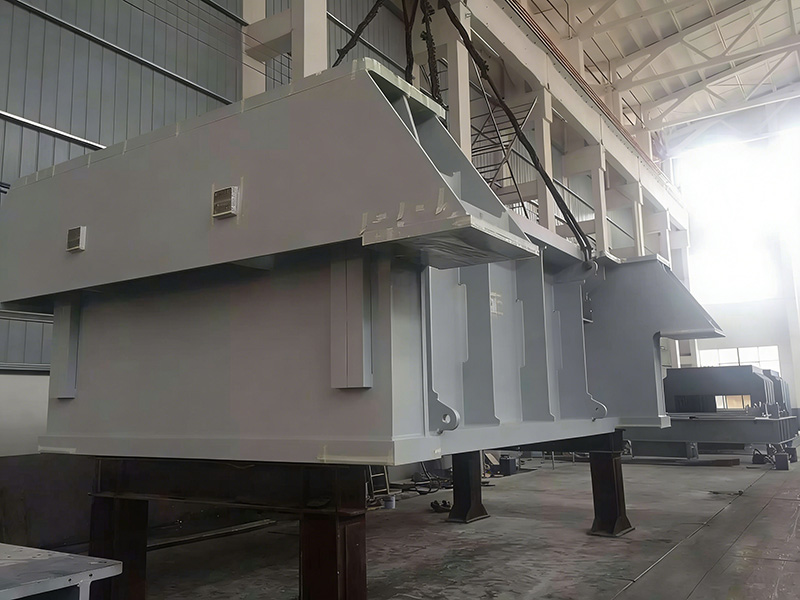
Welding process selection is the engineering decision that defines how the parts are joined, at what quality, and at what cost. The selection names the process, references the applicable standard (AWS D1.1, ASME Section IX, etc.), defines the WPS and the filler metal, and ties the inspection to the consequence of failure. The processing of various weldments capability at Yuqing supports a range of processes and standards; engineers should specify the process, the standard, the inspection, and the acceptance criteria explicitly so the shop can plan the work and the buyer can verify the result.
Frequently Asked Questions
What is the difference between MIG and TIG?
MIG (GMAW) uses a continuous consumable wire and is faster but less precise. TIG (GTAW) uses a non-consumable tungsten electrode and is slower but more precise. MIG is used for production welding; TIG is used for precision, stainless, and aluminum.
What is the most common welding standard?
AWS D1.1 (Structural Welding Code — Steel) is the most common for structural steel fabrication. ASME Section IX is the standard for procedure and welder qualification for pressure equipment. Other standards apply to specific industries (API 1104 for pipelines, AWS D17.1 for aerospace).
What is a WPS?
A Welding Procedure Specification is the documented procedure the welder follows. It includes the process, the materials, the joint type, the filler metal, the parameters, the position, and the acceptance criteria. The WPS is qualified by testing and recorded in a PQR.
What is the difference between GMAW-S, GMAW-Spray, and GMAW-Pulse?
These are transfer modes in MIG welding. Short-circuit (GMAW-S) uses low current for thin sections. Spray uses high current for thick sections. Pulse combines low heat input with high deposition by pulsing the current. Each has a defined range of application.
How is weld distortion controlled?
Distortion is controlled by balanced welding (welding from both sides toward the middle), back-step welding, clamping during welding, and sometimes post-weld straightening (heating the high-stress side to cause it to expand and counter the distortion).
What is the difference between a fillet weld and a groove weld?
A fillet weld is triangular in cross-section, joining two perpendicular members. A groove weld is in a prepared groove, joining two members in the same plane. Groove welds are stronger for thick sections; fillet welds are standard for structural connections.
Can dissimilar metals be welded?
Yes, with appropriate filler metal and procedure. Common combinations include carbon steel to stainless (using a 309L filler), carbon steel to aluminum (using a bimetallic transition insert), and stainless to stainless (using a higher-alloy filler). The WPS must be qualified for the dissimilar joint.
What is the difference between a CWI and a welding inspector?
A CWI (Certified Welding Inspector) is an AWS-certified individual who inspects welds and verifies conformance to the applicable code. A welding inspector may be a CWI or may have other credentials. For critical work, a CWI is required.
What is the role of preheat in welding?
Preheat reduces the cooling rate of the weld and the heat-affected zone, preventing hydrogen cracking in high-carbon or thick sections. It is specified on the WPS and verified before welding begins.
How is weld quality verified for a critical service?
Critical welds (pressure vessels, bridges, nuclear) are inspected by a combination of visual, NDT (PT, MT, UT, RT), and mechanical testing. The specific methods and acceptance criteria are defined by the applicable code. Documentation includes the WPS, the PQR, the welder qualification, and the inspection records.