China vs India CNC Machining (2026)
|
Metric |
China |
India |
Source |
|
Annual CNC machining revenue |
$85 billion |
$18 billion |
Industry reports 2025 |
|
Number of CNC machining factories |
~50,000 |
~12,000 |
Industry estimates |
|
AS9100 certified factories |
~600 |
~80 |
Public certification data |
|
IATF 16949 certified factories |
~1,200 |
~200 |
Public certification data |
|
Average hourly rate, 3-axis (USD) |
$25–$40 |
$20–$35 |
Industry survey 2025 |
|
Average hourly rate, 5-axis (USD) |
$45–$75 |
$40–$70 |
Industry survey 2025 |
|
Average lead time, prototype |
7–15 days |
10–20 days |
Yuqing customer data |
|
English fluency in engineering staff |
Moderate |
High |
Industry observation |
|
Top export markets |
USA, Germany, Japan, Korea, Mexico |
USA, UAE, Germany, UK |
Trade data 2025 |
|
Material cost, aluminum 6061 |
$0.80/in³ |
$0.95/in³ |
Yuqing procurement |
|
Material cost, SS 304 |
$1.40/in³ |
$1.65/in³ |
Yuqing procurement |
|
Material cost, Ti-6Al-4V |
$8.00/in³ |
$9.20/in³ |
Yuqing procurement |
China's Strengths
1. Manufacturing ecosystem density
Within a 50 km radius of Changzhou, you can find:
Aluminum smelters and extrusion houses
Steel service centers with every grade
Titanium distributors
Heat treatment facilities (vacuum, atmosphere, induction)
Surface finish shops (anodizing, plating, powder coating, painting)
Tooling suppliers (cutting tools, fixtures, jigs)
Sheet metal fabrication
Electronics assembly
This density doesn't exist in India at the same scale. When a Chinese shop needs a missing capability (e.g., a specific heat treatment), they can get it in 1–2 days. In India, this often takes 1–2 weeks.
2. Large-format capability
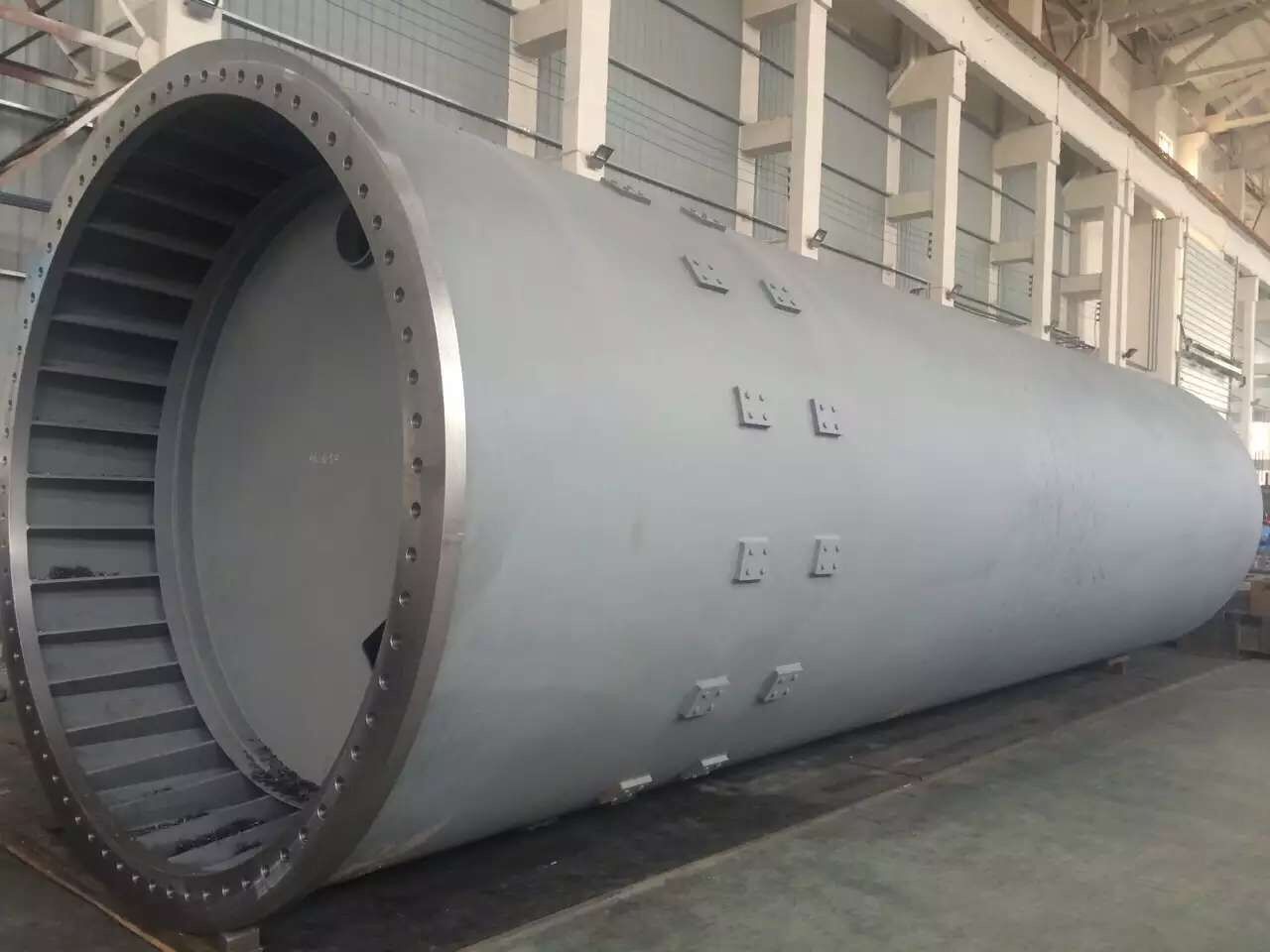
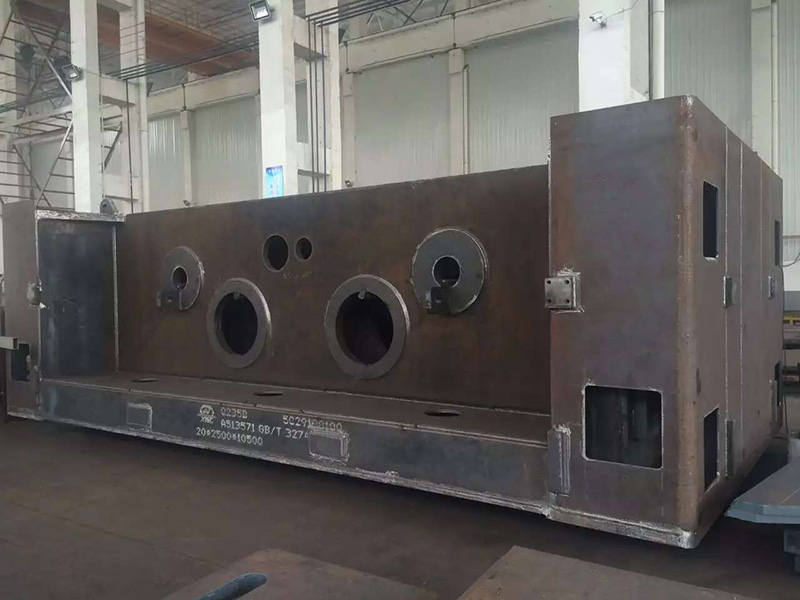
For parts larger than 1 meter, China dominates. Gantry machining centers (6+ meter envelope), floor-type boring machines (Φ200+ mm), and large turning centers are widely available. Yuqing runs a 6000 × 13000 × 3000 mm gantry — one of many in the Yangtze River Delta.
Indian shops typically max out at 1.5 × 1.5 m envelope. For wind energy, mining, oil & gas, and large aerospace parts, this means Indian shops simply can't bid on the work.
3. Mature export logistics
China's ports, freight forwarders, customs brokers, and Incoterms expertise are battle-tested. Sea freight from Shanghai to Los Angeles: 14–18 days, with daily sailings. India has fewer direct sailings, and customs can be slower.
4. Capacity at scale
For production runs >1,000 pieces, Chinese factories have the equipment density to handle volume. Many run 24/7 shifts. Indian factories are typically single-shift, with 30–50% lower machine utilization.
5. Material availability
China is the world's largest consumer and processor of aluminum, steel, and rare earths. Stock delivery is typically 1–3 days for any standard grade. India imports a significant portion of raw materials, adding 2–4 weeks lead time and 10–20% cost.
India's Strengths
1. Engineering talent density
India graduates ~1.5 million engineers per year (vs China's ~1.3 million). The English fluency is much higher — making complex engineering communication easier. For R&D-heavy projects, software-integrated parts, or projects requiring tight collaboration with your engineering team, India often wins.
2. Software and IT integration
Indian shops are typically stronger in:
CAD/CAM automation
ERP integration with customer systems
Digital twin / IoT for shop floor monitoring
ITAR / EAR compliance for defense work
This is partly a reflection of India's IT industry strength bleeding into manufacturing.
3. Aerospace and defense
India's aerospace sector (HAL, Tata Advanced Systems, Mahindra Aerospace) has driven significant CNC investment for defense suppliers. AS9100-certified Indian shops have grown 4× in the last 5 years. For aerospace parts destined for ITAR/EAR restricted programs, India sometimes offers supply chain advantages.
4. Lower initial cost for very small runs
For 1–5 piece prototypes, Indian shops can be 5–15% cheaper due to lower labor cost. The savings disappear at higher volumes when machine amortization matters more.
5. Time zone alignment with Europe
For European buyers, India is in a similar time zone (4–5 hours ahead of CET), making real-time engineering collaboration easier. China is 6–8 hours ahead of CET, which creates some friction.
When to Choose China
Production runs >100 pieces (especially >1,000)
Parts larger than 1 meter
Tight tolerances on large structural components
Cost is the primary driver
Standard metals (aluminum, steel, stainless, brass, copper)
Fast material procurement required
Multiple secondary processes (heat treat, surface finish)
When to Choose India
R&D-heavy projects requiring close engineering collaboration
Software-integrated parts (sensors, electronics integration)
Aerospace/defense projects with ITAR/EAR considerations
Very small prototype runs (1–5 pieces)
Complex engineering with English-language specifications
Time zone alignment with Europe
Real Cost Comparison (Yuqing Data)
We helped a US buyer compare quotes for the same part (250-piece run of structural aluminum brackets):
|
Factor |
China (Yuqing) |
India (comparable shop) |
Difference |
|
Machining time |
18 min × $28/hr = $8.40 |
22 min × $25/hr = $9.17 |
China -8% |
|
Setup cost |
$90 |
$110 |
China -18% |
|
Anodizing |
$2.50 (Type II, locally available) |
$4.50 (Type II, sourced from China anyway) |
China -44% |
|
Inspection |
$1.20 (CMM in-house) |
$2.00 (sent to third-party lab) |
China -40% |
|
Total per piece |
$23.10 |
$28.97 |
China -20% |
|
Lead time |
28 days (factory + sea) |
38 days (factory + sea + Indian customs) |
China -10 days |
The China quote was 20% cheaper and 10 days faster. The buyer went with China.
Hybrid Sourcing
The most sophisticated buyers use both countries strategically:
Engineering and prototypes from India — for fast iteration and close collaboration
Production runs from China — for cost and capacity
This approach captures India's engineering strength and China's manufacturing scale. We work with several Indian engineering partners who handle customer-facing design and prototyping; once the design is frozen, production transfers to our Changzhou shop.
Frequently Asked Questions
Is CNC machining in China cheaper than India?
For most production parts (>100 pieces), yes — China is typically 15–30% cheaper due to lower material costs, denser supply chain, and higher machine utilization. For prototypes and R&D-heavy work, India can be competitive.
Is CNC machining in India cheaper than China?
For very small runs (1–5 prototypes) and R&D-heavy work, India is sometimes 5–15% cheaper due to lower labor costs. The advantage disappears at higher volumes.
Which country has better quality — China or India?
Both countries have top-tier factories with ISO 9001 / AS9100 / IATF 16949 certifications. Quality depends on the specific factory, not the country. Verify with audits, certifications, and prototype runs.
Which is better for aerospace CNC machining — China or India?
For commercial aerospace parts, China has more capacity and certified factories (~600 AS9100 vs ~80 in India). For defense aerospace with ITAR/EAR restrictions, India may have supply chain advantages. For large aerospace structural parts, China dominates.
Which is faster — China or India?
China is typically 20–40% faster on production parts due to material availability, capacity density, and shipping routes. Prototypes are similar in lead time (7–15 days for both).
Can I split production between China and India?
Yes — this is increasingly common. Use India for engineering and prototyping, China for production scale. We coordinate with several Indian engineering partners for hybrid projects.
Which country has better communication — China or India?
India has better English fluency in engineering roles. Chinese factories have improved dramatically over the last decade, but India's advantage in technical English is real. Yuqing's sales and engineering staff all speak English; we also support German, French, Spanish, Russian, Japanese, and Arabic.
Do Chinese factories respect intellectual property?
Top-tier Chinese factories (with AS9100, IATF 16949, and certifications) take IP seriously — they have contractual obligations and audit trails. NDAs are standard. Lower-tier trading companies may not. Verify IP protection before sending proprietary designs.