A part that measures perfectly and corrodes in six months has not been made correctly. Post-processing is the stage where corrosion resistance, wear resistance and appearance are decided — and it is the stage most often squeezed when a delivery date moves.
This article covers the post-processing chain for machined and welded metal parts: what each process does, which materials it suits, and how to specify it on a drawing. Reference practice comes from Changzhou Yuqing Heavy Industry Machinery Co., Ltd. (Yuqing Heavy Machinery) in Changzhou, Jiangsu, China, whose capability integrates machining, welding and casting with finishing in one plant.
Why Post-Processing Is a Design Decision, Not an Afterthought
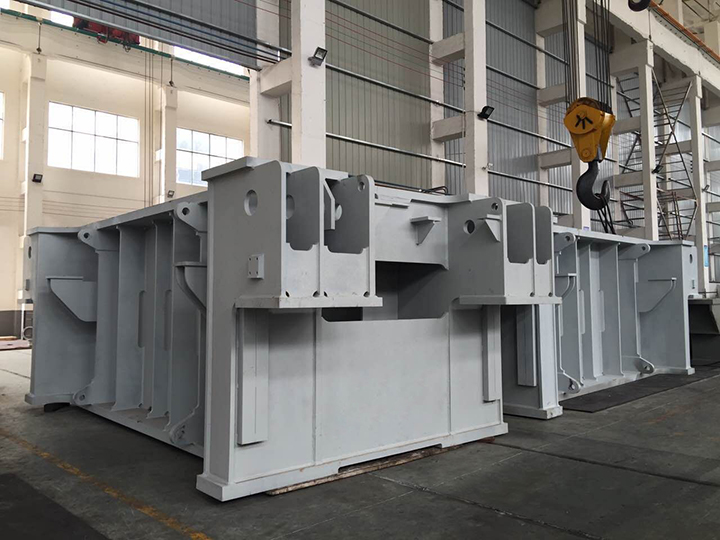
Surface treatment and coating of machined parts
First, tolerance is consumed. Anodising builds a layer of roughly 5–25μm per surface. On a bore with a ±0.01mm tolerance, that is a meaningful fraction of the allowance, and it applies to the anodised surface only.
Second, process order matters. Heat treatment after finish machining will move the part. Plating after assembly traps solution in joints. Painting over a weld that has not been inspected hides the defect you most needed to see.
Third, the wrong finish can be worse than none. A coating that chips at a sharp edge creates a corrosion cell. A passivation bath on a part with embedded iron from a contaminated brush leaves the iron in place.
Mechanical Finishing
Deburring, Grinding and Polishing
The first group of operations removes material rather than adding it.
Deburring is mandatory on any part with a machined edge. Burrs on a mating face cause misalignment; burrs on a hydraulic or pneumatic passage break loose and damage downstream components.
Surface grinding brings a face flat and to size after heat treatment, when distortion has already occurred. It is the standard correction step before final inspection on flat parts.
Polishing reduces surface roughness for appearance or for functional reasons — sealing faces, mould cavities, or parts that will be anodised, where polishing quality shows through the coating.
|
Mechanical step |
Purpose |
Typical application |
|
Deburring |
Remove sharp edges and loose material |
All machined parts |
|
Surface grinding |
Flatten and size after heat treatment |
Plates, bases, mating faces |
|
Polishing |
Reduce roughness, improve appearance |
Mould cavities, visible parts |
Heat Treatment
Heat treatment is not a finish, but it belongs in the same planning conversation because it determines the final dimensions.
Common requirements on machined metal parts include hardening for wear resistance, tempering to balance hardness and toughness, and stress relief after heavy material removal. The practical rule is to leave finish machining until after heat treatment, or to leave grinding allowance that the finishing operation can remove.
For parts with a high material removal ratio, or those starting from castings and forgings, stress relief before finishing is what keeps the part from bowing a week after delivery.
Surface Treatment Options
Choosing Between Them
These processes change the surface rather than the bulk. Choosing between them depends on the base metal, the service environment, and whether appearance matters.
|
Treatment |
Base metal |
What it gives |
|
Zinc plating |
Carbon steel |
Sacrificial corrosion protection |
|
Nickel plating |
Steel, copper alloys |
Hardness, wear resistance, decorative finish |
|
Chrome plating |
Steel |
Hardness, low friction, wear resistance |
|
Anodising |
Aluminium |
Oxide layer, corrosion and wear resistance, colour |
|
Passivation |
Stainless steel |
Removes free iron, restores corrosion resistance |
|
Painting |
Most metals |
Appearance, broad corrosion protection |
|
Hot-dip galvanising |
Carbon steel |
Heavy-duty outdoor corrosion protection |
Yuqing's
post-processing chain covers electroplating in zinc, chrome and nickel, anodising, passivation, painting and hot-dip galvanising — applied to machined parts and to welded structures from the same plant.
Matching the Finish to the Environment
The service environment should drive the choice, not habit.
• Indoor, dry, controlled — a phosphate or light oil finish is often enough on carbon steel
• Outdoor, industrial atmosphere — hot-dip galvanising or a multi-coat paint system
• Marine or salt exposure — 316 stainless with passivation, or galvanising plus topcoat
• Food, medical or cleanroom — passivated stainless, no pigmented coating
• High-wear contact surfaces — chrome plating, nitriding, or hardened and ground steel
• Aluminium exposed to weather — anodising, with the thickness set by the exposure level
Specifying Post-Processing on a Drawing
A finish note that says only "paint" will be interpreted differently by every supplier. Specify it properly:
1. Name the standard — for example anodising to a stated class, or galvanising to a stated coating mass
2. State the thickness or coating weight, not just the process
3. Say which surfaces are masked or left bare, especially electrical contacts and mating faces
4. State the colour and gloss level if appearance is specified
5. Note the surface roughness required before coating — Ra value, not a verbal description
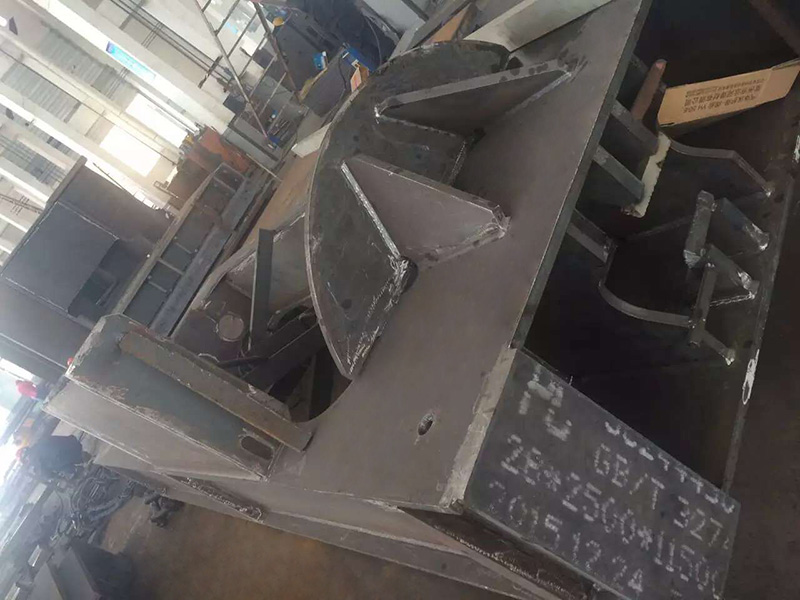
On welded assemblies, add the inspection requirement before coating. Once a weld is painted, ultrasonic or magnetic particle testing becomes far more difficult and the defect is hidden rather than fixed.
Where Post-Processing Fits in the Production Sequence
A Workable Eight-Step Route
A workable sequence for a machined and welded steel part looks like this:
1. Cutting and forming
2. Welding
3. Weld inspection — UT or MT on critical joints
4. Stress relief
5. CNC machining of critical features
6. Deburring and surface preparation
7. Surface treatment
8. Final inspection and packing
Steps 3 and 5 are where most quality escapes originate, and both depend on the finishing stage not being allowed to hide the evidence.
Post-Processing at Yuqing
Changzhou Yuqing Heavy Industry Machinery Co., Ltd. has been machining and casting since 1989 and runs a 10,000m² plant in Xueyanqiao Town, Wujin District, Changzhou, with a team of over 70 and more than 30 pieces of equipment. Integrated machining, welding and casting means a part can move from raw material through welding, machining, heat treatment and coating without being shipped between suppliers.
Parts are inspected with full-dimension CMM checks, roughness and hardness testing, metallographic analysis, and non-destructive testing to UT, RT or MT as required, and export orders are packed with vacuum protection, foam and wooden pallets.
Send drawings with your finish specification to sales@czyqzg.com or call +86 13906152937 to confirm process sequence and lead time.