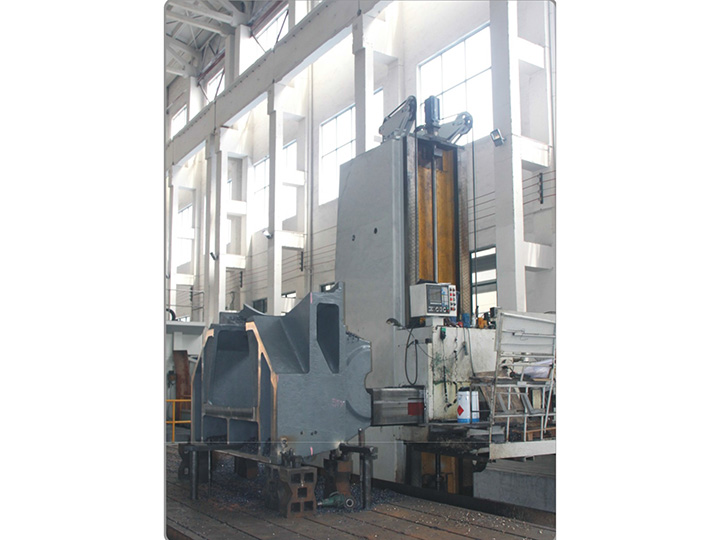
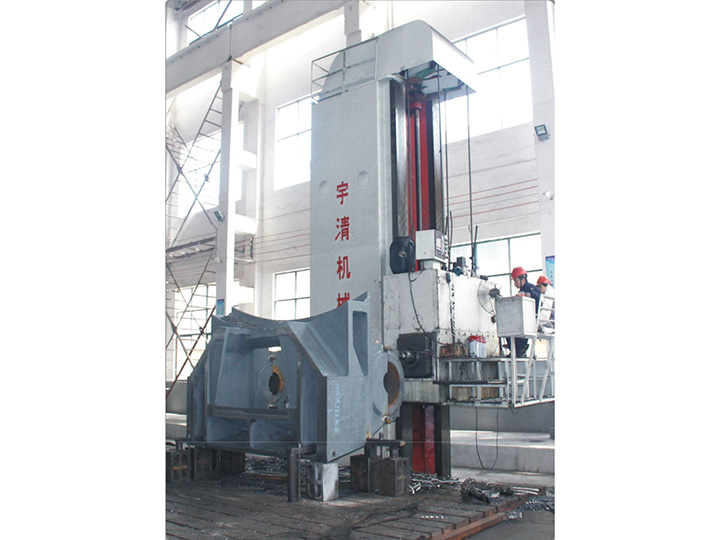
Against the backdrop of modern manufacturing pursuing high precision, complexity, and efficiency, CNC milling has become one of the key technologies supporting precision manufacturing. As a processing method based on computer numerical control technology, it precisely controls the tool's movement path and processing parameters through a numerical control system, focusing on the forming and manufacturing of various complex parts, covering common materials such as metals, plastics, and composite materials, providing irreplaceable processing solutions for aerospace, automotive, medical, and other industries.
I. Core Advantages of CNC Milling: Why It Becomes the First Choice for Precision Manufacturing?
The value of CNC milling stems from its four core characteristics that distinguish it from traditional processing, which directly address the key pain points of the manufacturing industry:
1. Micron-level High Precision: It can achieve micron-level (about 1/50 of a hair's diameter) processing error control, meeting the high-precision requirements of parts such as aero-engine blades and medical device implants - minor errors in such parts may directly affect product performance or safety.
2. Efficient Continuous Production: Relying on the automated control of the numerical control system, the machine tool can operate continuously for 24 hours without frequent shutdowns for parameter adjustment. Compared with the traditional milling processing-measurement-adjustment cycle, it can shorten the production cycle by more than 30%, significantly increasing enterprise productivity.
3. Complex Shape Processing Capability: It can accurately complete complex structures that are difficult to handle with traditional processing, such as curved surfaces, special-shaped holes, and polyhedrons. For example, the curved intake ports of automobile engines and the curved middle frames of mobile phones, these special-shaped parts can only be accurately replicated by CNC milling machines.
4. Wide Material Adaptability: Whether it is metals such as stainless steel and aluminum alloy, or engineering plastics and carbon fiber composite materials, CNC milling machines can achieve stable cutting by adjusting processing parameters, covering the full range of needs from heavy industrial parts to light consumer electronic parts.
II. Application Scenarios of CNC Milling: Penetrating Every Precision Corner of Life
It is these advantages that make CNC milling a underlying supporting technology in many key industries, and its application scenarios almost cover all products in our lives that require precision manufacturing:
- Aerospace: Parts such as aircraft engine blades and airframe titanium alloy structural parts must withstand high temperature and high pressure while maintaining strict dimensional consistency - the high precision of CNC milling can ensure the aerodynamic performance and structural strength of these parts, serving as the precision cornerstone of aerospace equipment.
- Automotive Manufacturing: Parts such as automobile engine blocks and chassis suspension swing arms require mass production with errors less than 0.01mm. The continuous automated processing of CNC milling machines can achieve every part is identical, ensuring the driving safety and performance stability of automobiles.
- Mold Manufacturing: The injection molds and the punch and die of stamping molds often have complex curved surfaces or undercut structures. Traditional processing is prone to dimensional deviation, while CNC milling can 1:1, ensuring that the parts produced by the mold are completely consistent.
- Medical Devices: The cutting edge of surgical knives and orthopedic implants (such as hip joint prostheses) require zero error - the micron-level precision of CNC milling can make the blade sharper and the implant more, directly related to the safety of medical operations.
- Electronic Products: Parts such as mobile phone camera brackets and computer CPU heat sinks are small in size (e.g., bracket thickness is only 0.5mm) and complex in structure (e.g., micro buckles). Traditional processing cannot balance precision and efficiency, while CNC milling can achieve batch and precise production of these small parts.
III. The Future of CNC Milling: Evolving towards Smarter and Greener
As the manufacturing industry transforms towards intelligent manufacturing, CNC milling technology is also constantly breaking boundaries, and will present four development directions in the future:
1. Intelligence: Through built-in sensors and AI algorithms, the machine tool can automatically identify the hardness and toughness of the processed material, and adjust parameters such as cutting speed and feed rate in real time without manual setting - for example, automatically reducing cutting force when processing aluminum alloy to avoid material deformation.
2. Higher Precision: In the future, the requirement for part precision will move from micron level to nano level (such as semiconductor chip packaging parts). CNC milling machines will achieve more extreme precision by optimizing the mechanical structure (such as using ceramic guide rails) and control system.
3. Compoundization: Combining CNC milling with laser processing, electrochemical polishing and other technologies to form a one-stop processing center - for example, completing surface polishing while cutting parts, reducing subsequent processes and improving efficiency.
4. Greenization: By using environmentally friendly cutting fluids (such as plant-based coolants), optimizing processing paths to reduce material waste (such as minimum cutting amount algorithms), and recycling waste chips, reduce environmental pollution and resource consumption in the processing process.
Conclusion: CNC Milling - The Precision Engine of Manufacturing
From the heavy equipment of aerospace to the tiny parts in mobile phones, CNC milling connects every link of the manufacturing industry with precision. It not only solves the complex, high-precision problems that traditional processing cannot handle, but also becomes the core driving force for promoting industrial upgrading. In the future, with the continuous evolution of technology, CNC milling will be more intelligent, environmentally friendly, and efficient, continuing to serve as the precision engine to support the manufacturing industry to develop to higher quality.
For enterprises, mastering CNC milling technology means mastering the right to speak in precision manufacturing; for consumers, behind every easy-to-use and durable product, there is the of CNC milling processing - it has never been far from our lives, but has always been promoting life to become better.