In the wave of modern manufacturing transforming towards automation and high precision, CNC Machining (short for Computer Numerical Control Machining) has long become one of the core supporting technologies. It precisely controls machine tool operation through computer programs, completely changing the traditional mechanical processing mode of relying on manual experience with unstable precision, and providing more efficient and accurate manufacturing solutions for aerospace, automotive, medical and other industries.
I. Basic Principles of CNC Machining: Using Code to Command Machine Tools
The core logic of CNC machining is program-driven production. The entire process is like drawing parts with code — every step from design to finished product is precisely controlled by a computer:
1. Design: Drawing the Digital Blueprint
Engineers first use Computer-Aided Design (CAD) software (such as AutoCAD, SolidWorks) to draw 3D or 2D part drawings, which serve as the original reference for machining.
2. Programming: Converting Design into Machine Tool Instructions
Through CNC programming software (such as Mastercam, UG), CAD drawings are converted into a language that machine tools can understand — G-code (controlling the tool's movement trajectory, such as move 50 mm along the X-axis) and M-code (controlling auxiliary functions of the machine tool, such as start the coolant pump or change the tool).
3. Machining: Machine Tool Automatically Executing Commands
The program is input into the CNC machine tool, which then automatically performs cutting, milling, turning and other operations according to the instructions. The entire process requires no manual intervention, and the machine tool can accurately replicate the designed part, just like a printer printing a document.
II. 5 Core Advantages of CNC Machining: Why It Can Replace Traditional Machining?
Compared with traditional manual operation or ordinary machine tools, the advantages of CNC machining are almost overwhelming:
- High Precision: Meeting Micron-level Requirements
The positioning accuracy of CNC machine tools can reach ±0.01 mm or higher, fully covering scenarios with extremely high tolerance requirements such as aerospace (e.g., aircraft turbine blades) and medical equipment (e.g., artificial joints) — traditional machining can hardly achieve such precision stably.
- High Efficiency: 24-Hour Non-Resting Productivity
Automated operation allows machine tools to run continuously, increasing efficiency by 3-5 times compared to traditional machining. For example, machining a metal gear takes 2 hours with a traditional machine tool, but only 30 minutes with a CNC lathe, while also avoiding human errors.
- Flexibility: Quickly Switching Production Modes
By simply modifying the program, it can quickly switch from producing mobile phone middle frames to producing drone parts, which is especially suitable for multi-variety, small-batch customized needs (such as prototype development and small-batch component manufacturing).
- Less Waste: Using Materials
Precise tool paths can maximize the use of raw materials. For example, when machining aluminum parts, the scrap rate of CNC milling is 20%-30% lower than that of traditional machining, directly reducing material costs.
- Safer: Away from Dangerous Operations
Operators do not need to directly contact high-speed rotating tools and can control remotely through a computer or control panel — avoiding the risks of fingers being cut by tools and iron chips splashing and hurting people in traditional machining.
III. Common Types of CNC Machining: Covering Almost All Mechanical Machining Scenarios
CNC machining is not a single technology but a general term for a series of automated machining methods. Common types include:
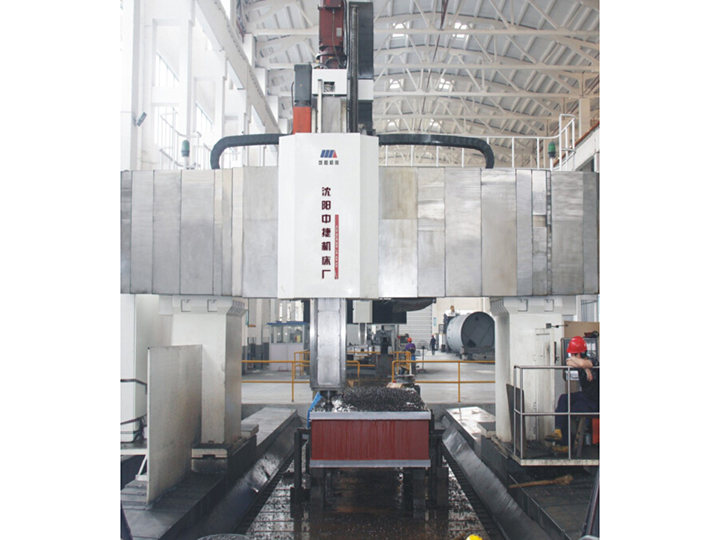
1. CNC Milling/Drilling: Using rotating tools to cut parts, suitable for machining planes, grooves or complex curved surfaces (such as molds, engine blocks).
2. CNC Turning: Rotating the part around an axis while the tool cuts along the axial direction, suitable for machining cylindrical parts (such as shafts, disc parts).
3. Electrical Discharge Machining (EDM): Corroding metal through electric sparks, suitable for machining hard materials (such as tungsten steel, ceramics) or complex shapes (such as deep grooves in molds).
4. CNC Laser/Plasma Cutting: Using high-energy beams to cut metal or non-metal materials, suitable for machining thin plates (such as sheet metal parts, advertising signs).
5. CNC Routing: Mainly used for cutting non-metal materials such as wood and plastic, such as furniture parts and decorative panels.
IV. Applications of CNC Machining: Ubiquitous from Aerospace to Daily Consumer Goods
CNC machining can be found in almost all manufacturing fields:
- Aerospace: Machining turbine blades and airframe structural parts of aircraft engines — these parts require high temperature resistance + high precision, which only CNC machining can meet.
- Automotive: Producing engine blocks, gearbox gears, and brake discs — ensuring the consistency of each part during mass production.
- Medical Equipment: Manufacturing surgical instruments (such as orthopedic implants) and medical instrument housings — requiring extremely high surface smoothness and biocompatibility.
- Consumer Goods: High-end watch cases, mobile phone metal middle frames, and drone frames — these exquisite parts are all products of CNC machining.
- Jewelry Making: Customized gold and platinum jewelry, with complex patterns precisely machined by CNC engraving machines, which is more efficient and uniform than manual work.
V. Future Trends of CNC Machining: Smarter, More Energy-Efficient, and More Environmentally Friendly
With the development of technology, the evolution direction of CNC machining has been clear:
- In-depth AI Integration: Future CNC machine tools will self-learn — analyzing machining data through machine learning to automatically optimize tool paths (such as changing a detour trajectory to a straight line) failures in advance (such as the bearing is about to wear out and needs to be replaced).
- More Energy-Efficient Machine Tools: Manufacturers are developing low-energy consumption models, such as using servo motors instead of traditional motors, reducing energy consumption by more than 30%; some machine tools can also recover cutting heat and convert it into electrical energy for reuse.
- Environmental Closed-Loop: More use of recyclable materials (such as recycled aluminum and recycled plastic), and metal chips generated during machining will be remelted and reused in production — achieving material circulation.
Conclusion: CNC Machining is the Cornerstone of Modern Manufacturing
From manufacturing a small gear to building an aircraft engine, CNC machining plays a silent role. It not only solves the pain points of traditional machining such as low precision and slow efficiency but also becomes the key to the transformation of manufacturing towards intelligence and greenization. In the future, with the further integration of AI and energy-saving technologies, CNC machining will bring more surprises — such as in unmanned workshops, CNC machine tools automatically complete the entire process from design to machining, truly realizing lights-out factories.
For enterprises, mastering CNC machining technology is equivalent to holding the admission ticket to the future of manufacturing; for consumers, every high-precision product we use (such as mobile phones, cars, medical equipment) has the contribution of CNC machining behind it.
CNC machining is not a future technology — it is already happening now and will continue to lead the development of manufacturing.