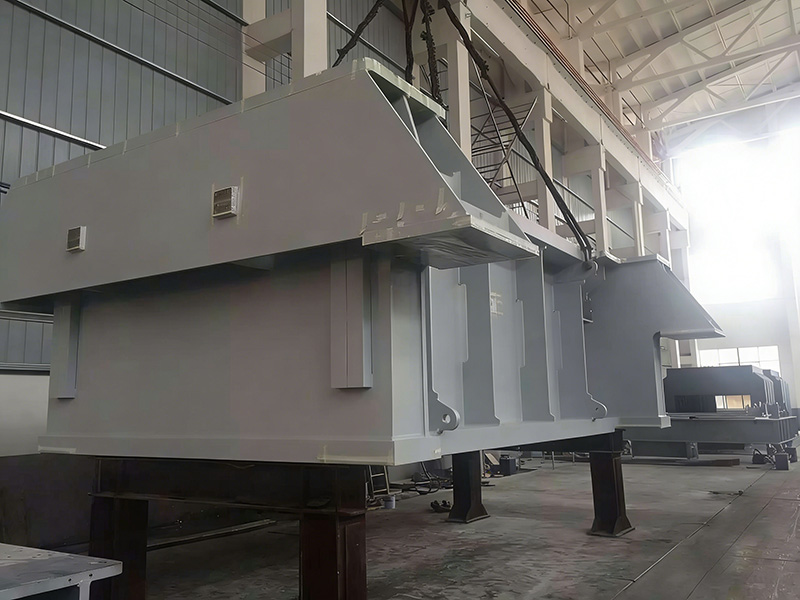
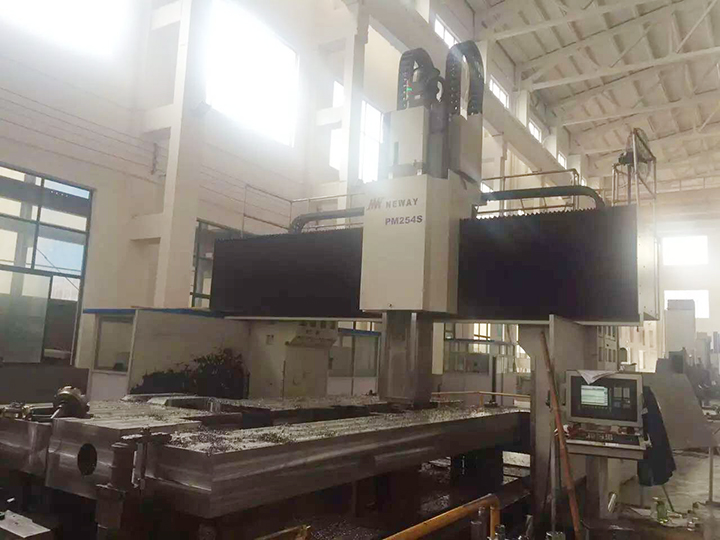
In the era of advanced industrial manufacturing, the demand for high-performance
CNC machining of complex parts and components has grown exponentially across global industries. Modern sectors including aerospace, medical device, automotive, precision electronics, and renewable energy no longer rely on simple, standard mechanical parts. Instead, they demand custom components with intricate geometries, ultra-tight dimensional tolerances, flawless surface finishes, and exceptional structural stability. As industrial innovation accelerates, traditional manual machining and conventional mechanical processing methods can no longer meet rigorous production standards, making advanced CNC machining the core backbone of complex part manufacturing.
What Are Complex CNC Machined Parts and Components?
Complex CNC parts refer to precision components that feature sophisticated structural designs which cannot be produced through ordinary manufacturing processes. Typical characteristics include irregular curved surfaces, deep cavities, thin-walled structures, undercut features, multi-angle holes, and overlapping precision grooves. Unlike standard parts with regular shapes and simple parameters, complex components require multi-dimensional processing and strict error control throughout production.
These complex components are usually crafted from high-performance materials such as titanium alloys, stainless steel, aluminum alloys, and engineering plastics. Each material has unique hardness, toughness, and thermal expansion properties, further increasing machining difficulties. Only professional CNC machining solutions can effectively address material processing challenges while maintaining consistent precision and structural integrity.
Why Traditional Machining Fails for Complex Component Production
Traditional machining methods, including manual lathe turning, conventional milling, and simple stamping, are designed for basic part production with low precision requirements and single structural features. When applied to complex parts, these processes expose obvious limitations. First, manual operation relies heavily on worker experience, leading to unstable dimensional accuracy and high error rates, which cannot meet micron-level tolerance standards.
Second, traditional processing requires repeated clamping and manual positioning for multi-feature complex parts. Each re-clamping introduces cumulative positioning errors, resulting in poor part consistency and high scrap rates. Additionally, traditional processes struggle with intricate undercuts, deep curved surfaces, and ultra-thin wall structures, often causing tool interference, part deformation, or incomplete forming. In terms of efficiency, traditional machining involves lengthy manual adjustment procedures, making it unable to support mass production of high-precision complex components.
Core Advantages of Advanced CNC Machining for Complex Parts
Modern CNC machining, especially multi-axis CNC milling and turning technology, completely breaks through the bottlenecks of traditional manufacturing and becomes the optimal solution for complex part processing. The most prominent advantage is high precision and stability. Driven by professional CAD/CAM programming systems, CNC equipment can execute ultra-precise cutting paths with tolerance control as low as ±0.001mm, fully meeting the strict precision requirements of high-end industrial components.
Furthermore, multi-axis CNC machining supports one-clamping multi-surface processing. Unlike traditional equipment that requires repeated positioning, 4-axis and 5-axis CNC machines can complete all complex feature processing in a single setup. This eliminates cumulative positioning errors, greatly improves part accuracy consistency, and effectively avoids structural deformation caused by multiple clampings.
In terms of processing adaptability, advanced CNC technology perfectly adapts to various complex geometric designs, including irregular curved surfaces, deep cavities, micro holes, and special-shaped structures. Combined with optimized tool selection and cutting parameter adjustment, it achieves smooth surface finishes without secondary polishing, meeting the assembly and service requirements of high-end equipment. Meanwhile, CNC machining balances customization and mass production, supporting both small-batch prototype development and large-scale standardized production of complex parts.
Key Industry Applications of Complex CNC Machined Components
Aerospace Industry: Aerospace equipment requires lightweight, high-strength, and high-stability complex components, such as turbine blades, engine structural parts, and aircraft precision connectors. These parts feature complex curved surfaces and strict tolerance standards, and CNC machining is the only reliable processing method to ensure flight safety and equipment durability.
Medical Implant and Device Industry: Medical CNC parts like artificial joint components, dental implants, and surgical instrument accessories demand high biocompatibility, ultra-high precision, and smooth surface finishes. Advanced CNC machining ensures zero burrs, precise dimensional matching, and stable material performance, complying with strict medical industry certification standards.
Automotive and New Energy Industry: Precision complex parts for new energy vehicles, including motor structural components, battery precision brackets, and transmission system parts, rely on CNC machining to achieve lightweight design and high structural strength, adapting to the rapid development of new energy vehicle precision manufacturing.
Precision Electronics and Automation Industry: Micro complex parts such as electronic equipment shells, precision sensor components, and automation fixture accessories require ultra-fine processing. High-precision CNC technology effectively solves the processing difficulties of microstructures and thin-walled parts, ensuring the stability and sensitivity of electronic and automation equipment.
Key Factors Ensuring High-Quality Complex CNC Machining
The quality of complex part CNC machining depends on multiple core factors. First, professional programming optimization is essential. Experienced engineers optimize cutting paths, avoid tool interference, and reduce processing vibration through precise CAM programming, which is the premise of high-precision processing. Second, high-precision CNC equipment and qualified tool matching are critical. Multi-axis linkage equipment and wear-resistant precision tools ensure stable cutting performance for hard materials and complex structures.
In addition, scientific process planning and strict quality inspection systems are indispensable. Reasonably arranged processing sequences effectively prevent part deformation; post-processing procedures such as deburring and surface treatment improve part usability. Meanwhile, full-process detection via coordinate measuring machines (CMM) and precision micrometers ensures every complex component meets design standards.
Conclusion
As modern manufacturing moves toward high precision, intelligence, and customization, CNC machining of complex parts and components has become an indispensable core technology in high-end industrial manufacturing. It overcomes the limitations of traditional processing in precision, complexity, and efficiency, providing reliable precision component solutions for aerospace, medical, automotive, and electronic industries. With continuous upgrading of multi-axis CNC technology and processing techniques, complex CNC machining will further promote the innovation and upgrading of global advanced manufacturing, delivering higher-precision, more stable, and more efficient custom component processing services for various industries.