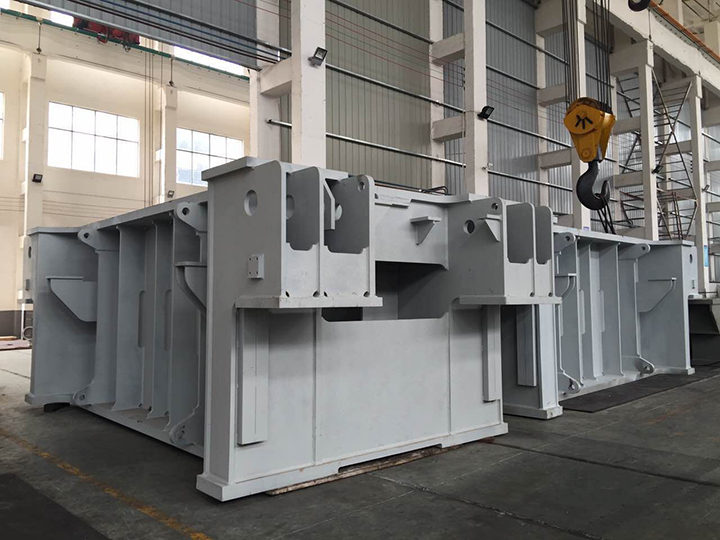
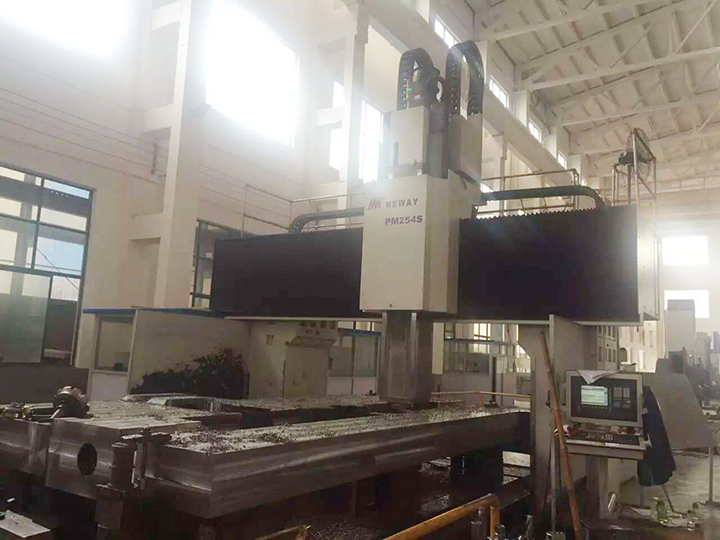
CNC lathe machining is an automated manufacturing technology that relies on a computer numerical control system. It achieves efficient and high-precision processing of parts by precisely controlling the movement trajectory and processing flow of the lathe. As one of the core technologies in modern manufacturing, it has completely changed the traditional lathe's reliance on manual operation and has become a processing tool in various industries such as aerospace, automotive, and medical.
I. Core Characteristics of CNC Lathe Machining
1. Coexistence of High Precision and High Efficiency
The biggest highlight of
CNC lathe machining is precision + speed - the computer system can control errors within a very small range, and even high-difficulty parts such as complex curved surfaces and fine-threaded screws can be accurately completed in one go. Compared with traditional lathes, its processing efficiency is greatly improved, making it especially suitable for mass production, enabling the delivery of high-quality parts in a short time.
2. Fully Automated Process with Strong Stability
The processing process is completely controlled automatically by the CNC system, from workpiece clamping to cutting and tool retraction, without the need for frequent manual intervention. This unmanned mode not only avoids human operation errors but also maintains stable processing quality. Even in long-term mass production, the size and precision of each part can be highly consistent.
3. Wide Processing Range, Adaptable to Various Shapes
CNC lathes are good at processing rotational parts. Whether it is common cylindrical, conical parts, complex spherical, curved surface parts, or special structures with threads and grooves, they can be easily handled. Its flexibility allows enterprises to avoid changing equipment for parts of different shapes, reducing production investment.
4. Strong Material Adaptability, Meeting Multi-Industry Needs
CNC lathes can handle materials from metals (such as steel, aluminum) to plastics, composite materials, and even wood. This material compatibility allows it to meet the processing needs of different industries, such as metal parts in the automotive industry and plastic prosthetics in the medical industry, which can all be processed by CNC lathes.
II. Four Major Advantages of CNC Lathe Machining
1. Improve Product Quality and Reduce Defect Rate
High-precision machining ensures that the dimensional tolerance and surface roughness of parts meet strict standards, completely solving the problem of error accumulation in traditional processing. For industries with high precision requirements (such as medical and aerospace), CNC lathe machining can directly improve product reliability and market competitiveness.
2. Reduce Production Costs and Resource Waste
The automated process reduces reliance on skilled workers, lowering labor costs; at the same time, efficient cutting paths and precise processing control can reduce material waste (such as avoiding part scrapping due to errors). In the long run, CNC lathe machining can help enterprises save a lot of operating costs.
3. Improve Production Efficiency and Shorten Delivery Cycles
The CNC system can continuously complete multiple processing procedures without stopping for tool changes or parameter adjustments. In mass production, the efficiency is far higher than that of traditional lathes. For example, processing a batch of engine parts may take several days with a traditional lathe, but a CNC lathe can complete it in one day, greatly shortening the customer's waiting time.
4. Easily Handle Complex Parts and Break Through Processing Limitations
Special-shaped parts that are difficult to process with traditional lathes (such as curved gears, multi-threaded shafts) are just routine operations for CNC lathes. It can realize cutting of complex trajectories through programming, allowing enterprises to no longer be stuck due to part difficulty and expanding the design space of products.
III. Common Application Scenarios of CNC Lathe Machining
1. Aerospace Industry
Aerospace parts have extremely high requirements for precision and reliability, such as engine blades, airframe structural parts, and fuel system parts, all of which require CNC lathe machining to ensure performance.
2. Automotive Manufacturing Industry
Core automotive components such as engine blocks, transmission gears, and drive shafts are regular customers of CNC lathes. It can efficiently complete mass production to meet the large-scale demand of the automotive industry.
3. Medical Equipment Industry
The precision of medical devices is directly related to patient safety. For example, scalpels, prosthetic joints, and medical implants all rely on high-precision machining by CNC lathes to ensure safety and comfort in use.
4. Mold Manufacturing Industry
Key parts of injection molds and stamping molds, require extremely high precision to ensure product molding effects. CNC lathes can accurately process these complex structures and extend the service life of the molds.
5. General Machinery and Electronics Industry
From ordinary mechanical parts (such as gears, shafts) to electronic parts (such as connectors, sensor housings), CNC lathes can handle them, covering the capillaries of manufacturing.
With its advantages of high precision and high automation, CNC lathe machining has become a must-have technology in modern manufacturing. Whether you want to improve product quality, reduce costs, or overcome complex part processing problems, it can provide solutions. If you want to learn more about the application details of CNC lathe machining in specific industries or have other questions, please feel free to consult at any time.