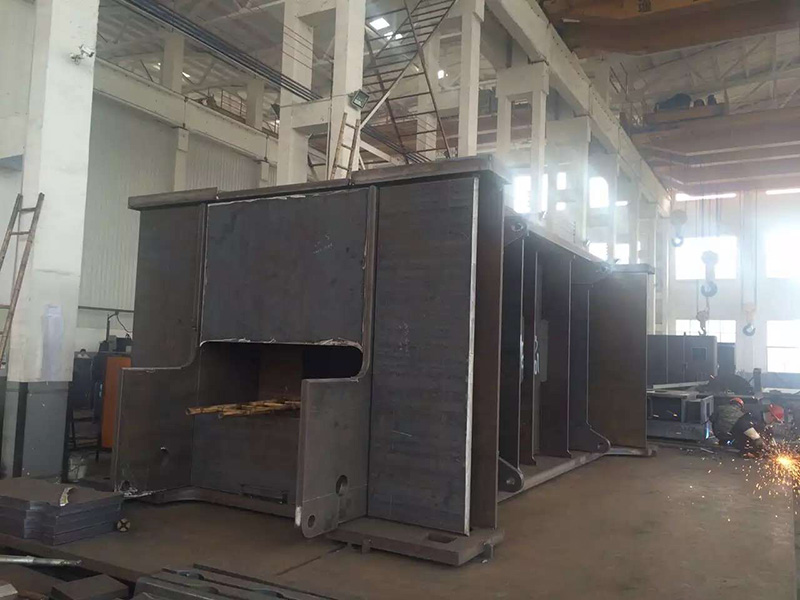
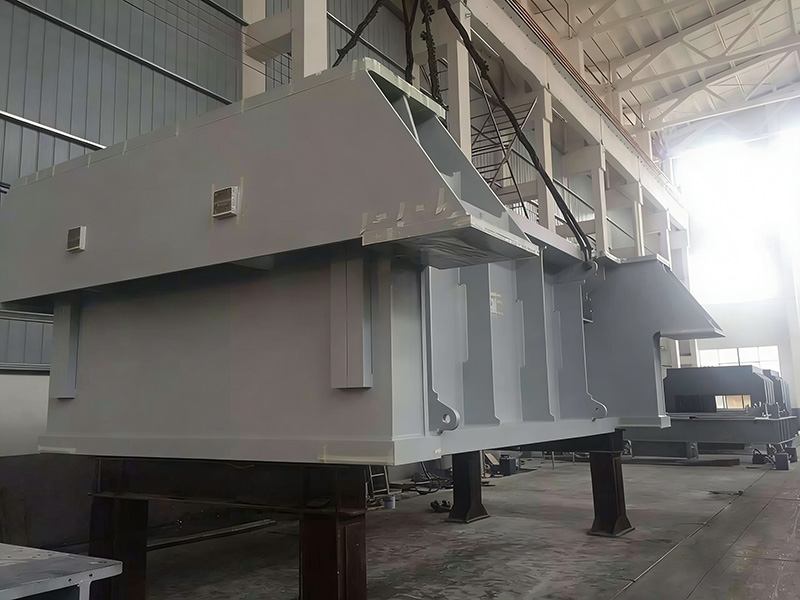
From daily automobile bodies and high-rise steel structures to aerospace satellite components, many products that support modern life rely on a key process - welding. As a core technology for joining materials, welding is not only the invisible bond of manufacturing but also continues to evolve with technological development, adapting to more and more application scenarios. Today, we will comprehensively the essence, application scope and future trends of welding to help you quickly understand the value of this industrial sewing technique.
I. Core Definition of Welding: Not Gluing, but Atomic-Level Bonding
The essence of
welding is to achieve stable atomic bonding between the contact surfaces of different workpieces (including metals, plastics, ceramics and other materials) through heating, pressure, or a combination of both, thereby forming an integrated structure. Unlike mechanical joining methods such as bolting and riveting, welded components have no gaps, higher strength, and can achieve advantages such as sealing, weight reduction, and structural simplification - this is the key reason why it can replace traditional joining methods.
Simply put, welding is not sticking materials together, but allowing the atoms of the materials to reconnect to form a stronger whole.
II. Core Application Fields of Welding: Ubiquitous from Civil Life to Aerospace
The versatility of welding allows it to penetrate almost all industrial fields. The following are the most common scenarios:
1. Basic Manufacturing: From small metal casings of home appliances and splicing of industrial pipelines to large frames of mechanical equipment and components of generator sets, welding is a necessary step in assembling these products;
2. Construction Engineering: Steel structure frames of high-rise buildings, steel box girders of bridges, and truss structures of stadiums - these buildings that need to bear loads for a long time must use welding to ensure structural integrity;
3. Automotive Industry: Stamped parts of automobile bodies (such as doors and roofs) and suspension components of chassis mostly use resistance welding or robotic welding, which can not only ensure strength but also improve production efficiency;
4. Aerospace: Aircraft wing skins, engine turbine blades, and precision satellite structures - these scenarios with extremely high requirements for precision and reliability must use laser welding or electron beam welding to ensure zero defects;
5. Civil and Emerging Fields: Stainless steel instruments of medical equipment, micro metal joints of electronic components, aluminum casings of new energy vehicle batteries, and even the sealed edges of plastic water cups (hot-melt welding) all show the presence of welding.
III. Common Welding Technologies: Choosing the Right Tool for Different Scenarios is Efficient
The choice of welding technology mainly depends on three factors: material type, workpiece thickness, and precision requirements. The following are 4 most commonly used technologies and their characteristics:
1. Arc Welding: The most classic welding method, which uses the arc between the electrode and the workpiece to generate high temperature to melt metal. It is suitable for welding common metals such as steel and stainless steel, with low cost and easy operation, and is widely used in construction and machinery manufacturing;
2. Gas Welding: Uses gas flame (such as acetylene + oxygen) to heat the workpiece, suitable for thin metals (such as thin steel plates, copper and aluminum) or field scenes without power supply. The disadvantage is low efficiency, and it is now mostly used for maintenance or small-batch production;
3. Laser Welding: Uses high-energy laser beam focusing for heating, with precision up to millimeter level and small heat-affected zone (no deformation), suitable for high-precision requirements such as electronic components and aerospace parts;
4. Resistance Welding: Melts metal through resistance heat of current, no need for welding wire, and extremely high efficiency - the spot welding robots in automobile factories are typical applications, which can weld hundreds of points per minute.
IV. Future Trends of Welding: Smarter, More Environmentally Friendly, and More Precise
With industrial upgrading, welding is also evolving towards the direction of high efficiency, precision, and sustainability:
- Automation and Intelligence: Robotic welding and numerical control welding equipment are becoming more and more popular, which can not only reduce human errors but also realize 24-hour non-stop production. For example, the penetration rate of robots in automobile factory welding lines has exceeded 80%;
- Popularization of High-Precision Technology: Precision welding such as laser welding and electron beam welding is no longer exclusive to aerospace and is entering fields such as electronics and medical care - for example, mobile phone camera brackets and micro components of heart stents have begun to use laser welding to improve reliability;
- Environmental Protection and Energy Saving: Lead-free welding, low-energy plasma welding, and cold welding technology (reducing thermal pollution) have become trends. For example, the welding of aluminum casings for new energy vehicle batteries has begun to use splash-free welding to reduce pollutants;
- Adaptation to New Materials: Welding technologies for plastics, ceramics, and composite materials (such as ultrasonic welding and friction welding) are developing. For example, plastic shells of new energy batteries and medical ceramic implants all require new welding solutions.
Conclusion: Welding is Always the Underlying Support for Industrial Upgrading
From the invention of arc welding in the 19th century to today's robotic welding and laser welding, the evolution history of welding is a microcosm of industrial technological progress. It seems basic, but it supports the upgrading of industries such as automobiles, construction, and aerospace - without welding, there would be no modularization, lightweight and precision of modern industry.
In the future, with the improvement of environmental protection and intelligent needs, welding will continue to evolve, but its core mission will always remain unchanged: to connect materials into more useful products.
For enterprises, choosing the right welding technology can not only improve product quality but also reduce costs and adapt to market changes - and this is the invisible value of welding.