Why Source Custom CNC Parts Internationally?
International sourcing of custom CNC parts is common for several reasons:
Cost savings: labor and overhead costs are often lower in some countries, leading to significant cost savings for the buyer.
Capacity access: international suppliers may have capacity that is not available domestically.
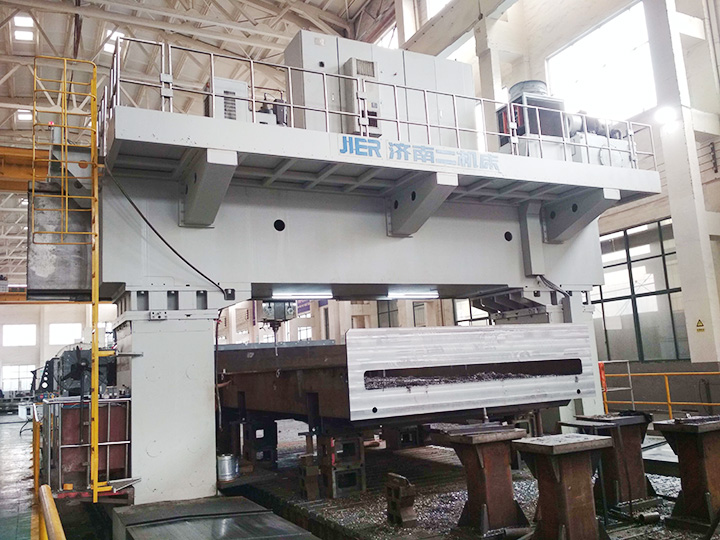
Capability breadth: some countries specialize in specific capabilities (e.g., precision machining in Germany, large-part machining in China, low-volume prototyping in the US).
Material availability: certain materials may be more readily available from international suppliers.
Time zone advantage: 24-hour production cycle by handing off work between time zones.
The trade-offs are longer lead times, communication challenges, quality verification, and logistics complexity. For low-cost, high-volume parts, the savings often outweigh the trade-offs.
The Yuqing export machined parts capability is designed for international customers.
What Is an RFQ?
A Request for Quotation (RFQ) is a document sent to potential suppliers to request a price quote for a specific part or set of parts. The RFQ should include:
Part drawings: 2D drawings (PDF) and 3D models (STEP, IGES, or native CAD).
Material specification: material grade, condition, and certificate requirements.
Tolerance specification: general tolerances (e.g., ISO 2768) and specific feature tolerances.
Surface finish requirements: Ra values and visual requirements.
Quantity: target quantity and expected annual volume.
Lead time: target lead time for first article and production.
Quality requirements: FAI, PPAP, inspection reports, certifications.
Packaging requirements: packaging method, labeling, and documentation.
Shipping requirements: shipping method, Incoterms, destination.
Commercial terms: payment terms, currency, Incoterms.
A well-prepared RFQ reduces back-and-forth communication and produces comparable quotes. The quote is more accurate, and the supplier can commit to the requirements.
How Are Suppliers Identified?
Suppliers are identified through:
Search engines: searching for "custom CNC machining" or "precision machining" in the target country.
Industry directories: Alibaba, ThomasNet, Kompass, and other B2B directories.
Trade shows: industry trade shows (e.g., IMTS, EMO, CIMT) for direct contact with suppliers.
Referrals: recommendations from industry contacts.
Sourcing agents: third-party agents who identify and manage suppliers.
For first-time sourcing, search engines and directories are the starting point. For ongoing sourcing, referrals and trade shows are more efficient.
Yuqing's about page documents the company's experience and capabilities.
How Are Suppliers Evaluated?
Suppliers are evaluated on:
Capability: does the supplier have the equipment and expertise for the part?
Quality: does the supplier have a quality management system (e.g., ISO 9001)?
Capacity: can the supplier meet the volume and lead time?
Communication: is the supplier responsive and clear in communication?
Cost: is the cost competitive with other suppliers?
References: does the supplier have references from similar customers?
Financial stability: is the supplier financially stable?
Compliance: does the supplier comply with relevant regulations (e.g., REACH, RoHS)?
A formal supplier evaluation includes a questionnaire, a capability assessment, and often a site visit. For ongoing relationships, periodic re-evaluation is recommended.
What Are Incoterms?
Incoterms (International Commercial Terms) are standardized terms published by the International Chamber of Commerce (ICC) that define the responsibilities of buyers and sellers in international transactions. The current Incoterms are Incoterms 2020.
Common Incoterms for CNC parts:
|
Incoterm |
Meaning |
Responsibility |
|
EXW |
Ex Works |
Buyer takes responsibility at the supplier's premises |
|
FOB |
Free On Board |
Seller delivers to the port of origin; buyer takes over |
|
CIF |
Cost, Insurance, and Freight |
Seller pays for transport to the destination port |
|
DAP |
Delivered At Place |
Seller delivers to the named place; buyer handles import |
|
DDP |
Delivered Duty Paid |
Seller handles everything, including duties
|
The choice of Incoterm depends on the buyer's capability and risk tolerance. For first-time buyers, DDP is the easiest but the most expensive. For experienced buyers, FOB or CIF is common.
How Are Parts Shipped?
Parts are shipped by:
Air freight: fastest but most expensive; used for urgent or high-value parts.
Sea freight: slowest but cheapest; used for high-volume or non-urgent parts.
Express courier: fastest for small parts; used for samples and prototypes.
Rail freight: emerging option for some regions (e.g., China-Europe rail).
The choice depends on the part size, weight, value, urgency, and destination. For most international CNC parts, sea freight is the default for production volumes; air freight is used for urgent or prototype parts.
Yuqing's export machined parts capability includes shipping via the customer's preferred method.
How Are Quality and Inspection Managed?
Quality and inspection are managed through:
Supplier quality management: the supplier's quality management system is audited and approved.
First article inspection (FAI): the first part is inspected and approved before production.
In-process inspection: critical characteristics are measured during production.
Pre-shipment inspection: parts are inspected before shipping.
Container loading inspection: parts are inspected at the supplier's premises during loading.
Destination inspection: parts are inspected on receipt (for high-value or critical parts).
For high-value or critical parts, third-party inspection services (e.g., SGS, Bureau Veritas, Intertek) are used to provide independent verification.
How Is Intellectual Property Protected?
Intellectual property (IP) is protected through:
NDA: a Non-Disclosure Agreement is signed before sharing technical information.
Patent protection: patents are filed in the supplier's country.
Trademark protection: trademarks are registered in the supplier's country.
Contract terms: the purchase agreement includes IP clauses that prohibit unauthorized use.
Supplier selection: suppliers with strong IP protection records are preferred.
For new designs, an NDA is essential. For mature designs, the IP risk is lower, but an NDA is still recommended.
What Are the Common Pitfalls in International Sourcing?
Common pitfalls:
|
Pitfall |
Consequence |
Prevention |
|
Unclear RFQ |
Inaccurate quote, hidden costs |
Use standardized RFQ template |
|
No NDA |
IP theft |
Sign NDA before sharing drawings |
|
No FAI |
Out-of-spec parts |
Require FAI for every part |
|
No pre-shipment inspection |
Defects shipped, no recourse |
Require pre-shipment inspection |
|
Wrong Incoterm |
Unexpected costs, delays |
Specify Incoterm clearly |
|
Poor packaging |
Damage in transit |
Specify packaging requirements |
|
Communication gaps |
Misunderstanding, delays |
Use clear written communication |
|
Hidden costs |
Higher-than-expected total cost |
Request detailed cost breakdown
|
Each pitfall is preventable with discipline. The first order with a new supplier should be treated as a pilot, with extra attention to communication and inspection.
How Are Customs and Duties Handled?
Customs and duties are handled by:
Customs broker: a third-party customs broker handles the import paperwork and duties.
Importer of record: the importer of record is the entity responsible for customs compliance.
Harmonized System (HS) code: the HS code determines the duty rate.
Certificate of origin: the certificate of origin may affect the duty rate (e.g., free trade agreements).
For first-time importers, a customs broker is essential. The broker handles the paperwork, pays the duties, and clears the parts through customs.
How Is Payment Managed?
Payment is managed through:
Wire transfer (T/T): most common for international payments.
Letter of credit (L/C): used for large orders or new suppliers; the bank guarantees payment.
PayPal: used for small orders or samples.
Trade credit: extended by the supplier for trusted customers.
For first-time orders, T/T with a deposit (e.g., 30%) and balance before shipping is common. For ongoing relationships, net-30 or net-60 terms may be available.
What Are the Communication Best Practices?
Communication best practices:
Use English or a common language: English is the most common language for international sourcing.
Use written communication: email or messaging apps for record-keeping.
Be clear and specific: avoid ambiguity in requirements.
Confirm understanding: ask the supplier to confirm key requirements.
Use video calls: for complex discussions, video calls are more efficient than email.
Document everything: keep records of all communication, including quotes, drawings, and agreements.
Time zone awareness: schedule calls at times that work for both parties.
The communication channel should be established early in the relationship. The supplier should have a single point of contact who is responsive and clear.
How Is the Sourcing Relationship Maintained?
The sourcing relationship is maintained by:
Regular communication: scheduled calls or emails to discuss ongoing and future orders.
Performance reviews: periodic reviews of quality, delivery, and cost.
Continuous improvement: collaborative improvement projects to reduce cost or improve quality.
Forecasting: sharing forecasts with the supplier to enable capacity planning.
Visits: periodic visits to the supplier's facility to build the relationship.
A long-term relationship is more valuable than a transactional relationship. The supplier becomes a partner in the buyer's success.
Conclusion
International sourcing of
custom CNC parts is a strategic activity that can deliver cost savings, capacity access, and capability breadth. The keys are a standardized RFQ, clear communication, quality verification, and trusted logistics partners. Yuqing's export machined parts capability, CNC machine tool processing, about, and contact pages document the company's experience with international customers and the resources available for new inquiries.
Frequently Asked Questions
What is the typical cost savings from international sourcing?
Cost savings vary widely, but typical ranges are 20–50% for labor-intensive parts and 10–30% for capital-intensive parts. The savings depend on the part complexity, the volume, and the country.
What is the typical lead time for international orders?
Lead time for international orders is typically 4–12 weeks, including production and shipping. Sea freight is 4–8 weeks; air freight is 1–3 weeks.
What is an Incoterm?
An Incoterm is a standardized term that defines the responsibilities of buyers and sellers in international transactions. Common Incoterms include EXW, FOB, CIF, DAP, and DDP.
What is the most common Incoterm for CNC parts?
For experienced buyers, FOB or CIF is common. For first-time buyers, DDP is the easiest but the most expensive.
How is quality verified for international orders?
Quality is verified through FAI, in-process inspection, pre-shipment inspection, and third-party inspection services. The level of inspection depends on the part value and the customer's risk tolerance.
How is intellectual property protected?
IP is protected through NDAs, patents, trademarks, contract terms, and supplier selection. For new designs, an NDA is essential.
What is a customs broker?
A customs broker is a third-party that handles the import paperwork, pays the duties, and clears the parts through customs. A customs broker is essential for first-time importers.
How is payment handled for international orders?
Payment is typically handled by wire transfer (T/T), letter of credit (L/C), or PayPal. For first-time orders, T/T with a deposit is common.
What is the best way to find international suppliers?
The best ways are search engines, industry directories (Alibaba, ThomasNet), trade shows (IMTS, EMO, CIMT), referrals, and sourcing agents.
What is the difference between FOB and CIF?
FOB (Free On Board): the seller delivers to the port of origin; the buyer takes over. CIF (Cost, Insurance, and Freight): the seller pays for transport to the destination port; the buyer takes over at the destination port.
What is the difference between DAP and DDP?
DAP (Delivered At Place): the seller delivers to the named place; the buyer handles import. DDP (Delivered Duty Paid): the seller handles everything, including duties and import.
How is a long-term sourcing relationship maintained?
A long-term relationship is maintained by regular communication, performance reviews, continuous improvement, forecasting, and periodic visits.