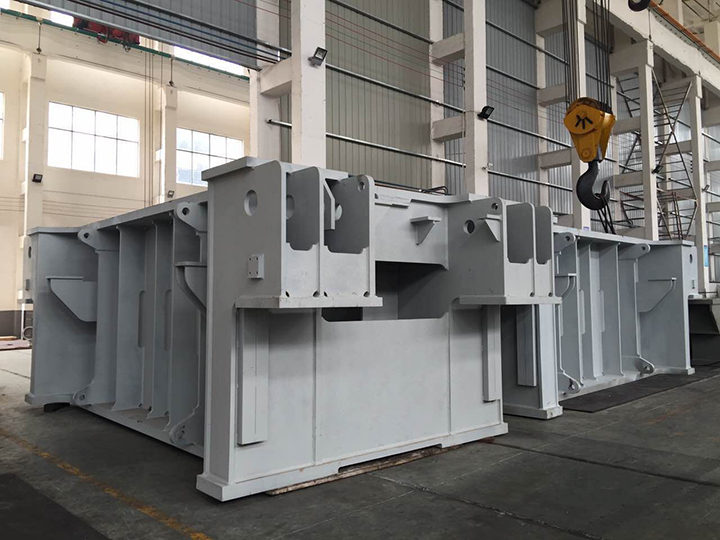
Changzhou Yuqing Heavy Industry Machinery Co., Ltd. (Yuqing Heavy Machinery) provides professional stainless steel fabrication services, delivering precision-machined and welded stainless steel components for the mining, shipbuilding, railway, metallurgy and aviation industries from its ISO-certified facility in Changzhou, China.czyuqing.com
Stainless steel is prized for its corrosion resistance, strength and hygienic properties, but it requires specialized fabrication knowledge. Wrong heat input, improper filler selection or poor shielding can ruin corrosion resistance and cause distortion or cracking. This guide explains the key processes, material grades, welding considerations and quality control involved in professional stainless steel fabrication.
Why Stainless Steel Needs Specialized Fabrication
Stainless steel contains chromium (and often nickel, molybdenum and other alloying elements) that form a protective oxide layer. During fabrication, this layer must be protected. Overheating can cause sensitization — chromium carbide precipitation that depletes corrosion resistance at grain boundaries — so controlled heat input, proper shielding gas and suitable filler metals are essential.
Common Stainless Steel Grades
- 304 / 304L — the general-purpose grade for structural and industrial applications.
- 316 / 316L — added molybdenum for superior corrosion resistance in marine and chemical environments.
- 321 — stabilized grade for high-temperature service.
- Duplex stainless steels — high strength combined with excellent corrosion resistance.
1. Laser Cutting
Flatbed laser cutting systems produce clean, precise profiles with minimal heat-affected zone, reducing post-cut finishing and preserving corrosion resistance.
2. Forming and Bending
Plate bending and forming shape stainless steel into shells, panels and structural sections before assembly.
3. TIG and MIG Welding
TIG welding is preferred for high-quality stainless steel joints, while MIG/MAG is used for higher productivity. Correct shielding gas and low-carbon filler metals maintain weld corrosion resistance.
4. CNC Machining
Post-weld machining on gantry mills and CNC boring machines achieves final dimensions, threads and mating surfaces on stainless steel components.
5. Surface Treatment
Pickling, passivation, grinding and polishing restore the protective layer and achieve the required surface finish.
Key Considerations for Stainless Steel Welding
- Control heat input — excessive heat causes distortion and sensitization.
- Use proper shielding gas — argon or argon-based mixtures protect the weld pool.
- Select matching filler metal — matching or over-alloyed fillers maintain corrosion resistance.
- Minimize contamination — dedicated tools and clean surfaces prevent carbon steel contamination.
- Manage distortion — fixtures and weld sequence control warping in thin sections.
Quality Control in Stainless Steel Fabrication
An ISO-certified workshop ensures consistent stainless steel fabrication quality through:
- Material certification — verifying grade and chemical composition.
- Dimensional inspection — using calibrated testing equipment to confirm tolerances.
- Weld inspection — visual, penetrant and other non-destructive testing of critical joints.
- Surface quality checks — confirming finish and freedom from contamination.
- Full traceability — documentation from raw material to delivery.
Yuqing Heavy Machinery implements strict full-process quality control to guarantee high-quality stainless steel processing that meets customer requirements.czyuqing.com
Applications of Stainless Steel Fabrication
- Shipbuilding and marine — corrosion-resistant structures and fittings.
- Mining and metallurgy — wear- and corrosion-resistant components.
- Railways — structural and trim components.
- Aviation equipment — precision stainless assemblies.
- Food, chemical and processing equipment — hygienic tanks, frames and housings.
How to Choose a Stainless Steel Fabrication Partner
1. Confirm material expertise — ensure the supplier handles the right grades and thicknesses.
2. Check welding qualifications — verify procedures and welder certification for stainless steel.
3. Assess equipment — laser cutting, precision machining and testing capability.
4. Review quality system — ISO certification and documented inspection.
5. Evaluate experience — proven projects in your industry reduce risk.
Why Choose Yuqing Heavy Machinery
With 37 years of fabrication experience, an elite technical team and advanced laser cutting, 5-axis machining and robotic welding capabilities, Changzhou Yuqing Heavy Industry Machinery Co., Ltd. delivers reliable stainless steel fabrication for customers in China, the United States, Japan, South Korea, India, Thailand, Finland and Germany.
Contact us with your material grade, drawings and tolerance requirements to receive a tailored stainless steel fabrication quotation.