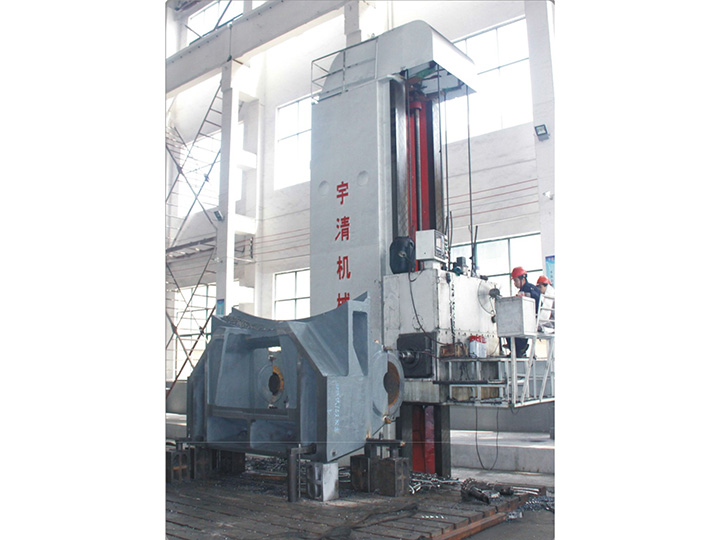
Changzhou Yuqing Heavy Industry Machinery Co., Ltd. (Yuqing Heavy Machinery) is a professional manufacturer of weldments — precision welded parts and structural components — with 37 years of experience serving the mining, shipbuilding, railway, metallurgy and heavy machinery industries.czyuqing.com
A weldment is a structural component or assembly produced by welding together individual metal parts, such as plates, tubes, castings and rolled sections. Unlike a simple welded joint, a weldment is a complete engineering product — a machine frame, a press structure, a ship section or a mining component — built to precise dimensional and strength requirements. This article explains the weldment manufacturing process, key considerations and how to select a reliable weldment fabrication partner.
What Is Weldment Fabrication?
Weldment fabrication is the complete production process that transforms raw steel into finished welded assemblies. The working principle combines material preparation, accurate fit-up and controlled welding to create components whose strength comes from the fused joints and the structural layout of the assembled parts. Weldments replace cast or forged one-piece structures in many applications because they offer design flexibility, faster delivery and lower cost for large or complex geometries.
The Weldment Manufacturing Process
1. Material Preparation
Steel plate and sections are selected, verified and cut to size using flatbed laser cutting or flame/plasma cutting.
2. Fit-Up and Assembly
Parts are positioned and clamped in fixtures or jigs to hold the required geometry before welding. Accurate fit-up minimizes distortion and rework.
3. Welding
Skilled welders or robotic welding systems join the parts using MIG/MAG, TIG, flux-cored or submerged arc welding, following qualified procedures.
4. Stress Relief (Optional)
Large or precision weldments may undergo heat treatment to relieve residual stress and improve dimensional stability.
5. Post-Weld Machining
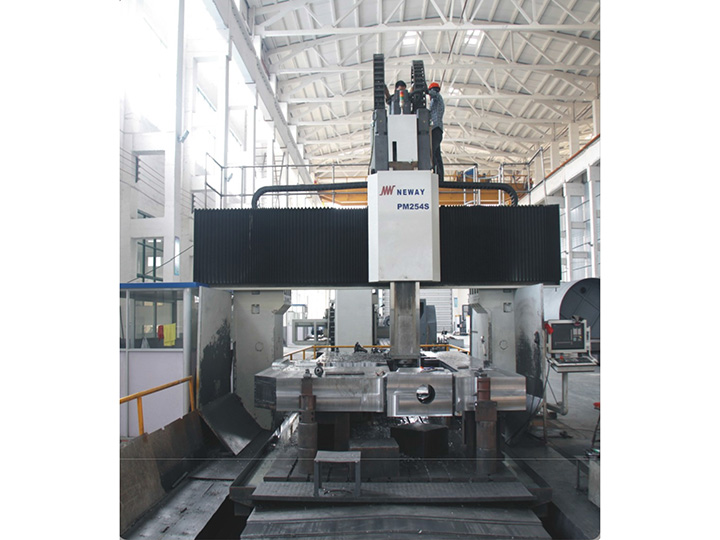
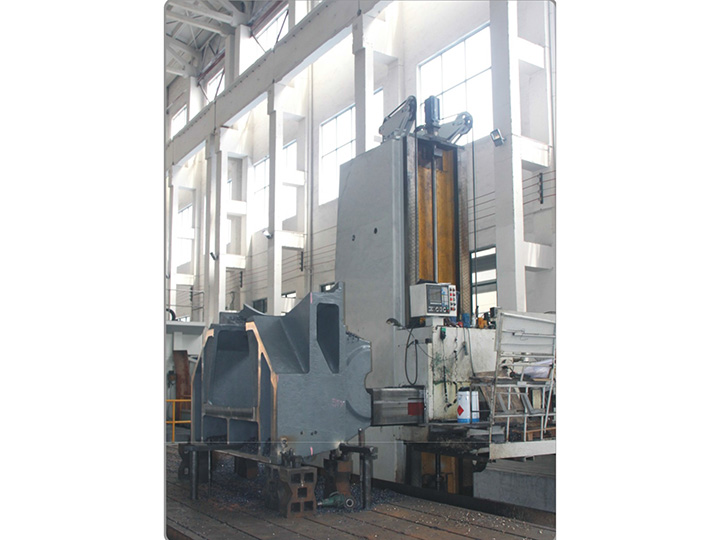
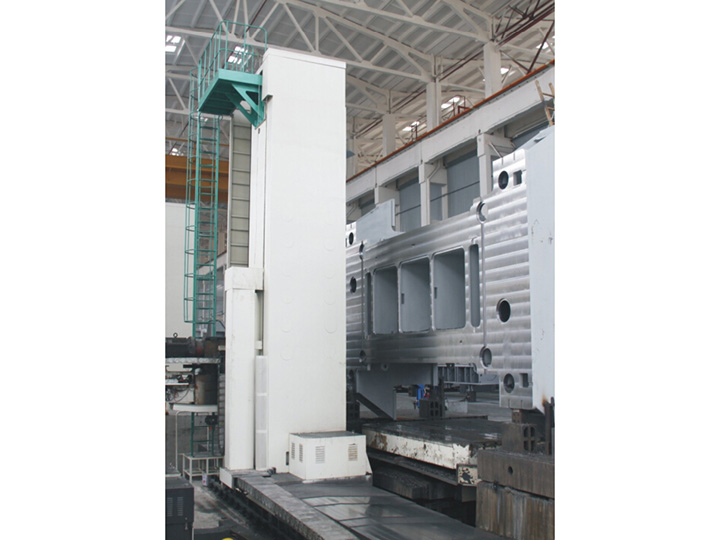
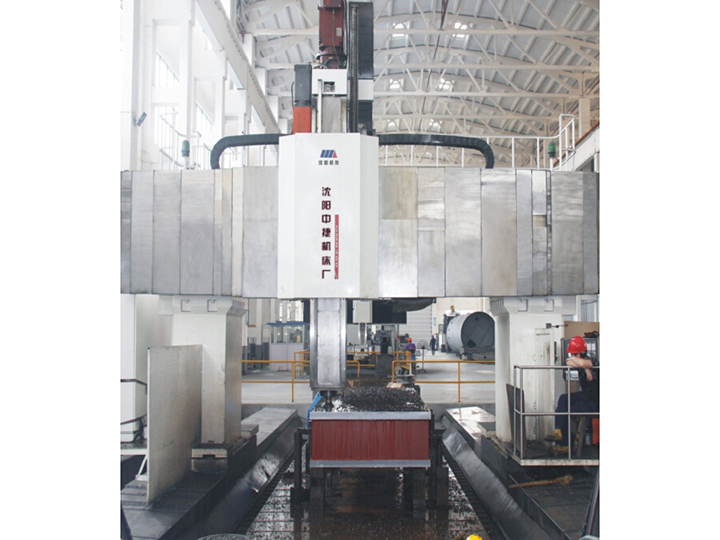
The weldment is machined on large gantry milling machines and CNC boring machines to achieve final tolerances, bores, faces and mounting surfaces.
6. Inspection and Finishing
Dimensional inspection, surface treatment and final quality checks complete the product.
Key Considerations in Weldment Fabrication
- Distortion control — weld shrinkage causes warping; fixtures, weld sequence and heat input management control it.
- Weld quality — proper procedures, filler metals and welder skills ensure sound, defect-free welds.
- Dimensional accuracy — machining after welding achieves final tolerances on precision surfaces.
- Material selection — plate grades, thickness and pre-processing must match the design load.
- Inspection — non-destructive testing verifies integrity of critical welds.
Quality Assurance for Welded Parts
An ISO-certified weldment manufacturer controls the entire process:
- Welding procedure and welder qualification — all welds follow approved, documented procedures.
- In-process inspection — fit-up checks and weld monitoring during production.
- Non-destructive testing — ultrasonic, magnetic particle or penetrant testing for critical welds.
- Dimensional verification — calibrated testing equipment confirms final geometry.
- Full-process traceability — records from material to final delivery.
Yuqing Heavy Machinery is equipped with various testing equipment and implements full-process quality control, producing high-quality welded parts that satisfy customer needs.czyuqing.com
Applications of Weldments
- Forging press and machine frames — heavy load-bearing welded structures.
- Aviation equipment — precision structural assemblies.
- Ship components — hull sections and marine structures.
- Mining equipment — crusher frames, screens and handling structures.
- Railway components — bogie frames and structural parts.
- Heavy machinery — bases, columns, booms and welded housings.
How to Choose a Weldment Fabrication Partner
1. Verify large-part capability — confirm the workshop handles your component size and weight.
2. Check welding and machining equipment — robotic welding, large gantry mills and CNC boring machines are essential for precision weldments.
3. Review quality systems — ISO certification, testing instruments and documented inspection.
4. Assess experience — decades of heavy-industry fabrication reduce project risk.
5. Confirm OEM/ODM support — a full-service partner manages drawing to export seamlessly.
Why Choose Yuqing Heavy Machinery
Changzhou Yuqing Heavy Industry Machinery Co., Ltd. combines 37 years of experience, an elite technical team and advanced equipment — including CNC floor-type milling and boring machines, gantry milling machines, laser cutting and automated welding lines — to deliver high-quality weldments and processed export products. Our customers include leading companies in China, the United States, Japan, South Korea, India, Thailand, Finland and Germany.
Send us your weldment drawings and specifications to receive a professional quotation today.