The single biggest variable. For a 10 cm³ part:
PEEK / engineering plastics: ~$25 of stock material → fast cycle, low tool wear
Pro tip: If your part doesn't need titanium's strength-to-weight, downgrade to 7075 aluminum. Most aerospace brackets that ship as Ti can be re-engineered to 7075-T6 at ~40% lower cost. We've done the conversion for three major drone OEMs — same flight envelope, ~$180k annual savings per program.
2. Machining time (25–40% of total cost)
Hourly rates in 2026 (China factory, single shift):
3-axis CNC milling: $25–$40 / hour (Yuqing rate: $28)
5-axis CNC milling: $45–$75 / hour (Yuqing rate: $52)
CNC turning: $25–$40 / hour (Yuqing rate: $28)
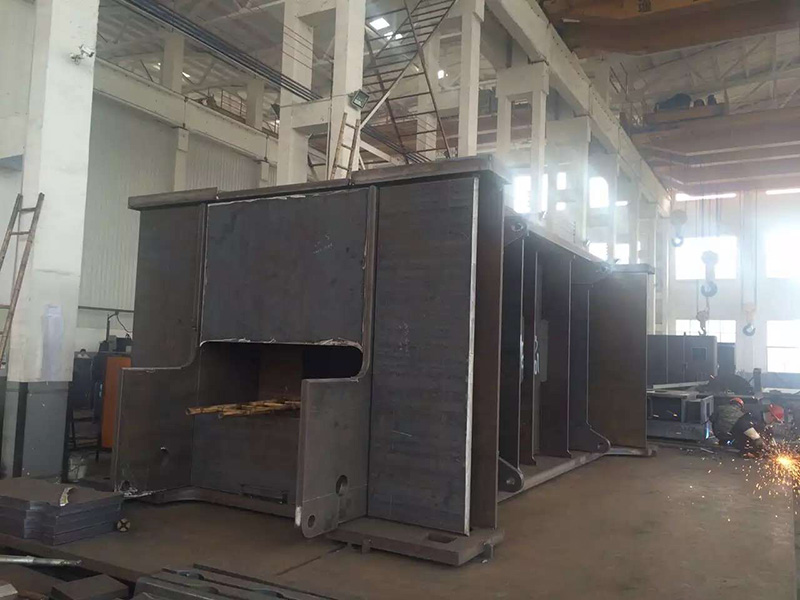
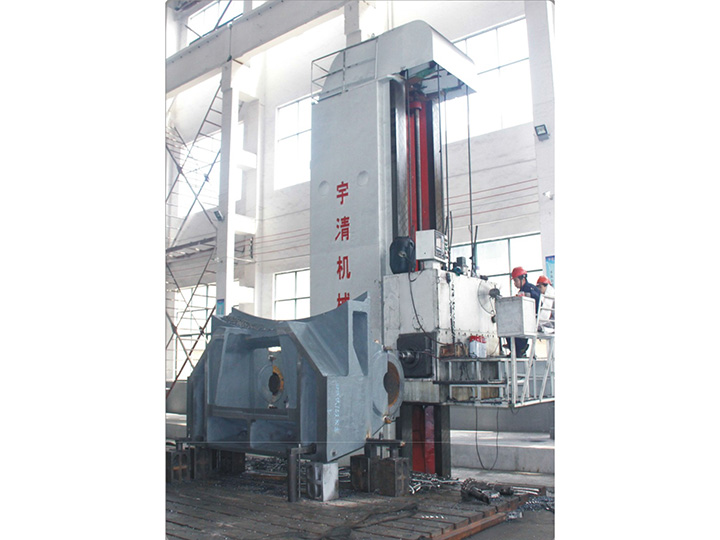
Floor-type boring: $60–$120 / hour (Yuqing rate: $85, due to machine depreciation)
Wire EDM: $35–$55 / hour (Yuqing rate: $40)
The same part on a 5-axis machine can cost 2× the 3-axis run — but it eliminates 2–3 secondary setups, so for complex parts the total cost is usually lower.
10,000+ pieces: Often switches to die casting or injection molding for sub-$2 parts
The crossover point where CNC becomes uneconomical vs. injection molding is roughly 5,000 pieces for simple geometries — CNC keeps winning for complex parts even at higher volumes.
How to Calculate a Quick Estimate
Use this formula before sending an RFQ:
Per-piece cost ≈
(Material volume × material $/in³)
+ (Machining time × machine $/hour)
+ (Setup cost / batch quantity)
+ (Surface finish premium %)
+ (Inspection cost, if required)
+ (Factory margin 15–25%)
Worked example (a real Yuqing quote from March 2026):
Part: aluminum 6061 bracket, 8 cm³ bounding box, 6 machined features, ±0.05 mm tolerance, batch of 50 pcs
Material: 8 × $0.80 = $6.40
Machining time: 22 min/pc × $28/hr = $10.27
Setup amortization: $130 / 50 pcs = $2.60
Tolerance premium: 8% = $1.55
Inspection (CMM): $50 / 50 = $1.00
Factory margin (18%): $3.93
Total: ~$25.75/pc
The buyer paid $26.50/pc on the PO. The 3% gap is normal — quotes usually land within ±10% of estimate when drawings are complete.
Frequently Asked Questions
How much does a single custom CNC part cost?
For a typical small-to-medium aluminum or steel part (under 100 mm in any dimension), prototype single-piece cost ranges from $50 to $500. The wide range reflects material, tolerance, and complexity. A simple 50 mm aluminum bracket with standard tolerance might cost $50; a complex titanium aerospace fitting with tight tolerances could cost $500.
Why is CNC machining so expensive for one-off parts?
Setup, programming, and fixturing consume 1–3 hours of labor before any metal is cut. For a single part, that $200 in setup is added to a $20 part, tripling its cost. Once you order 10+ pieces, setup amortizes — and per-piece cost drops dramatically.
Is CNC machining cheaper than 3D printing?
It depends on material and quantity. For 10+ aluminum or steel parts with tight tolerances, CNC is usually 50–80% cheaper than metal 3D printing (SLM/DMLS). For complex internal channels, lattice structures, or one-off prototypes in any metal, 3D printing wins. See our CNC vs 3D printing comparison guide for a full breakdown.
Do you charge for quotes?
No. Yuqing provides written quotes within 24 hours for STEP/IGES files, free of charge. We can also provide DFM (design for manufacturability) feedback at no cost — usually 2–3 suggestions to lower your cost or improve machinability.
What is the most cost-effective material for CNC machining?
Aluminum 6061-T6 is almost always the cheapest option that still offers good mechanical properties. Brass C360 is faster to machine (lower cycle time) but more expensive per kg. For most prototypes and short-run production, 6061 hits the sweet spot.
Can I get a discount for larger orders?
Yes. Volume discounts at Yuqing follow a tiered structure: 100+ pieces = 5–10% off, 500+ pieces = 15–25% off, 1,000+ pieces = 25–40% off. The exact discount depends on part complexity and material — request a quote with your target quantity.
How long does a CNC machining quote take?
Yuqing returns quotes in under 24 hours for standard parts (95% of RFQs). Complex parts requiring engineering review take 2–3 business days. If you need a quote faster than that — say, for a same-day response — mention it in your email subject line and we'll prioritize.
What information do I need to provide for an accurate quote?
Provide: (1) 3D model in STEP, IGES, or Parasolid format, (2) 2D drawing with critical dimensions and tolerances, (3) material specification, (4) quantity needed, (5) surface finish requirements, (6) any inspection or certification needs (material certs, CMM reports, etc.). The more complete your RFQ package, the more accurate the quote.