CNC vs 3D Printing (2026)
|
Metric |
CNC Machining |
Metal 3D Printing (SLM/DMLS) |
Source |
|
Hourly machine cost |
$25–$75 |
$80–$150 |
Industry benchmark |
|
Tolerance |
±0.01–0.1 mm |
±0.1–0.3 mm |
Industry spec |
|
Surface finish (as-printed) |
Ra 0.8–3.2 μm |
Ra 6–15 μm |
Process default |
|
Min. feature size |
0.5 mm |
0.2 mm |
Process limit |
|
Internal channels |
Limited (straight or simple curves) |
Any complexity |
Process capability |
|
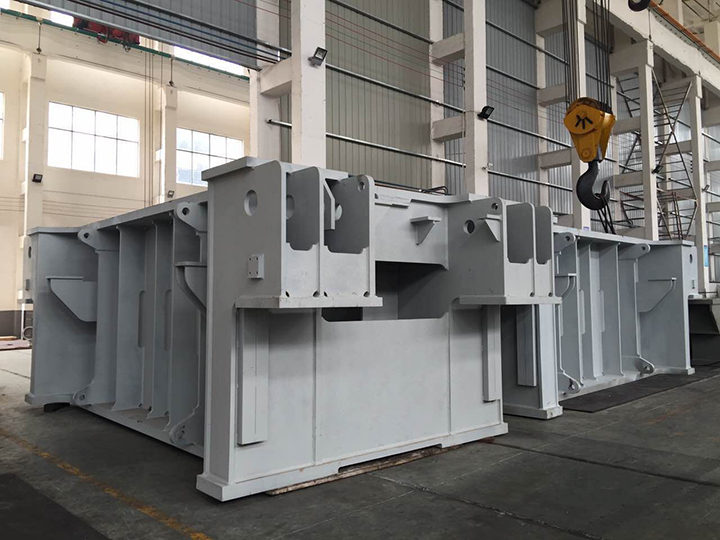
Max part size (Yuqing) |
6 m (gantry) |
400 × 400 × 350 mm |
Machine envelope |
|
Material certification |
Full (mill cert, traceability) |
Limited (powder cert only) |
Industry standard |
|
Per-piece cost at 1 piece |
$$ |
$$$ |
— |
|
Per-piece cost at 100 pieces |
$ |
$$$ |
— |
|
Per-piece cost at 1,000 pieces |
¢ |
$$$ |
— |
|
Lead time, prototype |
7–15 days |
3–7 days |
Yuqing data |
|
Tooling required |
Yes (vices, fixtures) |
No (just build plate) |
Process requirement |
When CNC Wins (Most Cases)
CNC machining is the right choice for ~70% of custom metal parts in production. Here's why:
1. Tight tolerances
CNC routinely holds ±0.025 mm. Metal 3D printing post-build is typically ±0.1–0.2 mm (and that requires HIP — hot isostatic pressing — to even approach that).
2. Production volumes above 10 pieces
The setup cost of CNC ($100–$300) gets amortized across multiple parts. 3D printing has near-zero setup but each part still takes 8–24 hours to build. At 10+ pieces, CNC wins on cost.
3. Material certification
CNC parts come with full mill certifications — material chemistry, mechanical properties, traceability. Critical for aerospace (AS9100), automotive (IATF 16949), and medical (ISO 13485).
4. Standard metals
Aluminum, steel, brass, copper — these all machine cleanly and cheaply. 3D printing adds $20–$50/kg powder premium.
5. Surface finish
As-machined parts come out at Ra 0.8–3.2 μm. 3D-printed parts come out at Ra 6–15 μm — and require post-processing (machining, polishing, bead blasting) to match CNC's surface.
6. Cost at scale
The same aluminum bracket:
CNC (100 pcs): $8.50/pc
3D printed (100 pcs): $42/pc
5× more expensive via 3D printing.
When 3D Printing Wins
3D printing is the right choice in specific, important scenarios:
1. Internal complexity
If your part has internal channels, lattice structures, or conformal cooling — features impossible to machine — 3D printing is the only option. Conformal cooling inserts for injection molds save 20–40% on cycle time; you cannot make these with CNC.
2. Topology-optimized structures
3D printing lets you print parts that are 30–60% lighter than machined equivalents, with strength concentrated where it matters. Aerospace brackets, satellite components, and high-end automotive suspension arms are now routinely topology-optimized + 3D printed.
3. Low-volume prototypes (1–5 pcs)
For a one-off prototype, 3D printing has near-zero setup. You can have a metal part in 3–5 days. CNC would need 7–10 days for the same one-off (including programming and fixturing).
4. Assembly consolidation
3D printing lets you merge 10 parts into 1 print. A bracket assembly with 8 fasteners becomes a single bracket with integrated bosses — saving assembly labor and reducing failure points.
5. Materials hard to machine
Titanium, Inconel, and tool steels are slow to machine. 3D printing these materials can be faster and cheaper, especially for complex geometries.
6. Field repairs and spares
Need to print a part on-site? Metal 3D printers are increasingly portable. Ship a powder cartridge + printer to a remote mine, oil rig, or naval vessel, and you can produce parts on demand.
Hybrid Workflows
Most modern products use both processes. A typical aerospace part might be:
3D printed as a near-net shape (reduces raw material by 60%)
CNC finish-machined to hold critical tolerances (interface surfaces, bearing seats)
HIP treated to close internal porosity
Surface finished (anodized, passivated, coated)
This hybrid approach captures the geometry benefits of 3D printing and the tolerance benefits of CNC. Yuqing runs both processes under one roof, so we can quote hybrid parts without managing two vendors.
Real Cost Comparison (Yuqing Quote, March 2026)
A medical device company requested a titanium bone screw prototype:
Geometry: M6 thread, 25 mm long, with 4 cross-cut retention slots
Material: Ti-6Al-4V
Quantity: 5 prototypes
Tolerance: ±0.025 mm on thread profile
Option A — CNC machining:
Material (Ti-6Al-4V bar stock): $42
Machining time: 38 min × $52/hr = $32.93
Setup + inspection: $80
Total: $154.93 per piece (× 5 = $774.65)
Option B — Metal 3D printing (SLM):
Powder material: $85
Build time (5 parts nested on plate): 9 hours × $110/hr = $990
HIP + heat treatment: $40/pc = $200
Support removal + machining of thread: $30/pc = $150
Inspection (CT scan for porosity): $60/pc = $300
Total: $317.50 per piece (× 5 = $1,587.50)
CNC won by 51% on this part. The complexity was low enough that 3D printing's flexibility didn't pay off.
But contrast: an aerospace manifold with 7 internal intersecting channels:
CNC: impossible (or requires EDM + 5-axis = $4,500/pc)
3D printing: $580/pc, with HIP + finish machining = $850/pc
Different part, different answer.
How to Decide for Your Part
Ask these 5 questions in order:
Does the part have internal channels or lattice structure?
→ Yes: 3D printing (or hybrid).
What's the quantity?
→ 1–5 pcs + complex geometry: 3D printing. 1–5 pcs + simple geometry: either. 10+ pcs: CNC.
What tolerance do you need?
→ ±0.05 mm or tighter: CNC. ±0.1 mm or looser: either.
Does it need material certification?
→ Yes (aerospace, medical, automotive): CNC.
What's the lead time?
→ 3 days or less: 3D printing. 7+ days: either.
If you're still unsure, send us your STEP file. We'll quote both options and let the numbers decide.
Frequently Asked Questions
Is CNC machining cheaper than 3D printing?
For most custom metal parts in low-to-medium volume, yes — CNC is 50–80% cheaper. For complex geometry with internal channels or for prototypes below 5 pieces, 3D printing is sometimes competitive or cheaper.
What materials can be 3D printed?
Common metal 3D printing materials: aluminum (AlSi10Mg), titanium (Ti-6Al-4V), stainless steel (316L, 17-4PH), Inconel 718/625, maraging steel, cobalt chrome. Plastics: ABS, PA12 (nylon), polycarbonate, TPU, PEEK. Exotic materials (tungsten, pure copper) are emerging.
Can 3D printed metal parts be used in production?
Yes — aerospace, medical, and automotive have qualified metal 3D printed parts for serial production. Examples: GE Aviation's fuel nozzles (printed in Ti-6Al-4V), SpaceX's SuperDraco engine chambers (Inconel), and several medical implants. The qualification process requires mechanical testing and process validation per industry standard.
What surface finish can you get on 3D printed parts?
As-printed: Ra 6–15 μm. After bead blasting: Ra 3–8 μm. After post-machining: Ra 0.8 μm. After polishing or electropolishing: Ra 0.1 μm. Most production parts need at least bead blasting + critical surface machining.
Can you 3D print aluminum 6061?
Standard SLM/DMLS printers print AlSi10Mg (a casting-grade alloy), not 6061. For aerospace parts needing 6061-T6 properties, CNC is the right process. Newer binder jetting and additive-subtractive hybrid machines are starting to support 6061 — contact us for availability.
What is the largest 3D printed part Yuqing can produce?
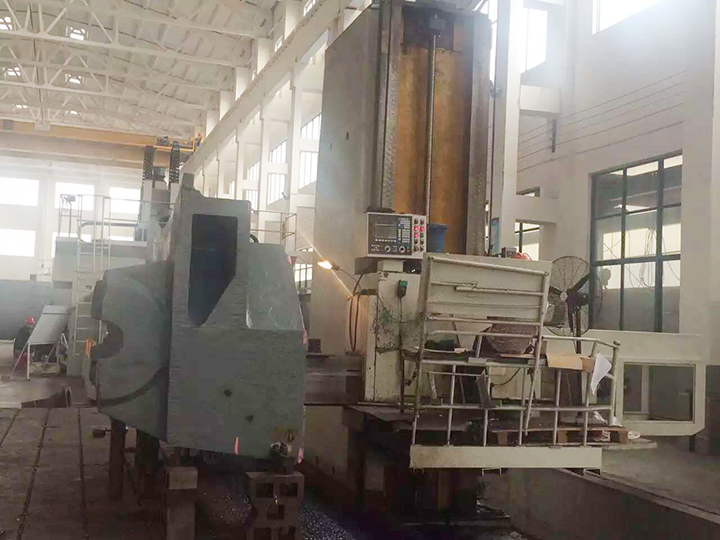
Our metal 3D printers have a build envelope of 400 × 400 × 350 mm per build. For larger parts, we section them and weld / bolt them together. For very large parts (over 1 m), CNC machining on our gantry or floor-type machines is the better option.
Do you offer both CNC and 3D printing?
Yes. Yuqing runs both processes under one roof. Send us your STEP file and we'll quote both — free of charge — so you can compare directly. We have no incentive to push one over the other.
How long does 3D printing take vs CNC?
3D printing: typically 3–7 days including post-processing (heat treatment, support removal, machining). CNC machining: typically 7–15 days for prototypes, faster for production runs. For urgent jobs, we offer expedited service on both.