Most quotes for machining complex parts look similar on paper. The difference shows up three weeks later, when the parts arrive — or when they do not, because the shop found a problem nobody asked about at the quoting stage.
These five questions are the ones that separate a supplier who can genuinely take on complex work from one who is pricing it optimistically. They are the questions worth asking before you place the order, not after.
Question 1: Which Machine, and Can It Reach Every Feature?
Name the Machine, Not the Category
The answer should name a machine and its working envelope, not a category.
Complex geometry often needs 4 or 5-axis capability, or a machine with enough reach to get a long tool into a deep cavity. If the supplier cannot tell you which machine will run the job, the setup plan does not exist yet — and the quote is a guess.
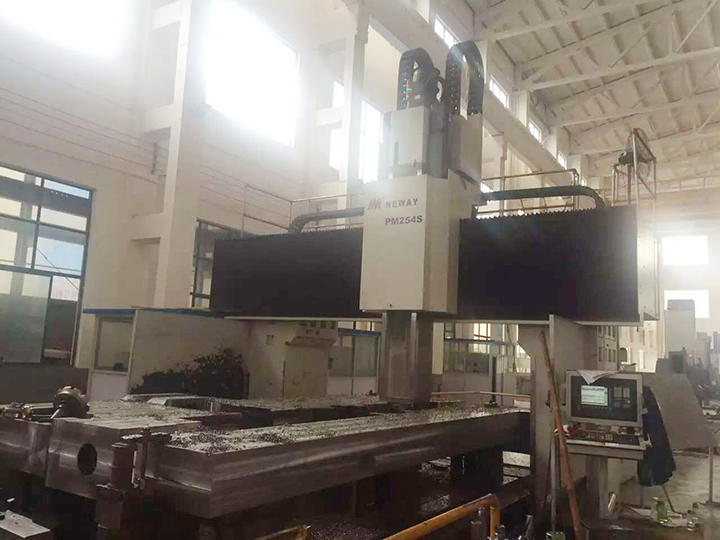
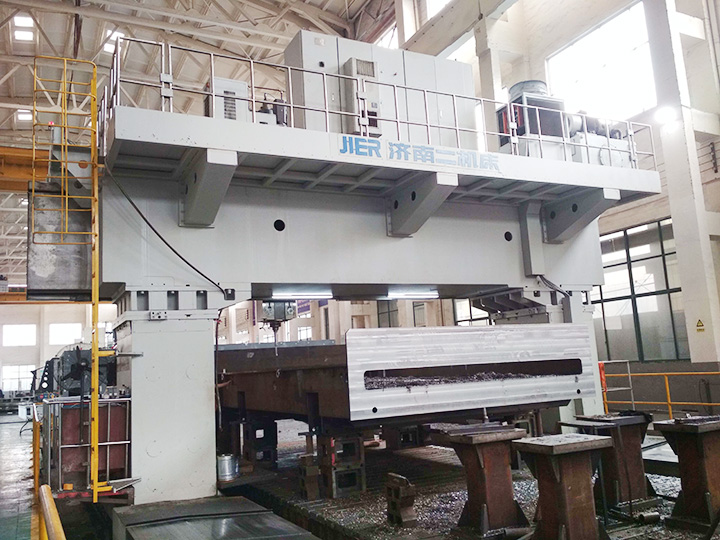
At Changzhou Yuqing Heavy Industry Machinery Co., Ltd. (Yuqing Heavy Machinery), complex part work runs on 3, 4 and 5-axis machines with tolerances to ±0.001in (0.025mm), alongside gantry machining centres with a 6000 × 13000mm table and floor-type boring and milling machines with Φ160 and Φ200 spindles. Different geometry goes on different machines, and the choice is made at review rather than at the machine.
Question 2: How Many Setups, and What Is the Datum Plan?
Setup count drives cost, lead time and risk simultaneously. Every additional setup adds a re-clamping error and a queue position.
The related question is more important: which datum carries through the operations? If the first operation datums from a raw surface and the second from a machined one, the part is being made in two coordinate systems. On complex parts with dimensions stacked three deep, that is where out-of-tolerance results come from.
A supplier with a real plan will answer both in one sentence: "three setups, datuming from the machined base face throughout."
Question 3: Can You Hold the Tolerance — and Where Does It Cost Extra?
Batch Tolerance, Not Best Case
There is a large difference between the tightest tolerance a shop can achieve on one feature and the tolerance it can hold across a batch.
Ask for the batch tolerance, not the best-case number. Then ask which features are driving the cost. On most complex parts, one or two features account for a disproportionate share of the price — a bearing bore, a sealing face, an alignment hole. If the function does not require that tolerance, relaxing it is free money.
Yuqing holds tolerances within ±0.005mm on precision work, with finer results achievable on specific features, and works to ISO GPS standards with alignment to ASME Y14.5, DIN or JIS depending on the destination market.
Question 4: What Happens With Material and Heat Treatment?
Material choice and heat treatment sequence are where complex parts most often go wrong.
Titanium and high-temperature alloys cut far slower than aluminium, so a material change can multiply cycle time. And a part that is heat treated after finish machining will move — sometimes by more than its tolerance. The correct sequence is rough, treat, semi-finish, finish, and a supplier who treats after finishing has either a very stable part or a problem waiting to appear.
Worth confirming: whether heat treatment and surface treatment are done in-house or subcontracted, and who owns the schedule if the subcontractor slips.
Question 5: What Inspection Report Comes With the Parts?
Measured Values, Not Pass or Fail
Complex geometry is hard to measure, and a report that says "inspection passed" tells you nothing.
Ask for measured values on each critical feature, not pass/fail marks. Ask which instrument produced them — CMM, roughness tester, hardness tester, metallographic analysis, or non-destructive testing. Ask whether the report identifies the datum scheme, so you can confirm it matches the drawing.
|
Question |
Weak answer |
Strong answer |
|
Machine |
"A CNC machine" |
Named machine, stated envelope |
|
Setups |
"A few" |
Number, plus datum plan |
|
Tolerance |
"We can hold it" |
Batch tolerance, cost-driving features named |
|
Material and heat treatment |
"Standard" |
Grade confirmed, sequence stated, in-house or subcontracted |
|
Inspection |
"Inspection passed" |
CMM values per feature, instruments named |
What These Questions Reveal
A supplier who can answer all five without going away to check is a supplier who has already thought about your part. One who answers four of them vaguely has not.
The answers also give you a basis for comparison. Two quotes at the same price with different setup counts, different tolerance strategies and different inspection packages are not the same offer — and the one that looks cheaper often has a shorter inspection report.
Cost and Lead Time Drivers
For reference, the factors that move price on complex machining:
• Tolerance class — tightening from ±0.05mm to ±0.01mm can double the machining time
• Setup count — each extra setup adds fixture cost and handling risk
• Material machinability — alloy steels and titanium cut slower than aluminium
• Geometry access — deep cavities, undercuts and thin walls need special tooling
• Quantity — one-off parts carry the full programming and fixturing cost
• Inspection depth — full CMM reporting on every feature is time, and it is optional on non-critical work
Industries Served
Complex part machining service
Complex part machining at Yuqing supports aerospace, medical, automotive, energy, defence and general industrial OEM work, in materials including stainless steel, titanium and engineering plastics.
About Yuqing Heavy Machinery
Changzhou Yuqing Heavy Industry Machinery Co., Ltd. has operated since 1989 from a 10,000m² plant in Xueyanqiao Town, Wujin District, Changzhou, Jiangsu, China, with more than 70 staff and over 30 machines. The company holds ISO certification, was recognised as a national high-tech enterprise in 2025, and serves customers in China as well as the United States, Japan, South Korea, India, Thailand, Finland and Germany. Integrated machining, welding and casting capability means heavy complex parts can be fabricated and finished under one roof.
Send your drawings to sales@czyqzg.com or call +86 13906152937 for a manufacturing review and quotation.