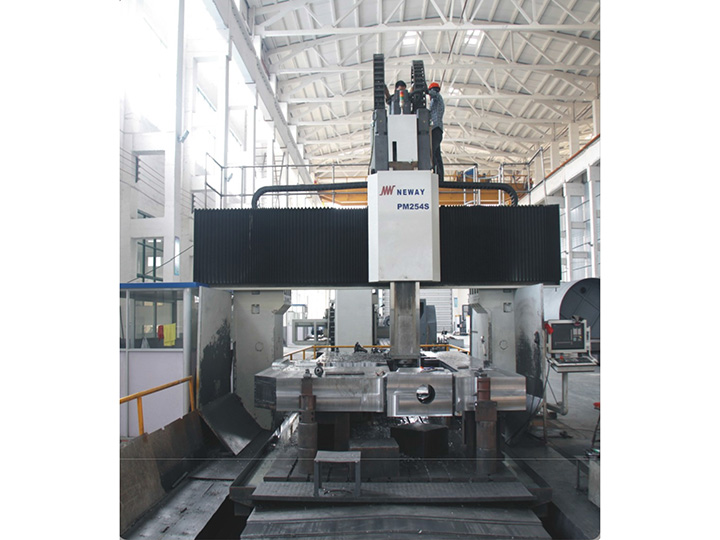
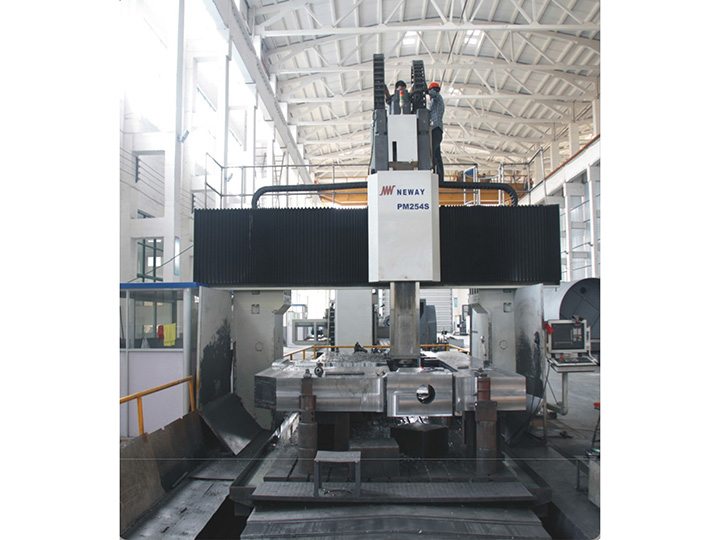
In modern manufacturing, milling machine processing is a core technology that removes material and shapes workpieces through rotating cutters—it is like a precision sculptor in the industrial field, transforming raw materials such as metals and plastics into various parts that meet size and performance requirements, supporting the production chains of multiple industries such as automotive, aerospace, and electronics.
I. What is Milling Machine Processing?
The principle of
milling machine processing is intuitive: through the relative movement between a high-speed rotating cutter (such as an end mill, drill bit) and the workpiece fixed on the worktable, excess material is gradually cut away to finally obtain the desired shape (such as flat surfaces, grooves, curved surfaces, or complex contours). The core of this process is controlled material removal, which can ensure precision and adapt to various workpiece requirements.
II. Common Types of Milling Machines and Their Application Scenarios
Different milling machine designs correspond to different processing needs, and choosing the right type is the first step to ensure efficiency and quality:
1. Vertical Milling Machine
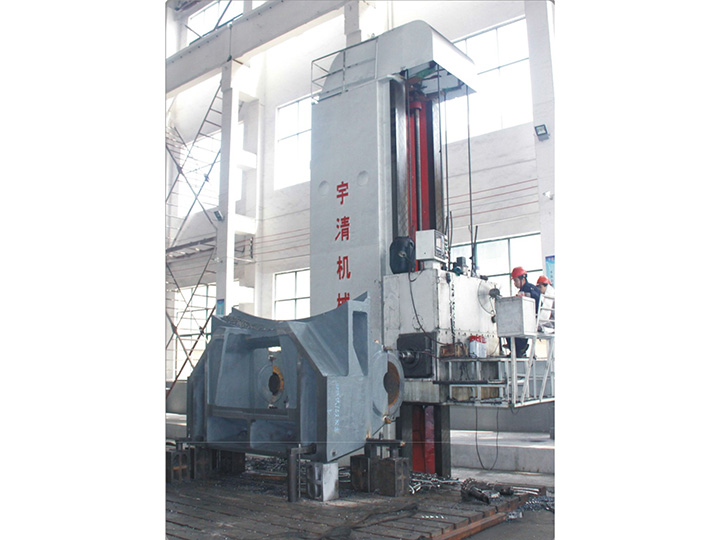
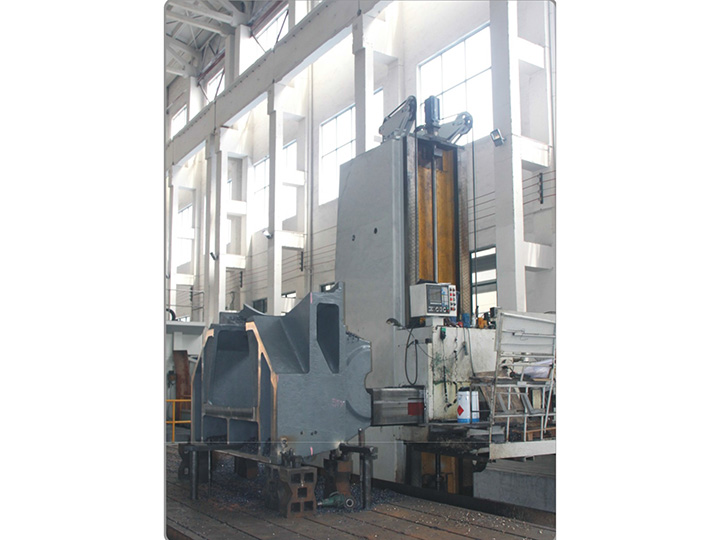
The spindle of a vertical milling machine is perpendicular to the worktable, and the cutter cuts into the workpiece vertically from above, suitable for operations such as drilling, cutting, and flat surface milling. Its advantages are flexible operation and high precision, especially suitable for industries with strict tolerance requirements (such as aerospace and automotive manufacturing)—for example, processing precision holes in aircraft components or the flat surface of automobile engine cylinder heads.
2. Horizontal Milling Machine
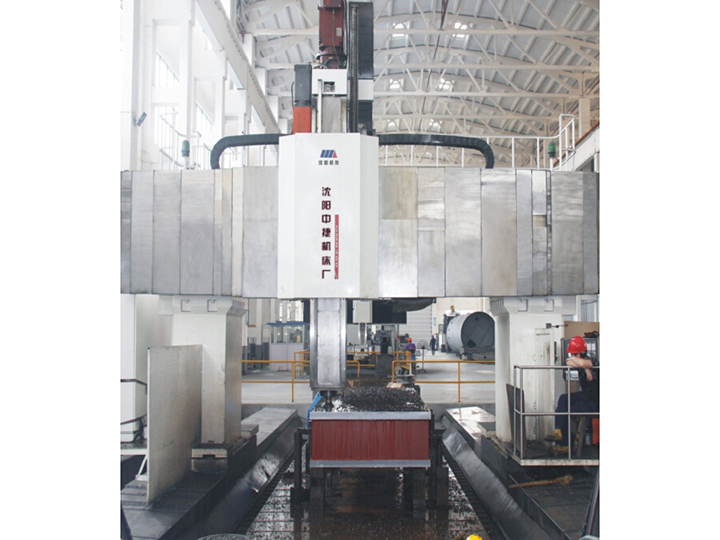
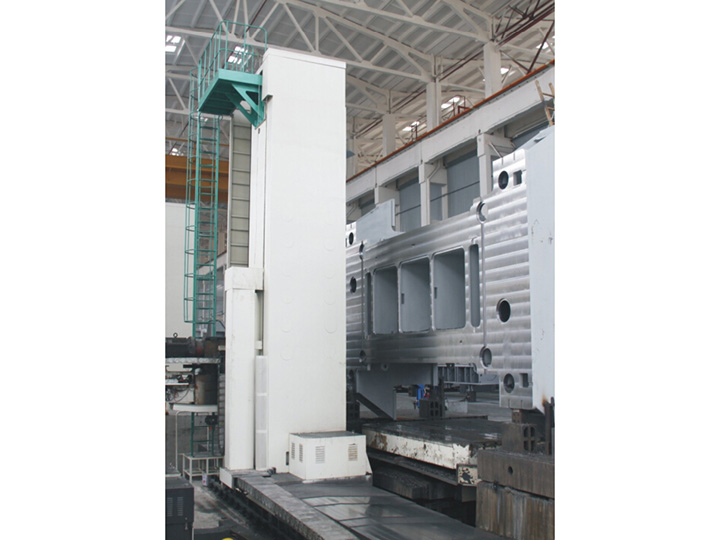
The spindle of a horizontal milling machine is parallel to the worktable, and the cutter rotates horizontally, more suitable for processing large-sized, thick materials (such as cast iron plates, steel blocks). It has stronger planar rigidity and is good at slotting, grooving, and milling long flat surfaces (such as the guide surface of machine tool beds), making it the first choice for heavy metal processing.
3. CNC Milling Machine
CNC milling machines are controlled by computer programs and do not require manual operation of the cutter path. They are characterized by high precision, high repeatability, and automation—for example, when processing batch mobile phone middle frames, CNC can ensure that each part has exactly the same size; even complex curved surfaces (such as turbine blades) can be precisely cut through programming. Now, CNC milling machines have become the main force of modern manufacturing.
4. Universal Milling Machine
Universal milling machines combine the advantages of vertical and horizontal types, with a spindle that can be switched between vertical and horizontal installation, capable of handling multiple processing needs (such as milling a flat surface first and then cutting a slot). They are highly flexible and suitable for small-batch, multi-variety part production (such as trial production parts in mold workshops).
III. Key Technical Points of Milling Machine Processing
To produce high-quality parts, the following key links need to be mastered:
1. Material Selection
Materials determine the performance of parts:
- Aluminum (lightweight): Suitable for aircraft structural parts in aerospace and casings of electronic equipment;
- Steel (high strength): Used for automotive transmission gears and engine blocks;
- Plastics (corrosion-resistant): Suitable for circuit board brackets in the electronics industry and parts of medical equipment.
Choosing the right material ensures that parts last long and perform well.
2. Cutter Selection
Cutters are the teeth of cutting and need to match the material and shape:
- End mill: Milling flat surfaces and step surfaces;
- Ball-end mill: Processing curved surfaces and arcs (such as mold cavities);
- Face mill: Rapidly milling large-area flat surfaces;
- Drill bit: Drilling holes (such as oil passage holes in engines).
Using the wrong cutter can lead to inability to cut or cutter chipping—for example, using an ordinary milling cutter to process hard steel can easily cause excessive wear of the cutting edge.
3. Cutting Parameter Setting
Cutting speed, feed rate, and cutting depth are the three key parameters:
- Cutting speed: The speed at which the cutter rotates (for example, the speed for processing aluminum is faster than that for steel because aluminum is softer);
- Feed rate: The speed at which the workpiece moves (too fast will make the cutter overworked, too slow will reduce efficiency);
- Cutting depth: The thickness of the cutter's cut each time (too deep will cause vibration, too shallow requires multiple cuts).
Reasonable parameters can balance quality and efficiency—for example, when processing steel parts, appropriately reducing the cutting speed can avoid overheating and burning of the cutter.
4. Workpiece Clamping
The workpiece must be firmly fixed on the worktable (using vices, pressure plates, or fixtures), otherwise, vibration during processing will lead to:
- Part size deviation (such as waviness when milling flat surfaces);
- Cutter chipping (vibration will cause uneven force on the cutter).
The principle of clamping is stable, accurate, and firm—for example, when processing thin-walled parts, soft jaws (such as copper pads) need to be used to prevent clamping deformation.
5. Processing Process Control
Real-time monitoring is required during processing:
- Listen to the sound: If the cutter makes a squealing sound, the speed may be too fast;
- Observe the chips: Continuous ribbon chips are normal; if they are powder, the cutter may be dull;
- Measure dimensions: Regularly check part dimensions with calipers and micrometers, and adjust parameters in time.
IV. Four Major Advantages of Milling Machine Processing
Why has milling machine processing become an industry favorite? Because it has irreplaceable advantages:
1. High Precision
It can process parts with tolerances of ±0.01mm or even smaller (such as aerospace turbine blades with tolerance requirements of several microns), meeting the needs of precision equipment.
2. High Efficiency
CNC milling machines can operate continuously 24 hours a day, which is 5-10 times more efficient than traditional manual milling machines; even complex parts can be completed quickly through programming.
3. Strong Flexibility
Whether it is a simple flat surface or a complex curved surface (such as automotive headlight molds), milling machines can handle it; they can even process one-time customized parts (such as metal sculptures for art installations).
4. Wide Application
From automotive engines to mobile phone camera brackets, from aircraft wings to medical device scalpels, almost all industries require milling machine processing.
V. Industry Application Cases of Milling Machine Processing
1. Automotive Industry
Processing engine blocks, transmission gears, and chassis suspension parts—for example, automotive engine blocks need to be milled on flat surfaces with vertical milling machines and then processed for oil passage holes with CNC to ensure sealing performance.
2. Aerospace
Processing aircraft wing structural parts, turbine blades, and landing gear parts—for example, the curved surfaces of turbine blades can only be accurately cut by CNC milling machines to ensure the power output of the engine.
3. Electronic Manufacturing
Processing metal brackets for circuit boards, mobile phone middle frames, and sensor casings—for example, mobile phone middle frames need to be processed with CNC milling machines to create precise button holes and charging ports to ensure fit with the screen.
4. Metal Processing
Producing various precision hardware parts (such as mold cores and mechanical drive shafts)—for example, injection molds in mold workshops need to be milled to form the curved surfaces of the to produce qualified plastic parts.
VI. Conclusion: Milling Machine Processing is the Cornerstone of Manufacturing
As a precise, efficient, and flexible technology, milling machine processing has long become the core technology of various industries. Whether it is automotive safety components or aerospace precision parts, they are inseparable from the sculpting of milling machines.
To do well in milling machine processing, the key is choosing the right tools + mastering technology: select vertical milling machines for high-precision parts, use CNC for automated production, choose steel materials for high-strength parts... Only by combining these points can milling machine processing exert its maximum value.
In the future, with the development of AI and numerical control technology, milling machine processing will become more intelligent and efficient—but the core precision and quality will always be its soul.