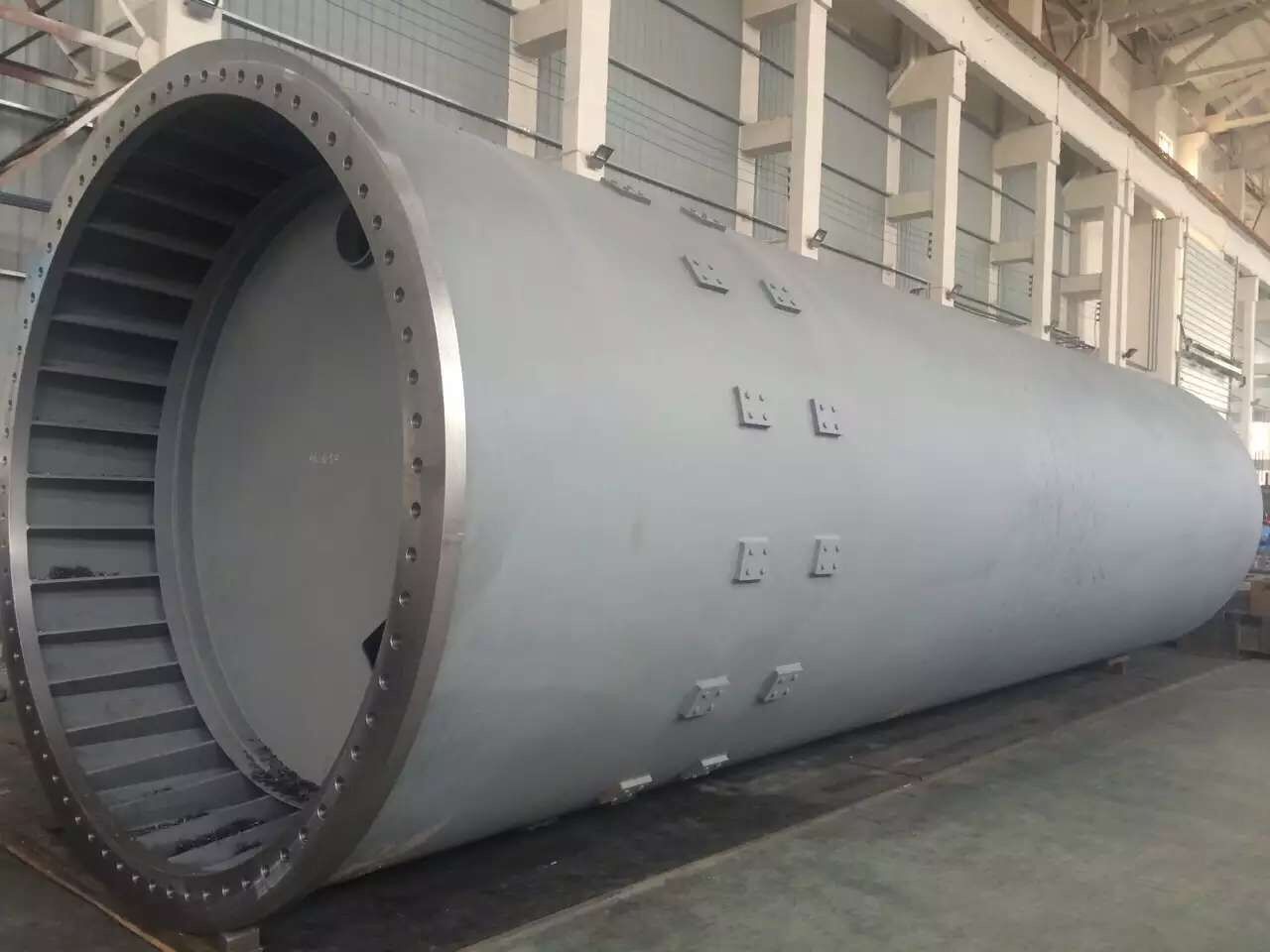
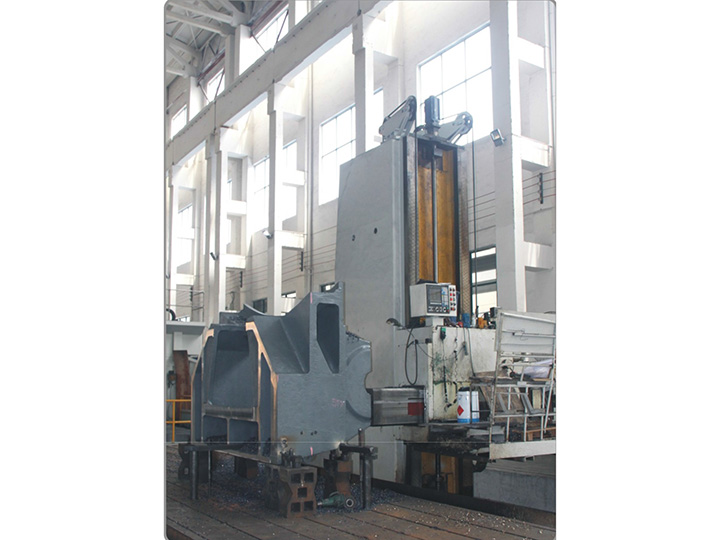
In the modern manufacturing industry that pursues high precision, high efficiency, and flexibility, boring machine processing, with its digital control and precision machining capabilities, has become the technical cornerstone supporting high-end fields such as aerospace, automotive, and medical industries. Whether it is the precise hole system of engine cylinders, complex curved surfaces of surgical instruments, or spatial cavities of aviation components, boring machine processing can meet the requirements with stable performance. This article will comprehensively analyze the importance and advantages of boring machine processing from technical logic, core value to practical applications.
I. What is Boring Machine Processing?
Boring machine processing is a precision machining technology based on digital program control - through computer programming input instructions, the equipment is driven to complete operations such as hole machining, end face processing, chamfering, and complex curved surface cutting of workpieces. It inherits the core principle of traditional boring machines, where the boring tool rotation is the main movement, and the workpiece or boring tool movement is the feed, while integrating system precise control to achieve automation, high precision, and high efficiency in the machining process.
In simple terms, boring machine processing is like an industrial precision engraving machine: computer instructions replace manual operations, allowing the boring tool to cut precisely according to a preset path, avoiding human errors and coping with complex processing requirements.
II. Core Technical Support of Boring Machine Processing
The high precision and stability of boring machine processing originate from the synergy of three core technical modules:
1. Mechanical Structure: The Physical Foundation of Precision
- Bed and Worktable: The bed is the foundation of the equipment, made of high-strength materials to ensure no deformation during processing; the worktable realizes precise movement along the X and Y axes through high-precision guide rails and clamping devices, and some equipment supports multi-axis linkage to handle spatial processing of complex workpieces (such as curved surfaces and cavities).
- Spindle Unit: As the cutting power source, the spindle drives the boring tool to rotate, and its precision directly affects the processing quality. It realizes stepless speed change through frequency conversion or servo motors to adapt to cutting requirements of different materials (steel, aluminum, cast iron); it is also equipped with a cooling system to reduce vibration and heat during high-speed rotation and maintain cutting stability.
- Feed Transmission System: Composed of servo motors, ball screws, and guide rails, it is responsible for controlling the feed movement of the worktable or spindle. The cooperation between the ball screw and the servo motor can precisely control the feed rate; the guide rails ensure smooth movement, avoid crawling phenomenon, and ensure consistent processing dimensions.
- Boring Tool System: Different types of boring tools (through holes, blind holes, fine adjustment) are selected according to processing requirements. The tool materials are mainly cemented carbide and high-speed steel, with high hardness and wear resistance, suitable for cutting various materials.
2. Control System: The Brain Center of Processing
The control system is the core of boring machine processing, composed of hardware (controller, display, operation panel, servo driver) and software (operating system, programming software, machining simulation software), mainly realizing four functions:
- Program input and editing: Convert the processing path into instructions recognizable by the equipment;
- Motion control: Precisely drive various components to work together;
- Precision compensation: Correct equipment errors to ensure processing accuracy;
- Status monitoring: Real-time feedback of equipment operating status and early warning of faults.
Through software machining simulation, processing problems (such as collisions, over-cutting) can be predicted in advance, reducing trial-and-error costs.
3. Auxiliary Devices: Guarantee for Efficiency and Safety
- Cooling and Lubrication System: By spraying cutting fluid circulation, it reduces cutting temperature, reduces tool wear, and flushes away chips to avoid residue affecting precision;
- Chip Removal Device: Timely cleaning of chips generated during processing, suitable for mass production, keeping the worktable clean;
- Protective Device: Adopting closed or semi-closed structure to prevent cutting fluid splashing, chip injury to people, and reduce the impact of dust on the equipment;
- Detection Device: Some high-end equipment is equipped with an online measurement system to detect workpiece dimensions in real-time and automatically adjust processing parameters to further improve precision.
III. Core Value of Boring Machine Processing: Solving Precision Pain Points in Manufacturing
Boring machine processing has become a just need in modern manufacturing because it can solve four core needs that traditional processing cannot meet:
1. Gold Standard for High-Precision Hole System Processing
Boring machines are the first choice for complex hole system processing (such as deep holes, stepped holes, eccentric holes), capable of processing holes with diameters from a few millimeters to hundreds of millimeters, and the hole diameter tolerance can be controlled within a very small range, meeting the strict requirements for hole precision in high-end manufacturing (such as engine cylinders and holes in aviation components).
2. Flexible Processing of Complex Curved Surfaces and Cavities
Through multi-axis linkage (3-axis, 4-axis, 5-axis), boring machines can realize continuous cutting of spatial curved surfaces and irregular cavities without multiple clamping of workpieces - this not only reduces clamping errors but also handles complex structures that traditional equipment cannot complete (such as curved surfaces of medical surgical instruments and cavities of aero-engines).
3. Multi-Process Integration to Improve Production Efficiency
Boring machines can integrate boring, milling, drilling, reaming, and tapping and other processes. The workpiece can complete multi-face and multi-process processing with one clamping. For example, automobile engine blocks, which originally required multiple equipment and multiple clampings, can be processed with boring machines to significantly reduce clamping time and transportation costs and improve production efficiency.
4. Supporting Stable Production in High-End Manufacturing
In fields such as aerospace, national defense, and high-end equipment, part consistency is crucial - boring machine processing avoids quality fluctuations caused by human factors through digital control, realizing exactly the same parts in mass production.
IV. Practical Applications of Boring Machine Processing: Precision Assistant Penetrating Multiple Industries
The application scenarios of boring machine processing cover high-end manufacturing to general production, typical cases include:
- Automotive Industry: Hole system processing of engine cylinders and cylinder blocks;
- Aerospace: Precision hole processing of engine components (such as turbine disks);
- Medical Field: Precision processing of surgical instruments (such as orthopedic implants);
- Oil and Gas: Hole system and end face processing of valve bodies, drill collars, and pipelines;
- General Manufacturing: Various workpieces requiring precise hole dimensions and alignment (such as molds, gearboxes).
V. Basic Process of Boring Machine Processing: From Preparation to Finished Product
The process of boring machine processing can be summarized into three major steps:
1. Preparatory Work
- Workpiece Clamping: Fix the workpiece on the worktable to ensure stability;
- Tool Selection: Select appropriate boring tools according to processing requirements (hole type, material);
- Parameter Setting: Set spindle speed, feed rate, cutting depth, and other parameters.
2. Processing Steps
- Rough Machining: Quickly remove most of the to improve efficiency;
- Semi-Finishing: Further correct dimensions to prepare for finishing;
- Finishing: Meet the final precision requirements;
- Deburring: Clean up burrs after processing to ensure the workpiece surface is smooth.
3. Quality Control
Check workpiece dimensions and precision through tools (such as micrometers, vernier calipers). Common problems include hole diameter deviation (adjust feed rate or tool), poor surface roughness (optimize cutting parameters or change tools), and hole position offset (check clamping or guide rail precision).
VI. Summary: The Future of Boring Machine Processing - Smarter and More Precise
Boring machine processing is the precision machining backbone of modern manufacturing. Its characteristics of digital control, high-precision output, and flexible production make it play an irreplaceable role in precision hole systems, complex structures, and efficient processing.
With the development of intelligent manufacturing technology, boring machine processing is evolving towards higher precision (such as nanoscale processing), higher efficiency (such as high-speed cutting), and more intelligence (such as AI adaptive control, digital twin). In the future, it will continue to empower the transformation and upgrading of the manufacturing industry and become an important support for Made in China to leap to China Precision Manufacturing.
This article comprehensively analyzes the value of boring machine processing from technical logic to practical applications - for manufacturing enterprises pursuing precision and efficiency, mastering boring machine processing technology is the admission ticket to high-end manufacturing.