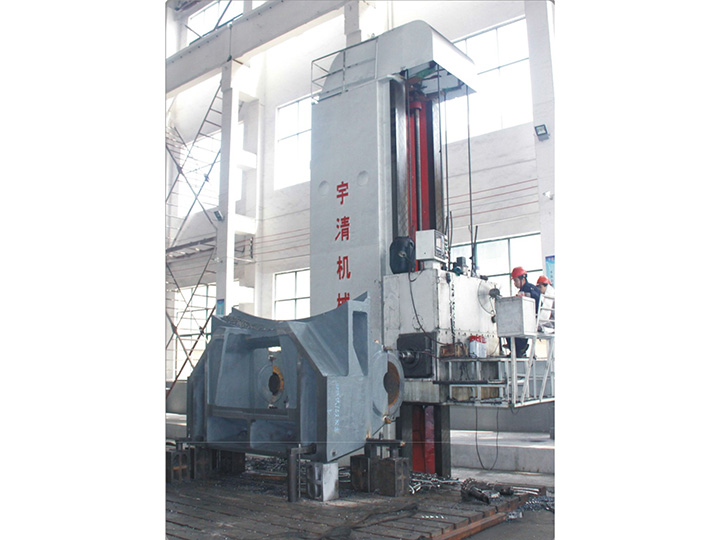
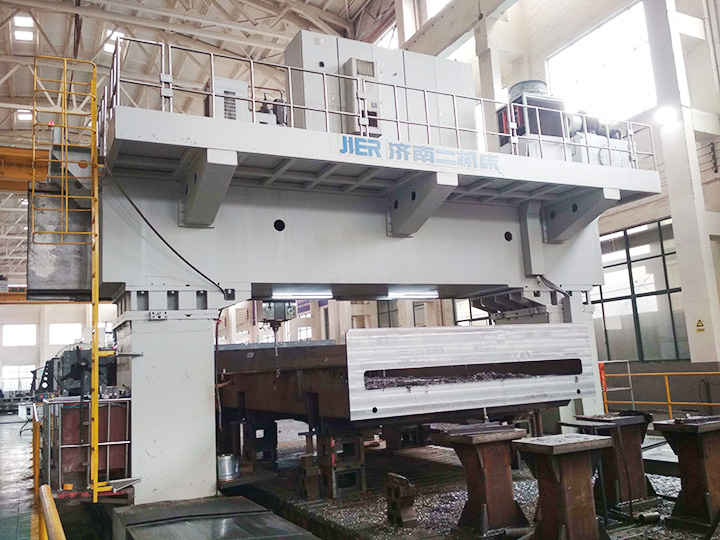
In today's modern manufacturing industry that pursues high precision, high efficiency, and high consistency, a composite process that can simultaneously solve hole machining and plane/contour machining - boring and milling machining - is becoming the core machining solution in automotive, aerospace, electronics, and other industries. It not only breaks the traditional step-by-step production mode of boring machine + milling machine but also, with the advantage of one-time clamping and multi-process completion, has become the efficiency engine for high-precision parts manufacturing.
I. What is Boring and Milling Machining? Core Definition and Process Logic
Boring and milling machining is a composite machining technology that integrates boring and milling processes into a single machine tool. It combines the high-precision hole machining capability of a boring machine with the plane/contour machining capability of a milling machine, enabling efficient production where a part is fixed once and multiple machining steps can be completed.
Its core logic is compositing: through precise control by the numerical control system, the machine tool can switch between different tools such as boring tools, milling cutters, and drills, and complete processes like precision hole boring → plane milling → thread tapping under the same coordinate system. This completely solves the problem of error accumulation caused by multiple clampings in traditional step-by-step machining, fundamentally improving machining accuracy and efficiency.
II. Core Application Scenarios of Boring and Milling Machining: Covering Three High-Precision Manufacturing Industries
The value of boring and milling machining lies in accurately matching the machining needs of high-precision, complex-structured parts and has now deeply penetrated the following three core industries:
1. Automotive Manufacturing: Solving the Precision Pain Points of Core Engine Parts
Parts such as the cylinder block, crankcase, and gearbox of automotive engines need to ensure the roundness of cylinder bores and crankshaft bores (with an error of ≤ 0.005 mm) and the flatness of the cylinder block top surface. Even minor dimensional errors can affect engine power output and service life.
The advantage of boring and milling machining is: completing hole + plane machining in one clamping, avoiding the multiple transfer errors in the traditional process of boring holes on a boring machine → milling planes on a milling machine. It not only increases production efficiency by more than 30% but also controls part precision at the micrometer level, perfectly meeting the large-scale, high-consistency production needs of the automotive industry.
2. Aerospace Manufacturing: Meeting the Multifunctional Requirements of Complex Structural Parts
Parts such as combustion chambers, casings, and blade tenons of aerospace engines often have the characteristics of complex curved surfaces + high-precision holes + thin-walled structures (e.g., combustion chambers need to be machined with hundreds of 0.1 mm cooling holes, and the curved surface contour error is ≤ 0.01 mm).
The traditional process requires three steps: milling curved surfaces on a milling machine → boring holes on a boring machine → drilling on a drilling machine, which easily leads to thin-walled deformation or dimensional deviation. Boring and milling machining, through tool change + numerical control programming, can complete all processes on the same machine tool, ensuring the integrity of thin-walled parts and meeting the ultra-precision requirements of aerospace parts.
3. Electronics Manufacturing: Meeting the Extremely High Precision Standards of Microparts
Parts such as semiconductor devices and precision sensors in the electronics industry often have sizes as small as a few millimeters or even micrometers (e.g., the microhole diameter of a semiconductor package shell is only 0.1 mm, and the roundness error needs to be ≤ 0.001 mm).
The high-precision numerical control system + micro-tool adaptation capability of boring and milling machining can precisely control cutting force and feed rate, avoiding over-cutting or deformation of microparts. At the same time, one-time clamping ensures the positional accuracy of parts, making it the core machining solution for micro-precision parts in the electronics industry.
III. Detailed Explanation of Boring and Milling Machining Equipment: Differences and Applicable Scenarios of Three Main Types of Machines
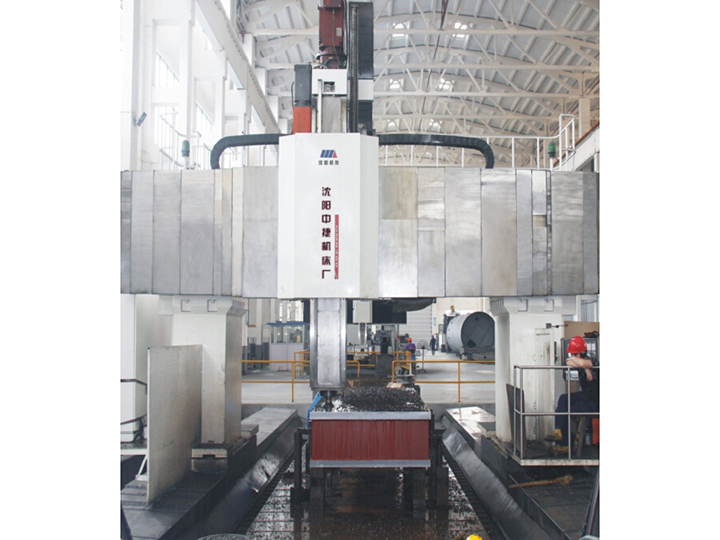
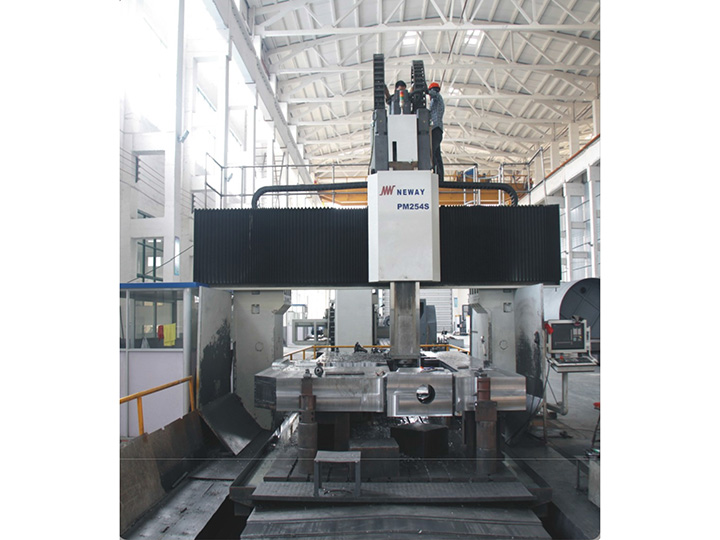
The core carrier of boring and milling machining is the boring-milling machine - a composite machine tool integrating boring and milling functions. According to different structures and application scenarios, it is mainly divided into three types:
1. Vertical Boring-Milling Machine: Suitable for Top Surface/Vertical Surface Machining of Small and Medium-Sized Parts
The tool axis of a vertical boring-milling machine is perpendicular to the machining table (similar to an ordinary vertical milling machine). It has a compact structure and is easy to operate. It is mainly used for machining top surfaces, vertical surfaces, or shallow holes of small and medium-sized parts (such as automotive engine cylinder heads and electronic component housings). Its advantage is high mass production efficiency, suitable for small and medium-sized parts with high precision requirements.
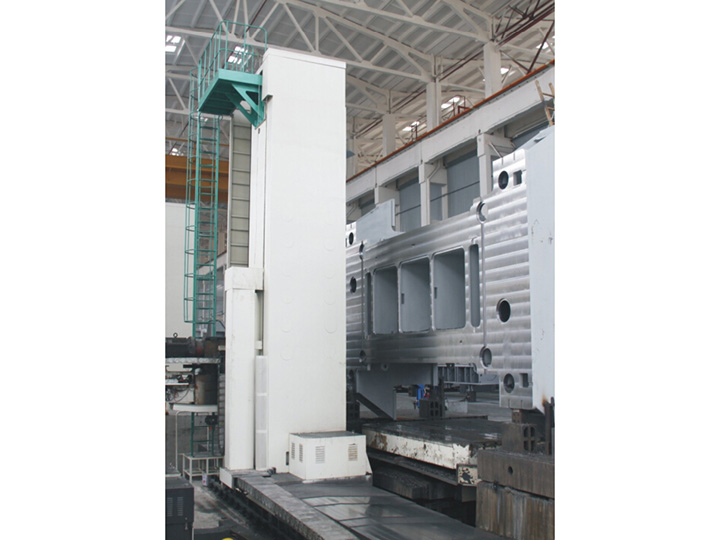
2. Horizontal Boring-Milling Machine: Covering Side Surface/Deep Hole Machining of Large Parts
The tool axis of a horizontal boring-milling machine is parallel to the machining table, equipped with a retractable boring spindle, and can machine side surfaces and deep holes of large parts (such as deep holes in aerospace engine casings). It is currently the most widely used boring-milling equipment, capable of carrying heavy parts (such as large gearbox housings), ensuring the straightness of deep hole machining, and covering the machining needs of medium and large parts in automotive, aerospace, and other industries.
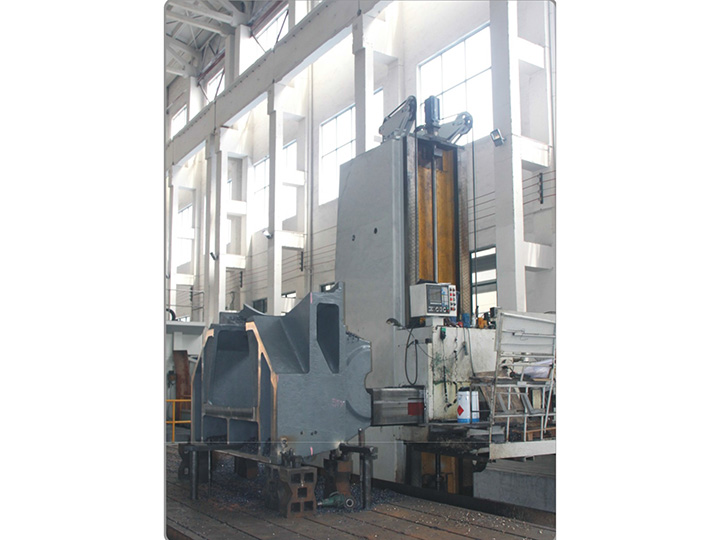
3. Floor-Type Boring-Milling Machine: Focusing on High-Speed Machining of Heavy/Large-Scale Parts
Floor-type boring-milling machines adopt a boring spindle-less ram structure, without a traditional boring spindle, and drive the tool to move through the ram. They are suitable for machining heavy and large-scale parts (such as marine engine cylinder blocks and large aerospace cabins). Their advantage is high speed and efficiency - the ram moves faster and is equipped with accessories such as angle milling heads and universal milling heads, which can handle complex spatial curved surfaces and are essential equipment for large-scale parts in aerospace, marine, and other industries.
IV. Technical Advantages of Boring and Milling Machining: Why It Has Become a Hot Commodity in Manufacturing
Boring and milling machining can stand out in the field of high-precision manufacturing, mainly due to four core technical advantages:
1. High Precision: From Error Accumulation to One-Time Forming
In traditional step-by-step machining, each time a part is transferred to a different machine tool, a clamping error of 0.02-0.05 mm is generated. Boring and milling machining, with one-time clamping, completes all processes under the same coordinate system, and the error can be controlled within 0.001-0.005 mm (micrometer level), fully meeting the ultra-precision requirements of aerospace and electronics industries.
2. High Efficiency: From Multi-Machine Step-by-Step to One-Machine Completion
Boring and milling machining integrates boring, milling, drilling, and tapping, reducing the time for machine changing, clamping, and waiting. Production efficiency is increased by 30%-50% compared with traditional processes. For example, machining an automotive engine cylinder block takes 8 hours with traditional processes, but only 4-5 hours with boring and milling machining, significantly shortening the production cycle.
3. Multifunctionality: From Single Process to Full Coverage of Complex Parts
Boring-milling machines can adapt to various tools and achieve arbitrary contour machining through numerical control programming. For example, the curved surface + hole + thread composite structure of an aerospace combustion chamber can be completed in one operation with boring and milling machining without changing equipment, perfectly solving the problem of difficult machining of complex parts.
4. Automation: From Manual Operation to Intelligent Production
With the development of Industry 4.0, boring and milling machining is upgrading towards automation - realizing unmanned production through robotic arms for automatic loading and unloading, laser scanners for real-time dimension detection, and intelligent tool magazines for automatic tool change. For example, automated boring-milling units in the aerospace field can process continuously for 24 hours, not only reducing human errors but also increasing product qualification rate from 90% to over 98%.
V. Conclusion: Future Potential of Boring and Milling Machining in Modern Manufacturing
From the heart parts of automotive engines to the core structural parts of aerospace, and then to the micro-precision parts of the electronics industry, boring and milling machining, with its advantages of high precision, high efficiency, and multifunctionality, has become the basic supporting process of