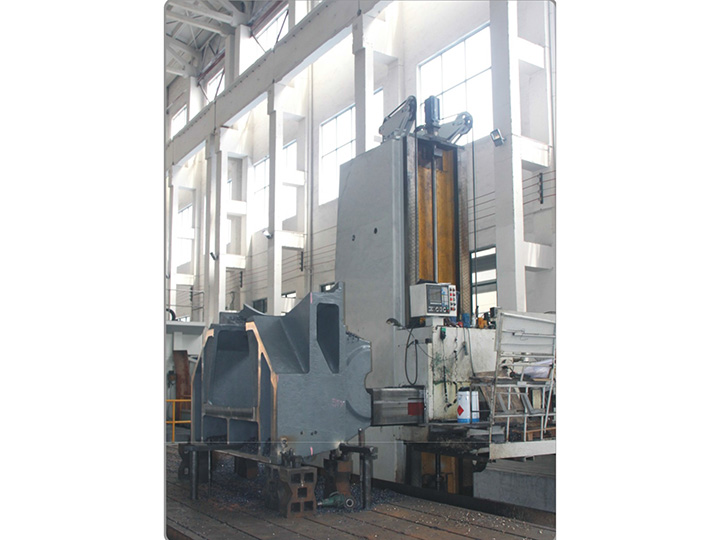
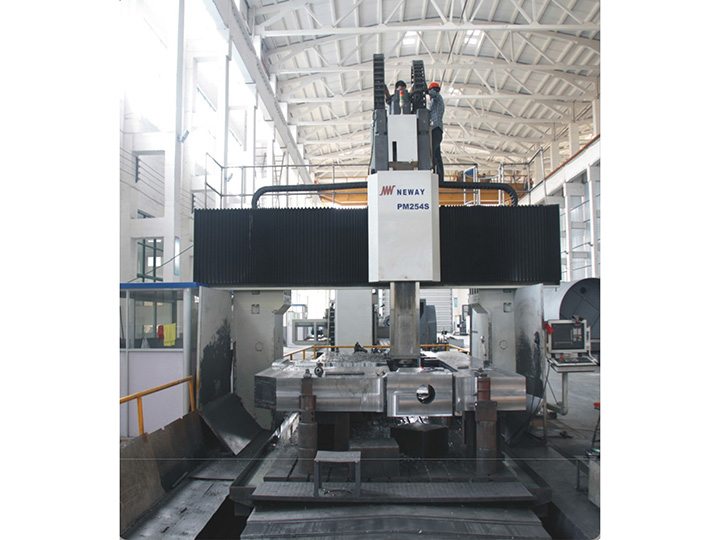
In the wave of upgrading modern manufacturing towards high precision, high efficiency, and automation, CNC gantry milling machines, as core equipment, have become indispensable processing tools in fields such as automotive, aerospace, and mold manufacturing, relying on their precise processing capabilities and automation advantages. They not only solve the pain points of traditional machine tools such as large errors and low efficiency but also support the core needs of high-end manufacturing - from aerospace engine components to automotive core parts, from precision molds to medical devices, they can be seen in almost all scenarios with strict precision requirements.
I. What is a CNC Gantry Milling Machine? Core Definition and Advantages
A
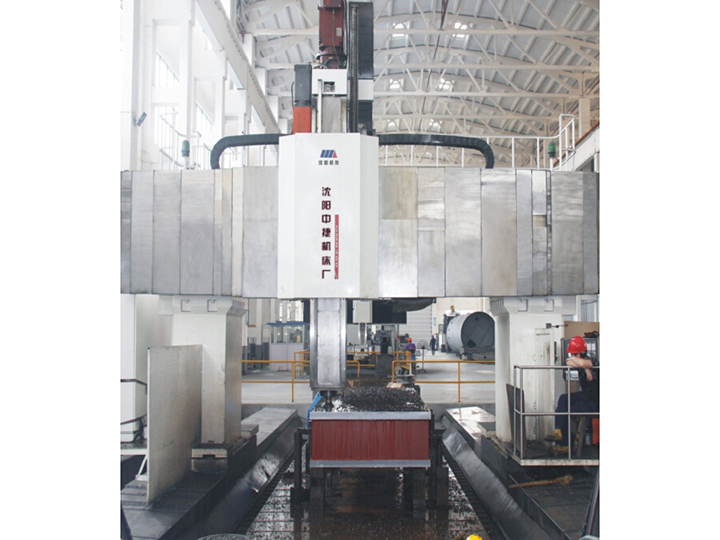
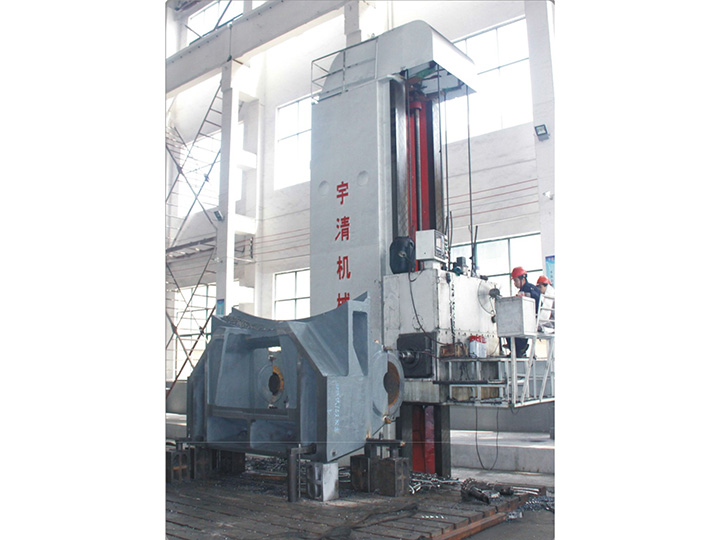
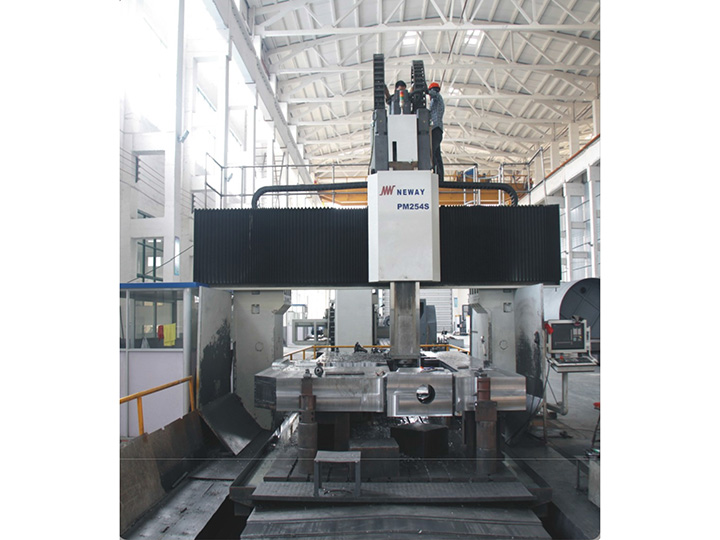
CNC gantry milling machine is a high-precision automated machine tool with a computer numerical control (CNC) system as its core, which controls the relative movement between the tool and the workpiece through preset programs to achieve precise cutting of complex workpieces. Its core advantages can be summarized into three points:
- High precision: Capable of achieving micron-level size control, meeting the zero error requirements of high-end manufacturing;
- Automation: Fully automatic processing according to the program, reducing errors caused by manual intervention;
- Versatility: Can handle various workpieces from small precision parts to large components, covering the needs of multiple industries.
II. Working Principle of CNC Gantry Milling Machine: The Whole Process from Programming to Processing
The working logic of a CNC gantry milling machine revolves around program-driven + system control + precise execution, enabling high-difficulty processing without complex manual operations. The specific process is as follows:
1. Writing the CNC Machining Program
First, the operator writes a program through professional CNC software (such as CAD/CAM) - the program will specify key information such as the geometric parameters of the workpiece, tool type, cutting path, rotational speed, and feed rate. This step is the blueprint of processing and directly determines the final precision.
2. Loading the Program into the CNC System
The written program is imported into the brain of the machine tool - the CNC system. The system converts the program instructions into motion signals for each axis (X/Y/Z axes) of the machine tool, ensuring the precise relative position between the tool and the workpiece.
3. Clamping the Workpiece and Tool
The operator fixes the workpiece to be processed on the machine tool table (fixtures are required to ensure precise positioning) and installs the corresponding tool. This step is the foundation - if the workpiece or tool positioning is deviated, it will directly lead to processing errors, so strict calibration is required.
4. Automatic Execution of Processing
After starting the machine tool, the CNC system will control the tool to automatically cut according to the preset path. No manual intervention is required throughout the process, and the tool will move along the trajectory set by the program until all processing steps are completed. The final size, shape, and surface quality of the workpiece fully meet the design requirements in the program.
III. Industrial Applications of CNC Gantry Milling Machines: Covering All Scenarios of High-End Manufacturing
The high precision + automation characteristics of CNC gantry milling machines make them necessary equipment in multiple industries. The following are the most typical application scenarios:
1. Aerospace: Processing Life-Critical Core Components
The aerospace field has stringent requirements for part precision - components such as aircraft fuselage frames, wing skins, and engine blades require dimensional errors to be controlled within 0.01mm (equivalent to 1/10 of a hair's diameter). CNC gantry milling machines can perfectly meet this requirement: through precise control of the cutting path by the program, they ensure the strength and aerodynamic performance of the components, serving as a guarantee for the safety and reliability of aerospace equipment.
2. Automobile Manufacturing: The Core Equipment Supporting Large-Scale Production
The core demand of the automotive industry is consistency - core components of the same model, such as engine blocks, crankshafts, or transmission cases, must have completely consistent dimensions to ensure the reliability of the car. CNC gantry milling machines achieve batch high-precision production of automotive core components through automated processing, not only improving production efficiency but also reducing the risk of failures caused by part errors.
3. Mold Manufacturing: Solving the Processing Difficulty of Complex Curved Surfaces
The surfaces of large automotive panel molds (such as door molds) and precision electronic molds (such as mobile phone shell molds) often have complex curved surfaces, which are difficult for traditional machine tools to process accurately. CNC gantry milling machines can simulate the shape of curved surfaces through programs and control the tool to cut along the curved surface trajectory, easily handling complex contours and deep cavity structures, significantly shortening the mold development cycle (from the traditional several months to several weeks).
4. Medical Devices and Electronics: Subdivided Fields with Precision down to Microns
In the processing of medical devices (such as orthopedic implants, surgical instruments) and electronic equipment (such as laptop frames, mobile phone middle frames), CNC gantry milling machines can achieve micron-level precision control - for example, the sharpness of surgical instrument blades and the surface finish of electronic parts rely on their precise cutting. These products are directly related to user safety (such as surgical instruments) or product experience (such as the feel of electronic devices), so the precision requirements are far higher than those of ordinary manufacturing.
5. Energy and Heavy Machinery: Meeting the Challenge of Large Components
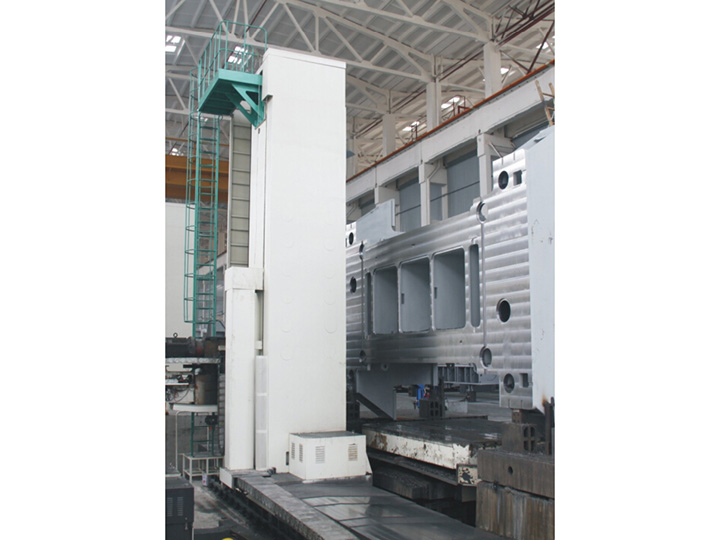
Large workpieces such as drill pipe joints of oil rigs, bed frames of heavy machine tools, and car body frames of locomotives cannot be processed by traditional machine tools due to stroke limitations, while the gantry structure (large span and long stroke) of CNC gantry milling machines can easily handle them. It can process components up to tens of meters in length, ensuring the structural strength and stability of large machinery.
IV. Summary: CNC Gantry Milling Machine - The Precision Leader of High-End Manufacturing
From the national heavy equipment in aerospace to daily-used automobiles and mobile phones, the role of CNC gantry milling machines runs through the entire chain of high-end manufacturing. Its essence is replacing manual experience with program precision and solving limitations of traditional processing with automation efficiency.
For enterprises, a CNC gantry milling machine is not just a machine tool but also a weapon to enhance competitiveness - it can help enterprises produce more precise products, reduce scrap rates, and shorten delivery cycles, thereby gaining an advantage in the fierce market competition.
In today's era when manufacturing is transforming towards intelligence and high-end, the status of CNC gantry milling machines will only become more important - after all, precision is the soul of manufacturing, and CNC gantry milling machines are the best of precision.